National Grid’s 400kV Somerset substation: design and civils lens for engineers
Reviewed by Tom Sullivan
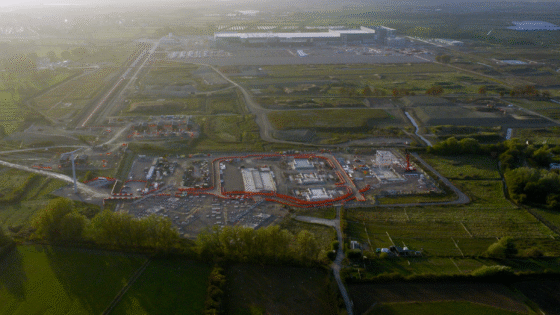
First reported on New Civil Engineer
30 Second Briefing
Balfour Beatty has begun main construction works on National Grid Electricity Transmission’s new 400kV substation near Woolavington, Somerset, to connect the Gravity Smart Campus directly into the UK transmission network. The scheme will require high-capacity 400kV switchgear, large power transformers and associated civil works including heavy foundations, cable ducts and security-rated enclosures. For civil and geotechnical teams, key issues will include managing high fault-level loading on structures, construction around existing grid assets, and programme interfaces with the Gravity site’s large-scale industrial development.
Technical Brief
- Similar 400kV connection nodes for major campuses or gigafactories are emerging as a repeat project typology in the UK.
Our Take
Balfour Beatty and National Grid Electricity Transmission are already collaborating on what is described as the UK’s largest electrical substation at Teesworks, suggesting the Somerset 400kV substation will benefit from a maturing delivery model and shared lessons on large-scale grid interface works.
The 400kV rating aligns this Woolavington asset with National Grid’s highest-voltage backbone, which is particularly relevant for power-hungry developments like the Gravity Smart Campus that will need direct access to transmission capacity rather than relying on lower-voltage distribution networks.
Across our infrastructure coverage, Balfour Beatty frequently appears on complex National Grid projects (including temporary access solutions and rail-linked logistics for Sizewell C), indicating it is consolidating a niche in multi-modal, heavy civil works around major UK energy connections.
Prepared by collating external sources, AI-assisted tools, and Geomechanics.io’s proprietary mining database, then reviewed for technical accuracy & edited by our geotechnical team.


