Geomechanics.io

  • Free Tools
Sign UpLog In

Geomechanics.io

Geomechanics, Streamlined.

© 2026 Geomechanics.io. All rights reserved.

Geomechanics.io

CMRR-ioGEODB-ioHYDROGEO-ioQCDB-ioFree Tools & CalculatorsBlogLatest Industry News

Industries

MiningConstructionTunnelling

Company

Terms of UsePrivacy PolicyLinkedIn
    Product
    Projects

    MMD HYD Sizer for rare earths: design and throughput notes for plant engineers

    May 22, 2026|

    Reviewed by Tom Sullivan

    MMD HYD Sizer for rare earths: design and throughput notes for plant engineers

    First reported on Australian Mining

    30 Second Briefing

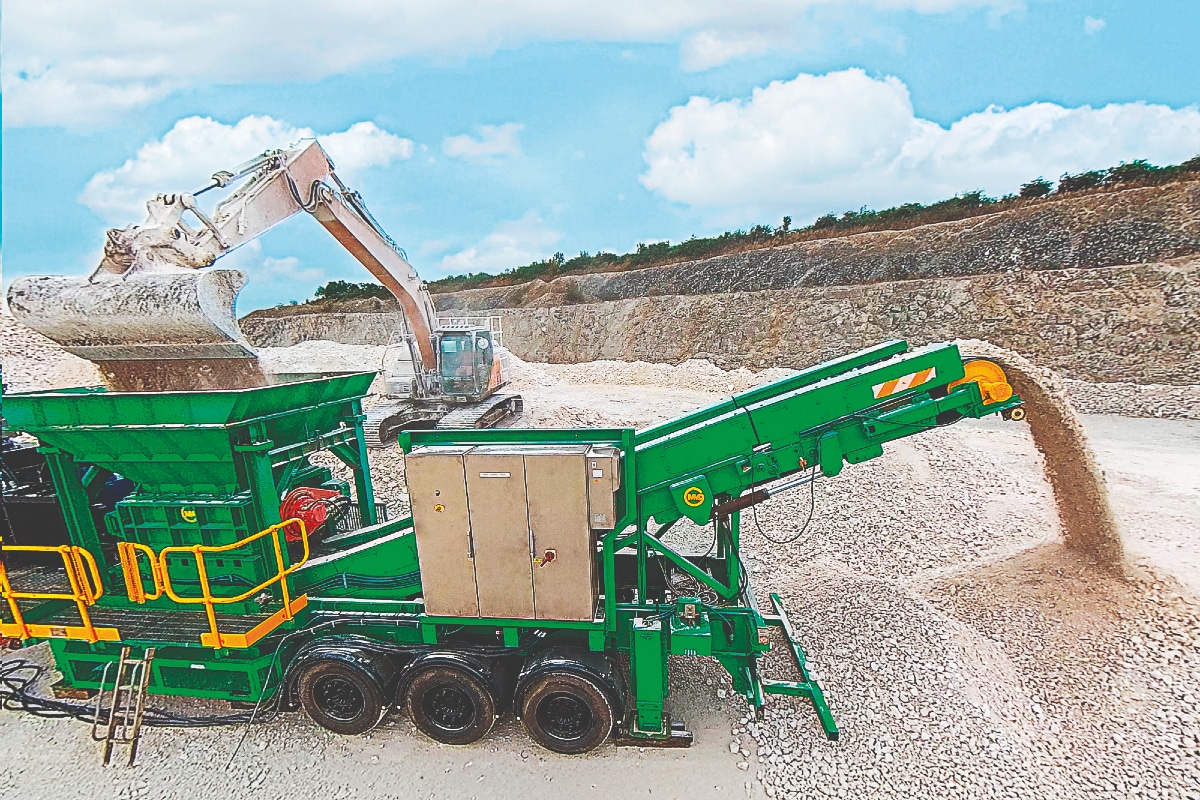
    MMD Australia is targeting rare earth element projects with its next-generation HYD Sizer, redesigned for variable ore hardness, higher moisture contents and tighter product size control than earlier MMD sizers. The unit incorporates hydraulic drive and modular tooth configurations to handle both soft overburden and abrasive rare earth-bearing ores in a single machine, reducing the need for multiple crushing stages. For geometallurgy and plant designers, the HYD Sizer’s adaptability to changing feed characteristics offers flexibility for deposits with complex mineralogy and fluctuating throughput.

    Technical Brief

    • For similar REE projects, single-sizer layouts could shorten commissioning schedules and reduce civils complexity.

    Our Take

    Within our 1200 Mining stories, rare earth elements appear far less frequently than iron ore or gold, so MMD’s positioning around this commodity in Australia signals a push into a niche where equipment vendors can secure higher-spec, higher-margin process roles.

    For Australian rare earth elements projects, which often deal with variable ore textures and tight environmental constraints, MMD-style sizers can allow smaller footprints and lower dust generation than conventional crushers, an operational angle that tends to resonate with local permitting and ESG expectations.

    Geotechnical Software for Modern Teams

    Centralise site data, logs, and lab results with GEODB-io, CMRR-io, and HYDROGEO-io.

    No credit card required.

    • Save and export unlimited calculations
    • Advanced data visualisation
    • Generate professional PDF reports
    • Cloud storage for all your projects

    Prepared by collating external sources, AI-assisted tools, and Geomechanics.io’s proprietary mining database, then reviewed for technical accuracy & edited by our geotechnical team.

    Related Articles

    Mining
    about 11 hours ago

    RKX Rock Extraction electric pulse rock breaking: design and risk notes for mines

    RKX Rock Extraction is set to unveil an electric pulse rock-breaking system at Hillhead 2026, targeting operations where explosives are restricted or supply-constrained and hydraulic hammers are slow, noisy and maintenance-intensive. The Lisburn-based company’s technology uses high-voltage electrical pulses to fracture rock in situ, eliminating on-site explosive storage and reducing flyrock, vibration and dust. For mines and quarries facing tight vibration limits near infrastructure or communities, the method could open additional extraction zones and simplify permitting for selective breakage and scaling.

    Mining
    about 11 hours ago

    Pilar Gold PGDM Resemin–TEMPUS fleet: design and productivity notes for engineers

    Pilar Gold Inc has selected Resemin and Sotreq as strategic equipment partners to supply a new underground fleet for the restart and modernisation of its PGDM gold mining complex in Brazil. The ordered package includes Resemin jumbo drills and production rigs, paired with TEMPUS-branded underground support equipment, to mechanise drilling and production across the mine’s ramp-accessed stopes. The deal signals a shift from legacy fleets towards standardised, OEM-supported rigs, with implications for ground support design, development advance rates and maintenance planning at PGDM.

    Mining
    about 11 hours ago

    Greenland Resources’ Malmbjerg and LTU BOREAS: automation takeaways for mine planners

    Greenland Resources has joined Luleå Tekniska Universitet’s BOREAS consortium, alongside 12 other partners, to develop autonomous robotic systems for its Malmbjerg molybdenum project in central-east Greenland. The collaboration targets robotic support for construction, operation and maintenance in remote, high-relief terrain, where steep slopes, ice, and limited access complicate conventional open-pit development. For mine planners and geotechnical teams, the work signals future deployment of field robots for tasks such as bench inspection, slope monitoring and infrastructure upkeep under Arctic conditions.

    Related Industries & Products

    Mining

    Geotechnical software solutions for mining operations including CMRR analysis, hydrogeological testing, and data management.

    Construction

    Quality control software for construction companies with material testing, batch tracking, and compliance management.

    CMRR-io

    Streamline coal mine roof stability assessments with our cloud-based CMRR software featuring automated calculations, multi-scenario analysis, and collaborative workflows.

    HYDROGEO-io

    Comprehensive hydrogeological testing platform for managing, analysing, and reporting on packer tests, lugeon values, and hydraulic conductivity assessments.

    GEODB-io

    Centralised geotechnical data management solution for storing, accessing, and analysing all your site investigation and material testing data.

    AllGeotechnicalInfrastructureHazardsEnvironmental