Mining in Canada: wage slowdown and labour signals for project teams
Reviewed by Joe Ashwell

First reported on MINING.com
30 Second Briefing
Mining and natural resources workers in Canada remain the country’s best paid, with average weekly earnings of C$2,584 versus C$1,355 across all industries, but ADP Canada data show gross pay for job-stayers in the sector rose only 4.1% year-on-year in October, below the 4.5% national figure and tied for eighth of ten sectors. Base pay growth is effectively capped at 3.0%, matching inflation and leaving recent gains heavily dependent on volatile bonuses and overtime that once pushed annual gross pay growth to 11.5% in 2023 but only 4.1% now. Despite muted wage momentum, Statistics Canada reports payroll employment in mining, quarrying and oil and gas has climbed 3.9% year-on-year to 226,600 jobs, the fastest of any of the 20 sectors tracked.
Technical Brief
- ADP Canada’s dataset covers ~1.6 million private‑sector workers, giving relatively high statistical resolution by sector.
- Mining and natural resources gross pay growth ranked eighth of ten sectors in October, tied with information.
- Only “other services” workers, at 3.3% gross pay growth, saw weaker year‑on‑year gains.
- Sector pay volatility is extreme: standard deviation is roughly four times that of manufacturing over three years.
- Gross pay growth peaked at 11.5% in July 2023, then bottomed at 2.9% by March 2026.
- Manufacturing’s four‑year gross pay growth range is only 2.4 percentage points versus mining’s 8.6‑point swing.
- In October 2023, bonuses and overtime added a 6.5‑point wedge above base pay; by October 2026 it shrank to 1.1 points.
- Statistics Canada reports average weekly earnings for miners rose just 0.8% year‑on‑year versus 3.7% across all industries.
- Nationally, job‑changers secured 10.4% gross pay growth in October against 4.5% for stayers, with base pay 6.0% vs 3.0%.
- Payroll employment in mining, quarrying and oil and gas reached 226,600 in August, up 3.9% year‑on‑year versus 0.3% overall.
Our Take
With StatCan showing payrolls in mining, quarrying and oil and gas up 3.9% against only 0.3% overall, operators in Canada may be trading wage escalation for headcount growth, which can ease unit labour cost pressure on new copper and critical minerals projects.
The cumulative 27% gross pay growth for miners since October 2022, versus about 22% nationally, suggests that despite the recent slowdown, longer‑cycle compensation remains competitive enough to attract graduates from programmes like Memorial University’s planned mining and mineral processing degrees.
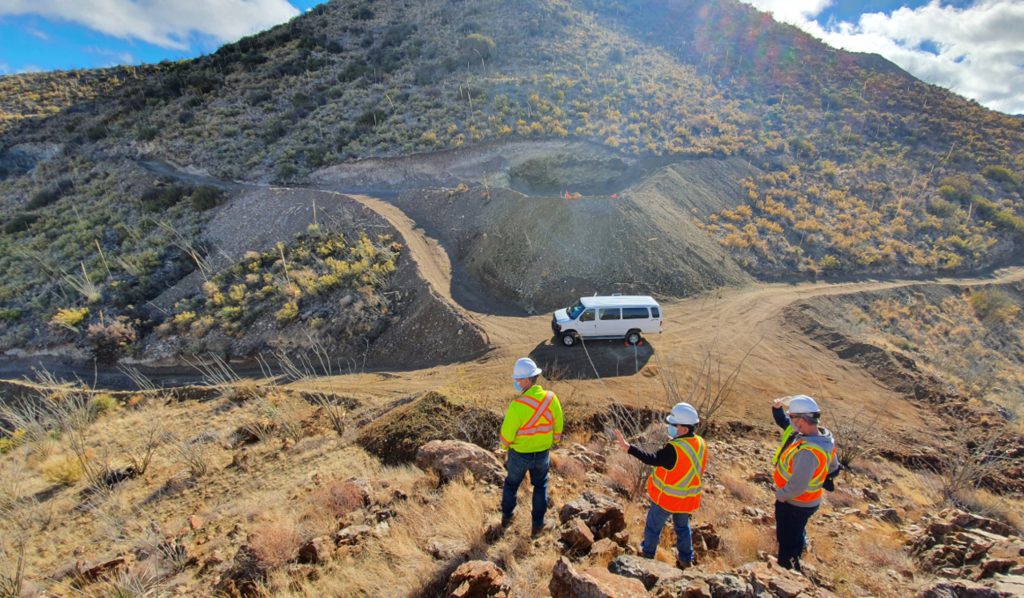
Mining pay being roughly four times as volatile as manufacturing in Canada implies that project developers such as Hudbay, including at assets like the Copper World project in Arizona, need more conservative contingency for bonus and overtime swings when budgeting during commodity up-cycles.
Prepared by collating external sources, AI-assisted tools, and Geomechanics.io’s proprietary mining database, then reviewed for technical accuracy & edited by our geotechnical team.
Related Articles


Related Industries & Products
Mining
Geotechnical software solutions for mining operations including CMRR analysis, hydrogeological testing, and data management.
Construction
Quality control software for construction companies with material testing, batch tracking, and compliance management.
CMRR-io
Streamline coal mine roof stability assessments with our cloud-based CMRR software featuring automated calculations, multi-scenario analysis, and collaborative workflows.
QCDB-io
Comprehensive quality control database for manufacturing, tunnelling, and civil construction with UCS testing, PSD analysis, and grout mix design management.
HYDROGEO-io
Comprehensive hydrogeological testing platform for managing, analysing, and reporting on packer tests, lugeon values, and hydraulic conductivity assessments.