Geomechanics.io

  • Free Tools
Sign UpLog In

Geomechanics.io

Geomechanics, Streamlined.

© 2026 Geomechanics.io. All rights reserved.

Geomechanics.io

CMRR-ioGEODB-ioHYDROGEO-ioQCDB-ioFree Tools & CalculatorsBlogLatest Industry News

Industries

MiningConstructionTunnelling

Company

Terms of UsePrivacy PolicyLinkedIn
    AllGeotechnicalMiningInfrastructureMaterialsHazardsEnvironmentalSoftwarePolicy
    Product
    Sustainability

    Metso Grate Kiln upgrade: DR-grade pellet specs and risks for iron ore engineers

    March 29, 2026|

    Reviewed by Tom Sullivan

    Metso Grate Kiln upgrade: DR-grade pellet specs and risks for iron ore engineers

    First reported on Australian Mining

    30 Second Briefing

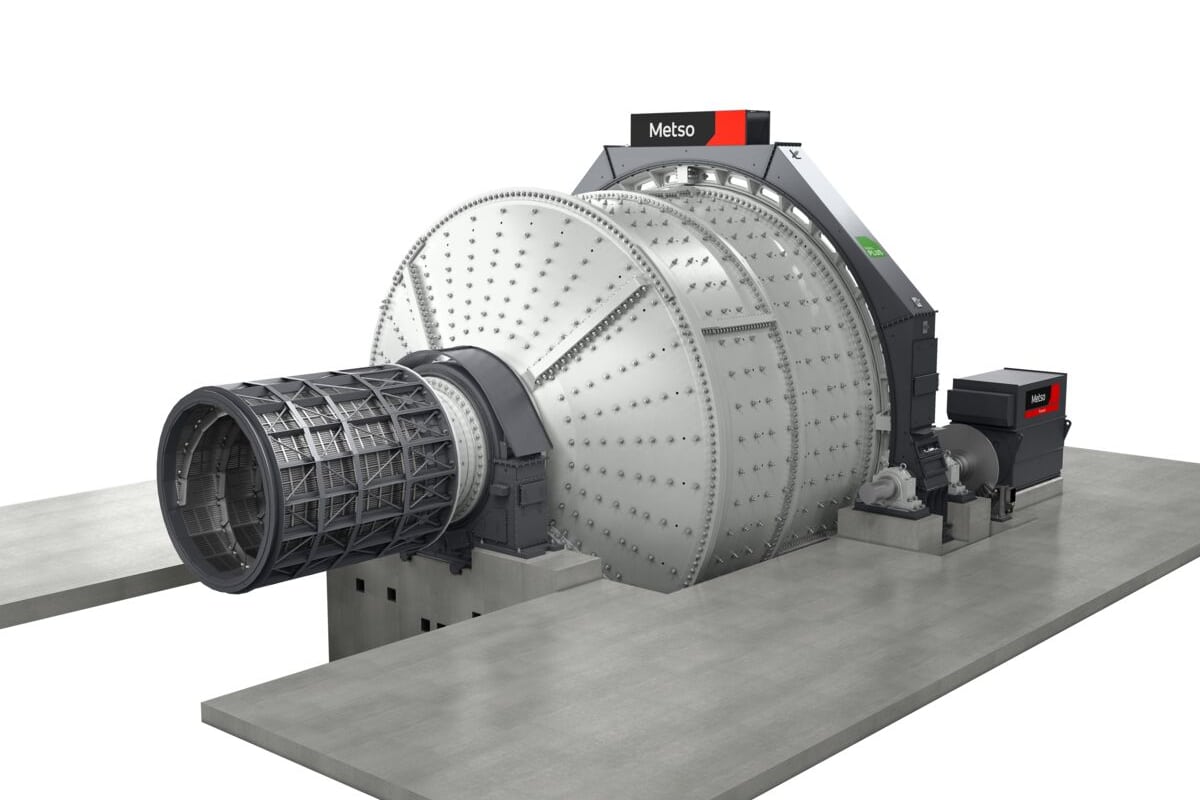
    Metso is upgrading its Grate Kiln pelletising system to produce higher-quality iron ore pellets tailored for direct reduction (DR) processes in green steelmaking, targeting tighter control of pellet size, strength and metallisation behaviour. The system integrates travelling grate, rotary kiln and annular cooler units, enabling consistent firing temperatures and uniform induration suited to gas-based DR furnaces and potential hydrogen-based reduction. For miners and pellet plants, the move signals growing technical pressure to supply DR-grade pellets with low gangue, high Fe content and predictable reducibility indices.

    Technical Brief

    • Grate Kiln upgrade centres on optimising heat transfer profiles across travelling grate, rotary kiln and annular cooler.
    • Metso is targeting tighter residence-time control in each unit to stabilise pellet thermal histories.
    • System configuration allows decoupling of drying, pre-heating, firing and cooling zones for finer process tuning.
    • Enhanced burner and airflow management in the rotary kiln aims to minimise temperature gradients across the bed.
    • Upgraded process control uses continuous off-gas and temperature feedback to adjust firing and cooling in real time.
    • Metso is marketing the Grate Kiln as suitable for both magnetite and hematite pellet feed blends.
    • Retrofit potential is emphasised, allowing existing pellet plants to upgrade induration lines without full greenfield builds.
    • For other pellet producers, the move signals competitive pressure to reconfigure induration lines around DR-focused process windows.

    Our Take

    Metso’s push on the Grate Kiln pelletising system for iron ore dovetails with its Metso–Loesche vertical roller mill dry grinding work, signalling a coordinated flowsheet aimed at lower energy and water use from comminution through to DR‑grade pellets.

    The Sangdong tungsten mine restart, which also features Metso equipment, shows that the company is already embedded in critical‑minerals projects; leveraging the Grate Kiln in Australia’s iron ore sector could similarly position Metso as a default vendor for low‑carbon pellet feed into emerging green steel hubs.

    Geotechnical Software for Modern Teams

    Centralise site data, logs, and lab results with GEODB-io, CMRR-io, and HYDROGEO-io.

    No credit card required.

    • Save and export unlimited calculations
    • Advanced data visualisation
    • Generate professional PDF reports
    • Cloud storage for all your projects

    Prepared by collating external sources, AI-assisted tools, and Geomechanics.io’s proprietary mining database, then reviewed for technical accuracy & edited by our geotechnical team.

    Related Articles
    SKRI ‘phytocapture’ at Raygorodok: dust control performance insights for mine engineers
    Mining
    about 10 hours ago

    SKRI ‘phytocapture’ at Raygorodok: dust control performance insights for mine engineers

    China’s Zijin Mining is expanding RG Gold’s Raygorodok operation in Kazakhstan with a $500 million processing plant while deploying SKRI’s ‘phytocapture’ system, planting over 100,000 Scots pines across more than 20 hectares about 1.7 km downwind of the open pit. Supercomputer modelling using regional wind-rose data sets tree species and spacing to form multilayered vegetative barriers, not simple landscaping. SKRI reports particulate-matter reductions above 40%, with the forest belt expected to capture roughly one-third of dust emissions as mining advances towards the barrier.

    Barrick’s Reko Diq copper project delays: capex and schedule lens for mine planners
    Mining
    about 11 hours ago

    Barrick’s Reko Diq copper project delays: capex and schedule lens for mine planners

    Barrick Mining has warned of “significant increases” to the capital budget and schedule for the 50%-owned Reko Diq copper-gold project in Balochistan, where Phase 1 was previously costed at US$5.6–6.0 billion and Phase 2 at US$3.3–3.6 billion, with first production targeted by end-2028. Citing escalating security risks in Pakistan and the wider region, Barrick will slow field development and extend the technical and financing review to mid‑2027, while keeping the project under “active management” with reduced capital spend. The porphyry deposit, holding an estimated 15 million tonnes of copper reserves and modelled for a 37‑year mine life, remains central to Barrick’s Tier 1 copper strategy and its long-term community commitments in Balochistan.

    Orica tech for smaller North American mines: blast design gains for engineers
    Mining
    about 14 hours ago

    Orica tech for smaller North American mines: blast design gains for engineers

    Orica is targeting smaller North American mines and quarries with the same digital blasting toolkit used on large sites, including its BlastIQ cloud platform for blast design and performance tracking and on-bench digital loading systems. Area Business Manager Elliott Giles told IM that these operations, aggregated, form a major explosives volume market, and are now adopting electronic detonators and precise blast modelling to cut oversize and improve fragmentation. For geotechs and drill‑and‑blast engineers, the shift means more consistent burden control, tighter vibration management and better data for pit wall stability assessment even on “small” jobs.

    Related Industries & Products

    Mining

    Geotechnical software solutions for mining operations including CMRR analysis, hydrogeological testing, and data management.

    CMRR-io

    Streamline coal mine roof stability assessments with our cloud-based CMRR software featuring automated calculations, multi-scenario analysis, and collaborative workflows.

    HYDROGEO-io

    Comprehensive hydrogeological testing platform for managing, analysing, and reporting on packer tests, lugeon values, and hydraulic conductivity assessments.

    GEODB-io

    Centralised geotechnical data management solution for storing, accessing, and analysing all your site investigation and material testing data.