Menai Bridge bicentenary: structural maintenance and loading lessons for engineers
Reviewed by Joe Ashwell
First reported on New Civil Engineer
30 Second Briefing
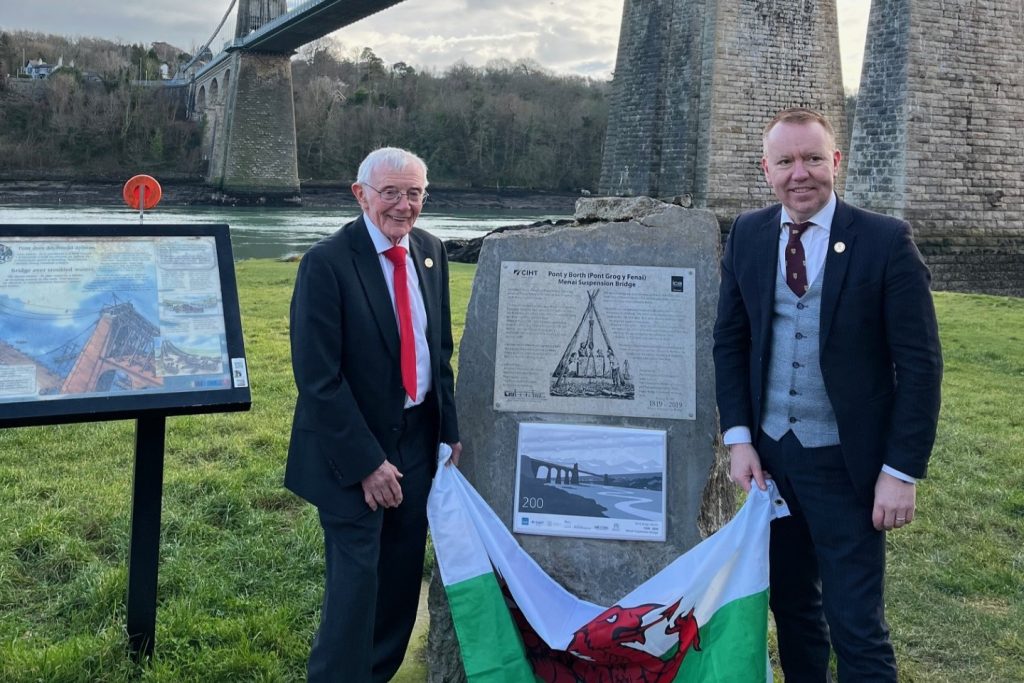
Menai Suspension Bridge has marked its 200th anniversary, with Welsh Government ministers and ICE leaders gathering on 29 January to commemorate the 1826 opening of Thomas Telford’s crossing between Anglesey and mainland Wales. The wrought-iron chain suspension bridge, originally designed for horse-drawn traffic and later strengthened for modern road loading, remains a critical A5/A55 route over the Menai Strait. The bicentenary focus is on long-term structural maintenance, corrosion management and traffic loading on historic suspension elements.
Technical Brief
- Wrought-iron chain suspension form demands ongoing inspection for section loss, pin wear and link cracking.
- Historic masonry towers and anchorages require regular monitoring for settlement, joint deterioration and water ingress.
- Traffic management during maintenance works is now a primary safety control, given constrained deck width.
- Corrosion control relies on paint systems, drainage detailing and access to otherwise difficult chain and hanger zones.
- Structural health monitoring is increasingly important for such heritage bridges, tracking deflection, vibration and cable behaviour.
- Any strengthening or replacement works must respect listed-structure constraints while satisfying current highway loading standards.
Our Take
ICE’s role in the Menai Bridge bicentenary sits alongside its current push on the Building Safeguards action plan covered in our database, signalling that heritage assets in Wales are being used as a platform to reinforce contemporary safety and risk-management standards.
Within the 732 Infrastructure stories in our coverage, Menai Bridge is one of relatively few long-span historic structures in the UK that still trigger ‘Safety’ tagging, underlining how asset owners such as the Welsh Government are expected to treat inspection, maintenance and temporary closures with the same scrutiny as new-build projects.
The involvement of New Civil Engineer in both this Menai Bridge piece and the ICE safety review coverage suggests practitioners in Wales can expect more cross-over between commemorative events and technical guidance, with lessons from historic suspension bridges feeding into current project design and management practice.
Prepared by collating external sources, AI-assisted tools, and Geomechanics.io’s proprietary mining database, then reviewed for technical accuracy & edited by our geotechnical team.
Related Articles


Related Industries & Products
Construction
Quality control software for construction companies with material testing, batch tracking, and compliance management.
Mining
Geotechnical software solutions for mining operations including CMRR analysis, hydrogeological testing, and data management.
CMRR-io
Streamline coal mine roof stability assessments with our cloud-based CMRR software featuring automated calculations, multi-scenario analysis, and collaborative workflows.
HYDROGEO-io
Comprehensive hydrogeological testing platform for managing, analysing, and reporting on packer tests, lugeon values, and hydraulic conductivity assessments.
GEODB-io
Centralised geotechnical data management solution for storing, accessing, and analysing all your site investigation and material testing data.