McLaren’s University of Greenwich renewal: adaptive reuse and net-zero lessons for project teams
Reviewed by Tom Sullivan
First reported on The Construction Index
30 Second Briefing
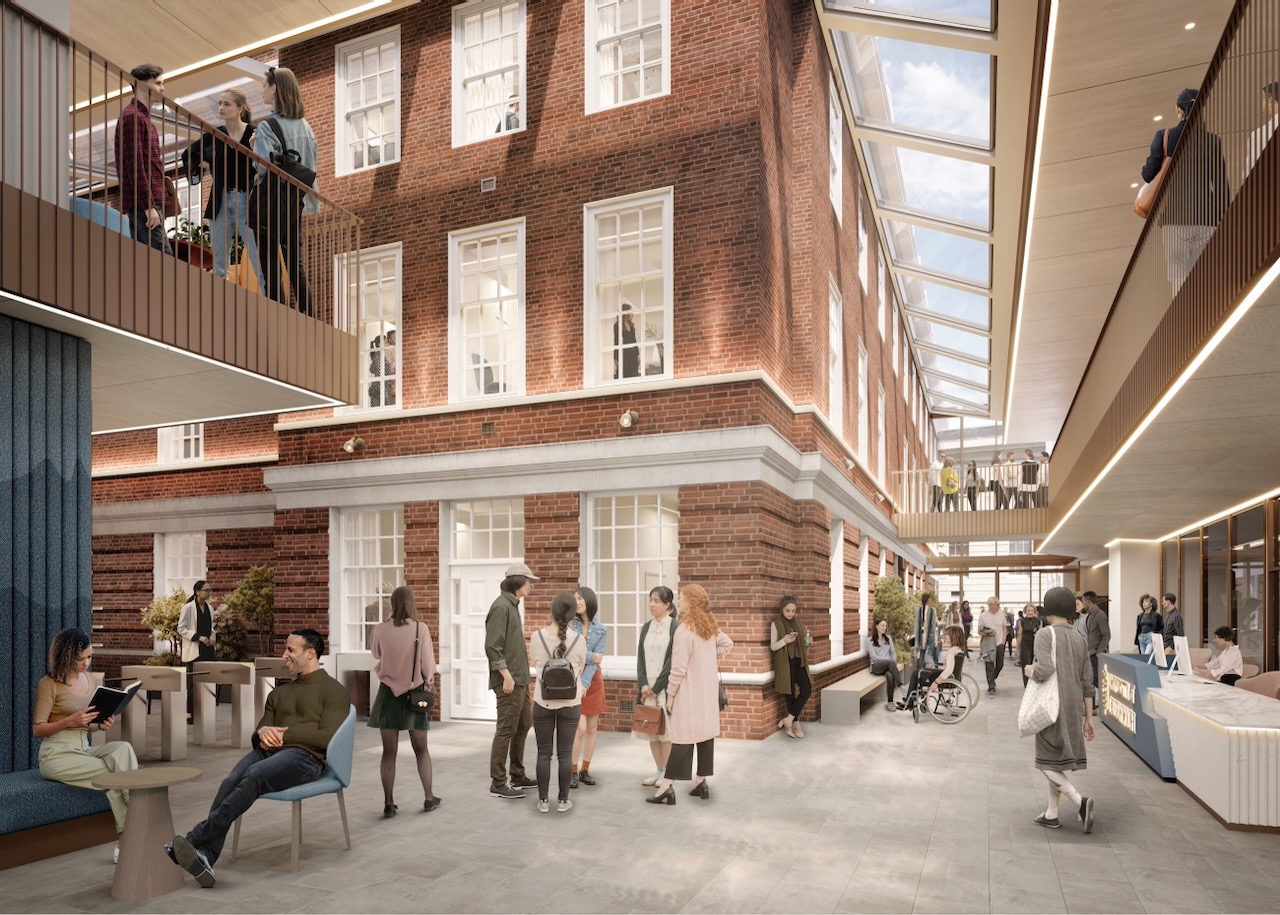
McLaren Construction has been appointed to refurbish and extend the Grade II-listed Devonport House at the University of Greenwich, converting the former hotel into a Stride Treglown-designed teaching hub for Greenwich Business School. Works include retaining heritage elements such as the Churchill Room and two original staircases, replacing a 1990s conference centre with a contemporary wing linked by a glazed atrium, and reconfiguring much of the ground floor for public access. The scheme targets net zero carbon for heating and BREEAM Excellent, with car parking replaced by green corridors, new squares and improved pedestrian routes, aiming to open for the 2028/29 academic year.
Technical Brief
- McLaren has been undertaking enabling works on site since December 2024 under a pre-construction services agreement.
- Retention of the Churchill Room and two historic staircases limits structural reconfiguration options and service distribution routes.
- Removal of surface car parking to form green corridors and squares alters surface-water runoff patterns and subgrade loading.
- Increased planting and biodiversity habitats will require coordinated landscape, drainage and maintenance planning within a busy urban campus.
- Opening much of the ground floor to the public adds crowd-loading, security zoning and fire-escape design complexity.
Our Take
McLaren Construction’s recent portfolio in our database – from the Sizewell C worker campus to Hinckley logistics sheds – shows it is increasingly trusted with technically constrained or high-profile UK sites, which aligns with working inside the Maritime Greenwich World Heritage Site context.
Targeting BREEAM Excellent for the Devonport House refurbishment fits a pattern in our Infrastructure/Sustainability coverage where London university estates are using major renewals as testbeds for low‑carbon retrofit rather than full demolition, which can materially reduce embodied carbon in 1920s‑era structures.
McLaren’s deployment of FieldAI autonomous scanning robots on other UK projects suggests the University of Greenwich scheme could benefit from similar digital verification tools, useful for managing heritage fabric and complex phasing ahead of the 2028/29 academic year handover.
Prepared by collating external sources, AI-assisted tools, and Geomechanics.io’s proprietary mining database, then reviewed for technical accuracy & edited by our geotechnical team.


