Geomechanics.io

  • Free Tools
Sign UpLog In

    Geomechanics.io

    Geomechanics, Streamlined.

    © 2026 Geomechanics.io. All rights reserved.

    Geomechanics.io

    CMRR-ioGEODB-ioHYDROGEO-ioQCDB-ioFree Tools & CalculatorsBlogLatest Industry News

    Industries

    MiningConstructionTunnelling

    Company

    Terms of UsePrivacy PolicyLinkedIn
    Projects
    Research

    Malmbjerg molybdenum mine funding: process testwork insights for project engineers

    June 30, 2026|

    Reviewed by Tom Sullivan

    Malmbjerg molybdenum mine funding: process testwork insights for project engineers

    First reported on MINING.com

    30 Second Briefing

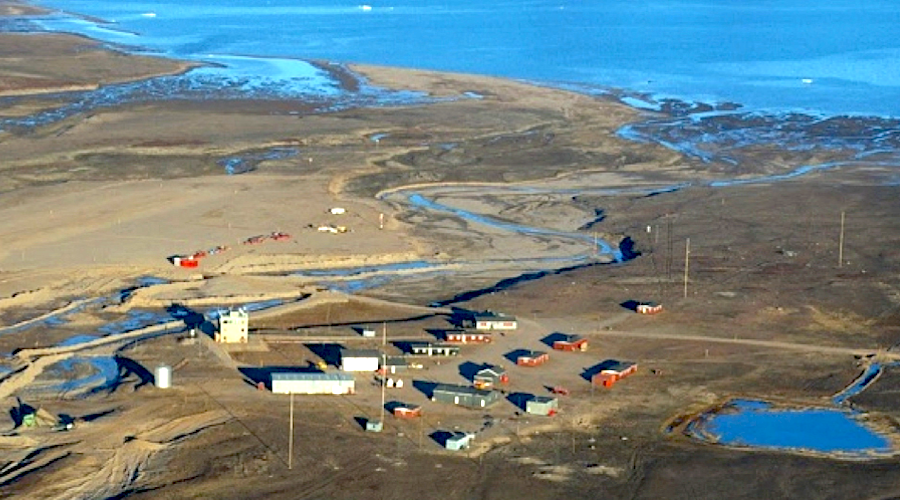
    Canada has committed C$7 million through Natural Resources Canada’s Critical Minerals Research, Development and Demonstration programme to Greenland Resources’ open-pit Malmbjerg molybdenum project in east Greenland, the first G7 investment in Greenland mining. The funding supports metallurgical work to test flotation of primary molybdenum using both saline and fresh water and to assess recovery of magnesium and rare earth elements from the orebody and process water, with the programme running to March 2028. Malmbjerg, 20 km from Mestersvig airport, is designed to produce 32.8 million lb/y of molybdenum metal for 10 years within a 20-year mine life, backed by a long-term offtake with Outokumpu.

    Technical Brief

    • Metallurgical testwork will explicitly compare flotation performance under saline versus fresh water process regimes.
    • Canadian technical teams will assess by-product recovery potential for magnesium and rare earth elements from ore and saline water.
    • Research activities fall under Natural Resources Canada’s Critical Minerals Research, Development and Demonstration programme framework.
    • Findings could feed directly into Malmbjerg plant design choices on water management, reagent schemes and by-product circuits.
    • Scope is limited to metallurgical feasibility and by-product potential; no geotechnical, hydrological or mine design work is referenced.

    Our Take

    Natural Resources Canada appears repeatedly in our database backing critical-mineral projects (gallium with Rio Tinto in Quebec and cobalt–gold with Fortune Minerals in NWT), so its support for Greenland Resources’ Malmbjerg molybdenum project fits a pattern of using federal funds to de-risk upstream supply for allied markets rather than purely domestic use.

    The Malmbjerg project’s location in east Greenland’s Semersooq region, combined with Greenland Resources’ 1,147.76 km² special exploration licence reported in February 2026, suggests the company is positioning this molybdenum–magnesium district as a long-life cluster asset rather than a single-mine play, which could matter for future EU offtakers like Outokumpu looking for multi-decade security.

    With China accounting for about 40% of global molybdenum output and Malmbjerg forecast to cover roughly 25% of EU consumption in its first decade, this Canadian-backed Greenland project effectively functions as a geopolitical diversification tool for European stainless-steel supply chains already linked to Greenland Resources through Outokumpu in our coverage.

    Geotechnical Software for Modern Teams

    Centralise site data, logs, and lab results with GEODB-io, CMRR-io, and HYDROGEO-io.

    No credit card required.

    • Save and export unlimited calculations
    • Advanced data visualisation
    • Generate professional PDF reports
    • Cloud storage for all your projects

    Prepared by collating external sources, AI-assisted tools, and Geomechanics.io’s proprietary mining database, then reviewed for technical accuracy & edited by our geotechnical team.

    Related Articles

    US DOE $73M Mine of the Future funding: key testbed insights for engineers
    Mining
    about 6 hours ago

    US DOE $73M Mine of the Future funding: key testbed insights for engineers

    The US Department of Energy has awarded US$73 million through its Mine of the Future initiative to four projects creating national-scale mining testbeds in West Virginia, Colorado, Arizona, Missouri and Texas. Innovative Wireless Technologies will integrate underground and surface sites in Julian, Blacksburg and Idaho Springs to validate next‑generation digital, connectivity and automation systems, while the University of Arizona and University of Missouri will build underground and comminution proving grounds focused on electrification and energy management. Southern Methodist University will repurpose a heavily instrumented Navasota drilling site into a “synthetic mine” for repeatable testing of drilling, sensing and autonomous workflows, aiming to de‑risk commercial deployment.

    Mining leads Canadian PM’s C$1T pitchbook: project finance signals for engineers
    Mining
    about 6 hours ago

    Mining leads Canadian PM’s C$1T pitchbook: project finance signals for engineers

    Mining projects dominate Prime Minister Mark Carney’s leaked C$1 trillion, five‑year investment pitchbook, with 63 of 167 opportunities spanning lithium, nickel, graphite, rare earths, gold and copper, and including proposals such as Canada’s first uranium refining and conversion plant in more than 40 years. Confirmed entries range from LithiumBank’s Boardwalk lithium brine project in Alberta, with 5.2 million measured and indicated tonnes LCE at 81.6 mg/L, to Surge Copper’s Berg copper‑molybdenum project, scoped for a 28‑year life and 176 million lb copper per year. Despite a 75% year‑on‑year rise to C$10.1 billion in TSX/TSXV mining equity raisings, pension and sovereign funds remain cautious on finite‑life mines, making long‑life assets and midstream processing plants more likely to secure capital.

    Cyclic Materials’ Mesa rare earth recycling plant: process and scale notes for engineers
    Mining
    about 6 hours ago

    Cyclic Materials’ Mesa rare earth recycling plant: process and scale notes for engineers

    Cyclic Materials has opened a 144,000-square-foot rare earth magnet recycling plant in Mesa, Arizona, designed to process up to 25,000 tonnes per year of magnet-bearing end-of-life products using its proprietary MagCycle mechanical separation technology. The feedstock-agnostic facility is already running at 8 tonnes per hour, producing Mag-Xtract rare earth magnet material and recovering copper, aluminium and steel for sale to US smelters, with over 7,000 tonnes of material already delivered. Backed by more than US$20 million in investment, the plant is intended as a replicable model ahead of a planned South Carolina rare earth recycling campus.

    Related Industries & Products

    Mining

    Geotechnical software solutions for mining operations including CMRR analysis, hydrogeological testing, and data management.

    CMRR-io

    Streamline coal mine roof stability assessments with our cloud-based CMRR software featuring automated calculations, multi-scenario analysis, and collaborative workflows.

    HYDROGEO-io

    Comprehensive hydrogeological testing platform for managing, analysing, and reporting on packer tests, lugeon values, and hydraulic conductivity assessments.

    GEODB-io

    Centralised geotechnical data management solution for storing, accessing, and analysing all your site investigation and material testing data.

    AllGeotechnicalInfrastructureHazardsEnvironmental