Lower Thames Crossing: design and sustainability lessons for tunnel engineers
Reviewed by Joe Ashwell
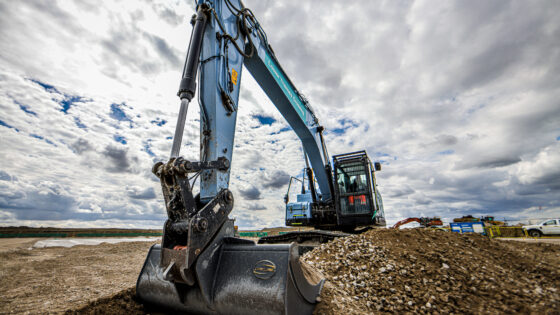
First reported on New Civil Engineer
30 Second Briefing
Lower Thames Crossing has ordered a 16.4m-diameter Herrenknecht TBM, the largest ever used in Europe, to drive twin 4.2km tunnels under the Thames from 2028 as part of the £11bn scheme. Early works include complex ground investigation and utility diversions in soft alluvium and Chalk, with strict limits on spoil disposal and construction emissions to meet “UK’s greenest road” targets. Key design choices include cut-and-cover approaches, low-carbon concrete and extensive off-site fabrication to reduce on-site plant hours and traffic disruption.
Technical Brief
- Early works package includes extensive riverbed and foreshore investigations to characterise alluvium–Chalk transition behaviour.
- Ground investigation uses closely spaced boreholes and CPTs on both banks to refine settlement predictions.
- Spoil logistics are being planned around limited local landfill capacity and strict HGV movement caps.
- Off-site fabrication strategy requires large laydown and preassembly areas remote from constrained riverfront sites.
- Carbon targets are driving selection of lower-clinker binders and optimised reinforcement ratios in permanent works.
Our Take
Herrenknecht’s 16.4m TBM for the Lower Thames Crossing will significantly upsize its recent UK Thames work, such as the 4m‑internal‑diameter Grain to Tilbury electricity cable tunnel, suggesting National Highways is leaning on a supplier with very current local ground and logistics experience.
The 2028 TBM delivery date means design and supply will overlap with Herrenknecht’s ongoing large‑diameter Mixshield deployments in places like Panama Metro Line 3, so lessons from high‑pressure, long undercrossings are likely to feed directly into risk allocation and contingency planning for the UK’s ‘greenest road’ ambitions.
Prepared by collating external sources, AI-assisted tools, and Geomechanics.io’s proprietary mining database, then reviewed for technical accuracy & edited by our geotechnical team.
Related Articles


Related Industries & Products
Construction
Quality control software for construction companies with material testing, batch tracking, and compliance management.
Tunnelling
Specialised solutions for tunnelling projects including grout mix design, hydrogeological analysis, and quality control.
QCDB-io
Comprehensive quality control database for manufacturing, tunnelling, and civil construction with UCS testing, PSD analysis, and grout mix design management.