Lower Thames Crossing £60M OCIP: risk allocation insights for project teams
Reviewed by Tom Sullivan
First reported on New Civil Engineer
30 Second Briefing
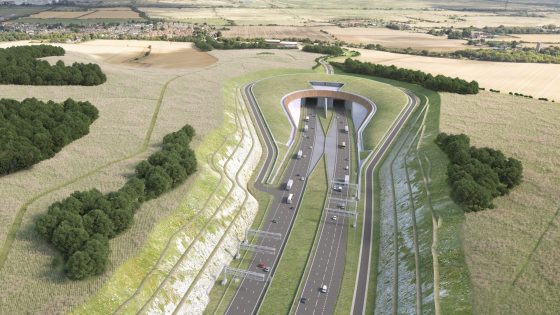
National Highways has begun procurement of an estimated £60M owner controlled insurance programme (OCIP) for construction of the Lower Thames Crossing, the proposed new road tunnel under the Thames linking Kent and Essex. Centralising construction all-risks and third-party liability cover under an OCIP is intended to standardise risk allocation across multiple main works contracts on the multi-billion-pound scheme. Contractors will need to align their own project insurance strategies, particularly for tunnelling, deep foundations and major earthworks, with the OCIP’s scope and exclusions.
Technical Brief
- OCIP value is estimated at £60M solely for construction-phase insurance placement.
- National Highways is the contracting authority procuring and administering the consolidated insurance package.
- Cover will sit alongside multiple main works contracts on the Lower Thames Crossing programme.
- Centralised placement typically improves bargaining power on high-risk tunnelling and deep-foundation works.
- Contractors must segregate insurable construction risks from retained design and professional indemnity exposures.
- Geotechnical and tunnelling method statements will need to reflect OCIP deductibles and notification protocols.
Our Take
Recent pieces involving National Highways in our database – from the Cockcrow Bridge green bridge scheme (4 June 2026) to the portfolio‑wide VRS barrier upgrades with Amey (24 June 2026) – show the agency bundling specialist packages at scale, so an OCIP for LTC is likely to be structured to accommodate multiple major works contracts and interfaces rather than a single EPC arrangement.
With 890 Infrastructure stories and over 2,300 tag‑matched project and contract items in our database, National Highways appears unusually prominent among UK clients, suggesting that how it structures this LTC insurance procurement could become a reference model for risk allocation on other large UK road schemes over the next programme cycle.
Prepared by collating external sources, AI-assisted tools, and Geomechanics.io’s proprietary mining database, then reviewed for technical accuracy & edited by our geotechnical team.
Related Articles


Related Industries & Products
Construction
Quality control software for construction companies with material testing, batch tracking, and compliance management.
Tunnelling
Specialised solutions for tunnelling projects including grout mix design, hydrogeological analysis, and quality control.
QCDB-io
Comprehensive quality control database for manufacturing, tunnelling, and civil construction with UCS testing, PSD analysis, and grout mix design management.