London Stadium 30m roof survey: inspection and maintenance notes for engineers
Reviewed by Joe Ashwell
First reported on New Civil Engineer
30 Second Briefing
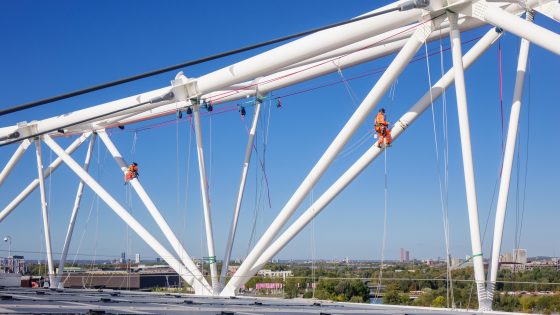
Rope-access-trained inspectors are surveying the 30m-high cable-supported roof of London Stadium at Queen Elizabeth Olympic Park, using industrial abseil techniques to reach truss nodes, tension ring connections and cladding interfaces without full scaffold. The work focuses on close visual inspection of steelwork, fixings and membrane panels, checking for corrosion, fatigue cracking and water ingress paths that could affect long-span structural performance. Findings will inform targeted maintenance and any future strengthening or replacement of roof elements under live-event loading.
Technical Brief
- Similar large-span stadiums can reduce scaffold risk and cost by adopting rope-access-based inspection regimes.
Our Take
Within our 812 Infrastructure stories, UK venues like London Stadium and assets at Queen Elizabeth Olympic Park appear frequently in safety-tagged pieces, signalling that legacy Olympic structures are now treated as long-term inspection and maintenance liabilities rather than one-off showcase builds.
A 30 m roof height pushes inspections into a regime where UK contractors typically rely on rope access, MEWPs or drone-based surveys; in our database, similar-height stadia and arena roofs are often where clients begin to formalise asset-management plans with quantified fall-risk controls and scheduled structural health checks.
New Civil Engineer’s role in industry initiatives such as the British Construction & Infrastructure Awards 2026 suggests that lessons from complex roof surveys at London Stadium are likely to feed back into best-practice case studies and award criteria around safe access design and inspection planning.
Prepared by collating external sources, AI-assisted tools, and Geomechanics.io’s proprietary mining database, then reviewed for technical accuracy & edited by our geotechnical team.


