Lighthouse: making infrastructure work for everybody – design notes for engineers
Reviewed by Tom Sullivan
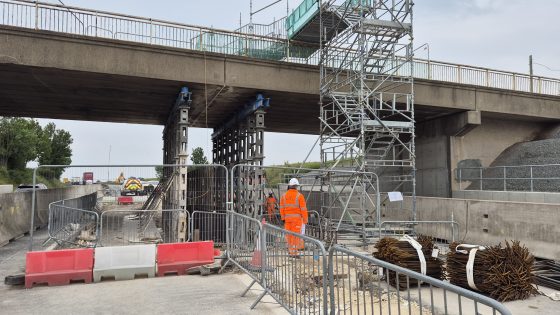
First reported on New Civil Engineer
30 Second Briefing
Infrastructure’s role in daily life is framed as extending beyond transport, digital networks and utilities to how projects distribute benefits and burdens across different communities. The piece calls for schemes to be planned and appraised not only on capacity and cost but on who gains access to reliable public transport, high‑speed digital connectivity and resilient water and energy services. For engineers, this signals stronger emphasis on inclusive design criteria, user segmentation and social impact metrics alongside traditional performance and safety standards.
Technical Brief
- Design briefs are pushed to specify minimum service levels by user group, not just network-wide averages.
- Appraisal frameworks are urged to weight distributional impacts alongside traditional economic metrics.
- Procurement strategies are encouraged to embed local labour, training and SME participation targets as hard evaluation criteria.
- Asset performance dashboards are proposed to disaggregate outage, latency and crowding data by postcode or demographic segment.
- Risk registers are expected to include explicit entries for inequitable access, with mitigation actions costed and scheduled.
- For geotechnical and civil works, construction staging is challenged to minimise temporary severance of low-mobility communities.
Our Take
New Civil Engineer’s recent focus on early-career innovation challenges and awards suggests the publisher is positioning itself as a convenor for more inclusive infrastructure practice, not just a news outlet.
The repeated pairing of New Civil Engineer with clients like Heathrow Airport and bodies such as the Adept National Bridges Group indicates that debates about ‘infrastructure for everybody’ are increasingly being channelled through practitioner-facing competitions and webinars rather than purely policy forums.
Prepared by collating external sources, AI-assisted tools, and Geomechanics.io’s proprietary mining database, then reviewed for technical accuracy & edited by our geotechnical team.
Related Articles


Related Industries & Products
Construction
Quality control software for construction companies with material testing, batch tracking, and compliance management.
Mining
Geotechnical software solutions for mining operations including CMRR analysis, hydrogeological testing, and data management.
QCDB-io
Comprehensive quality control database for manufacturing, tunnelling, and civil construction with UCS testing, PSD analysis, and grout mix design management.