Geomechanics.io

  • Free Tools
Sign UpLog In
Built byBoxcut Studio

Geomechanics.io

Geomechanics, Streamlined.

© 2026 Geomechanics.io. All rights reserved.

Geomechanics.io

CMRR-ioGEODB-ioHYDROGEO-ioQCDB-ioFree Tools & CalculatorsBlogLatest Industry News

Industries

MiningConstructionTunnelling

Company

Terms of UsePrivacy PolicyLinkedIn
    Projects

    Li-FT’s high-grade Adina cuts and Renard option: project economics for mine planners

    November 18, 2026|

    Reviewed by Tom Sullivan

    Li-FT’s high-grade Adina cuts and Renard option: project economics for mine planners

    First reported on MINING.com

    30 Second Briefing

    Li-FT Power has cut 45 metres at 2.71% Li₂O from 164 metres downhole in hole ALP0007 at the Galinée zone of its Adina project in Quebec, with additional intercepts of 25 metres at 2.71% Li₂O and 12 metres at 3.14% Li₂O from 185 metres in holes ALP0016 and ALP0014. The drilling will feed into a resource update and preliminary economic assessment in early 2027, building on Adina’s current 60.5 Mt indicated at 1.14% Li₂O and 15.9 Mt inferred at 1.17% Li₂O. Li-FT is evaluating processing Adina’s spodumene ore via the former Renard diamond mine, 60 km south, under a US$8.4 million option that carries about $18 million per year in care-and-maintenance costs.

    Technical Brief

    • Galinée, Main and Footwall zones define a ~350 m-wide, 2.5 km-long mineralised corridor.
    • All reported Galinée intercepts are downhole lengths; true thicknesses remain unconstrained at this stage.
    • Li-FT owns 100% of Adina and 75% of Galinée, with SOQUEM retaining a 25% interest.
    • Current Adina resource (effective 7 May 2026) totals ~876,000 tonnes contained Li₂O across indicated and inferred.
    • The Renard option cost $12 million (US$8.4 million) and can be exercised for $1 by June 2028.
    • Care-and-maintenance at Renard during the option period is estimated at ~$18 million per year, already pre-funded for year one.
    • Conversion of Renard to a lithium concentrator still requires full technical, economic, environmental and social assessments.
    • Existing Renard haul road links towards rail at Chibougamau (~400 km south), but a new Adina–Renard connector road is still required.
    • On the corporate side, Li-FT’s market capitalisation is about $105 million, with a 52-week share price range of $1.09–$9.17.

    Our Take

    Li-FT Power’s consolidation of Adina and the 75% Galinée interest, flagged in our 2025-12-15 coverage of its Winsome Resources deal, positions this Quebec lithium hub as one of the more advanced hard‑rock lithium districts in our database outside the Abitibi‑centred gold belt.

    The option over the Renard diamond operation, with its existing northern Quebec infrastructure and 400 km haul to rail at Chibougamau, suggests Li-FT is already thinking through a brownfield logistics solution that could materially lower capex versus a greenfield build for Adina ore transport.

    Geotechnical Software for Modern Teams

    Centralise site data, logs, and lab results with GEODB-io, CMRR-io, and HYDROGEO-io.

    Cancel at any time.

    • Save and export unlimited calculations
    • Advanced data visualisation
    • Generate professional PDF reports
    • Cloud storage for all your projects

    Prepared by collating external sources, AI-assisted tools, and Geomechanics.io’s proprietary mining database, then reviewed for technical accuracy & edited by our geotechnical team.

    Related Articles
    PNG’s next mineral wave panel: access, slopes and capex signals for mine planners
    Mining
    about 5 hours ago

    PNG’s next mineral wave panel: access, slopes and capex signals for mine planners

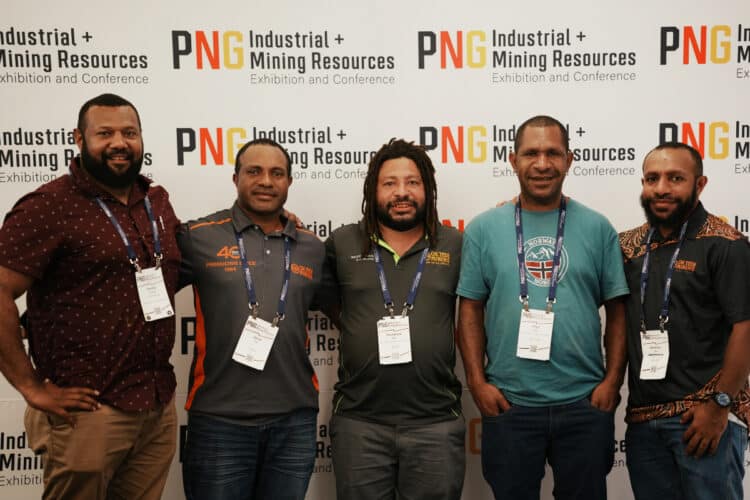
    The PNG Mining and Industrial Exhibition and Conference has confirmed a panel titled “Unlocking PNG’s Next Mineral Wave” to examine how exploration leaders are identifying and funding new mineral opportunities across Papua New Guinea’s complex terrain. Panellists will focus on early‑stage project financing, exploration targeting in remote high‑rainfall provinces, and the permitting environment for copper–gold and critical mineral prospects. For geotechnical and mine planners, the discussion signals growing attention on frontier deposits where access, infrastructure corridors and slope stability will be major cost and schedule drivers.

    Meeka Murchison gold grade boost: ore sorting implications for mine planners
    Mining
    about 5 hours ago

    Meeka Murchison gold grade boost: ore sorting implications for mine planners

    Meeka Metals has recorded a five-fold upgrade in gold grade at its Murchison project in Western Australia, with a Steinert multi-sensor ore sorter lifting low-grade underground development ore from 0.86g/t to a 4.39g/t gold product during initial commissioning. The sorter is treating underground development material rather than stoping ore, indicating potential to convert previously marginal headings into viable feed. For mine planners and process engineers, this points to scope for tighter cut-off grades, reduced haulage of waste, and more selective underground development in similar narrow-vein or low-grade settings.

    From tailings to opportunity: microbial reprocessing and closure risks for engineers
    Mining
    about 5 hours ago

    From tailings to opportunity: microbial reprocessing and closure risks for engineers

    Australian researchers are investigating mine tailings as a secondary resource, using microbes identified by Monash University in historic South Australian waste to mobilise residual metals and alter mineralogy. The work examines how microbial consortia can leach critical and base metals from decades-old tailings while potentially improving geochemical stability relevant to long-term rehabilitation. For geotechnical and closure planning, this raises questions about tailings storage design, long-term water and oxygen ingress, and whether “reactivated” tailings chemistries need new monitoring and risk criteria.

    Related Industries & Products

    Mining

    Geotechnical software solutions for mining operations including CMRR analysis, hydrogeological testing, and data management.

    Construction

    Quality control software for construction companies with material testing, batch tracking, and compliance management.

    CMRR-io

    Streamline coal mine roof stability assessments with our cloud-based CMRR software featuring automated calculations, multi-scenario analysis, and collaborative workflows.

    HYDROGEO-io

    Comprehensive hydrogeological testing platform for managing, analysing, and reporting on packer tests, lugeon values, and hydraulic conductivity assessments.

    GEODB-io

    Centralised geotechnical data management solution for storing, accessing, and analysing all your site investigation and material testing data.

    AllGeotechnicalInfrastructureHazardsEnvironmental