Geomechanics.io

  • Free Tools
Sign UpLog In
Built byBoxcut Studio

Geomechanics.io

Geomechanics, Streamlined.

© 2026 Geomechanics.io. All rights reserved.

Geomechanics.io

CMRR-ioGEODB-ioHYDROGEO-ioQCDB-ioFree Tools & CalculatorsBlogLatest Industry News

Industries

MiningConstructionTunnelling

Company

Terms of UsePrivacy PolicyLinkedIn
    Research
    Sustainability

    From tailings to opportunity: microbial reprocessing and closure risks for engineers

    November 18, 2026|

    Reviewed by Joe Ashwell

    From tailings to opportunity: microbial reprocessing and closure risks for engineers

    First reported on Australian Mining

    30 Second Briefing

    Australian researchers are investigating mine tailings as a secondary resource, using microbes identified by Monash University in historic South Australian waste to mobilise residual metals and alter mineralogy. The work examines how microbial consortia can leach critical and base metals from decades-old tailings while potentially improving geochemical stability relevant to long-term rehabilitation. For geotechnical and closure planning, this raises questions about tailings storage design, long-term water and oxygen ingress, and whether “reactivated” tailings chemistries need new monitoring and risk criteria.

    Technical Brief

    • Monash University work focuses on naturally occurring microbial consortia colonising decades-old South Australian tailings deposits.
    • Researchers are characterising microbial metabolisms that dissolve residual sulphide and oxide minerals to release metals.
    • Laboratory experiments use controlled redox, pH and temperature conditions to quantify microbially mediated leach rates.
    • Mineralogical changes in treated tailings are being tracked using microscopy and bulk geochemical assays.
    • Data sources include historic tailings from multiple legacy mine sites with differing ore types and processing histories.
    • Potential applications include in-situ or ex-situ bioleaching circuits integrated with existing tailings storage facilities.
    • Altered mineralogy and porosity from microbial action could change shear strength, consolidation behaviour and seepage regimes.

    Our Take

    Monash University’s work on tailings in South Australia sits alongside its Critical Minerals Initiative, signalling a research push to treat mine waste as a domestic source of critical minerals rather than just a liability.

    Related Monash research on hydrometallurgical recovery from spent lithium‑ion batteries suggests that similar low‑impact leach chemistries could be adapted for Australian tailings reprocessing, which would matter for sites facing tight water and reagent constraints.

    Geotechnical Software for Modern Teams

    Centralise site data, logs, and lab results with GEODB-io, CMRR-io, and HYDROGEO-io.

    Cancel at any time.

    • Save and export unlimited calculations
    • Advanced data visualisation
    • Generate professional PDF reports
    • Cloud storage for all your projects

    Prepared by collating external sources, AI-assisted tools, and Geomechanics.io’s proprietary mining database, then reviewed for technical accuracy & edited by our geotechnical team.

    Related Articles
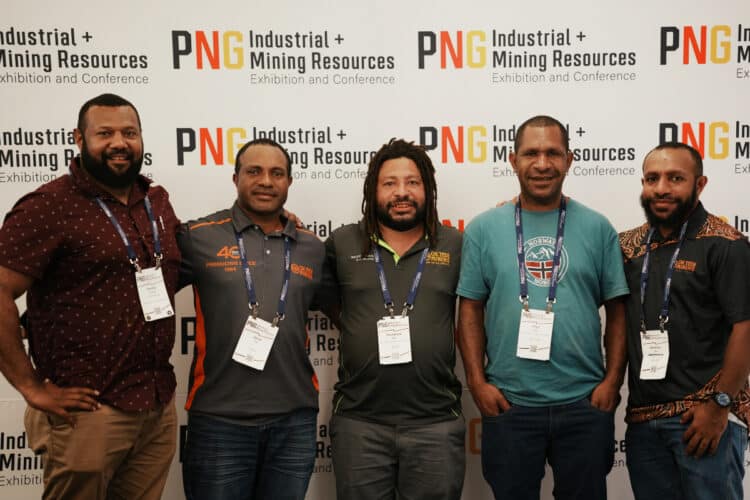
    PNG’s next mineral wave panel: access, slopes and capex signals for mine planners
    Mining
    about 3 hours ago

    PNG’s next mineral wave panel: access, slopes and capex signals for mine planners

    The PNG Mining and Industrial Exhibition and Conference has confirmed a panel titled “Unlocking PNG’s Next Mineral Wave” to examine how exploration leaders are identifying and funding new mineral opportunities across Papua New Guinea’s complex terrain. Panellists will focus on early‑stage project financing, exploration targeting in remote high‑rainfall provinces, and the permitting environment for copper–gold and critical mineral prospects. For geotechnical and mine planners, the discussion signals growing attention on frontier deposits where access, infrastructure corridors and slope stability will be major cost and schedule drivers.

    Meeka Murchison gold grade boost: ore sorting implications for mine planners
    Mining
    about 3 hours ago

    Meeka Murchison gold grade boost: ore sorting implications for mine planners

    Meeka Metals has recorded a five-fold upgrade in gold grade at its Murchison project in Western Australia, with a Steinert multi-sensor ore sorter lifting low-grade underground development ore from 0.86g/t to a 4.39g/t gold product during initial commissioning. The sorter is treating underground development material rather than stoping ore, indicating potential to convert previously marginal headings into viable feed. For mine planners and process engineers, this points to scope for tighter cut-off grades, reduced haulage of waste, and more selective underground development in similar narrow-vein or low-grade settings.

    Mines in the Vines at Asia-Pacific Summit: funding takeaways for project teams
    Mining
    about 3 hours ago

    Mines in the Vines at Asia-Pacific Summit: funding takeaways for project teams

    Mines in the Vines has been confirmed as an event partner for the 2027 Asia-Pacific Mining Investment Summit, with its first South Australian Investor Evening scheduled for 29 September. The format brings firm investors face to face with emerging and established mining companies and their leadership teams, targeting early-stage and growth capital for projects across commodities. For geotechnical and mining professionals, the event signals a concentrated venue to pitch technical project pipelines and de-risk funding through direct engagement with capital providers.

    Related Industries & Products

    Mining

    Geotechnical software solutions for mining operations including CMRR analysis, hydrogeological testing, and data management.

    CMRR-io

    Streamline coal mine roof stability assessments with our cloud-based CMRR software featuring automated calculations, multi-scenario analysis, and collaborative workflows.

    HYDROGEO-io

    Comprehensive hydrogeological testing platform for managing, analysing, and reporting on packer tests, lugeon values, and hydraulic conductivity assessments.

    GEODB-io

    Centralised geotechnical data management solution for storing, accessing, and analysing all your site investigation and material testing data.

    AllGeotechnicalInfrastructureHazardsEnvironmental