Last Energy’s Welsh micro reactors: civil and geotechnical design notes
Reviewed by Tom Sullivan
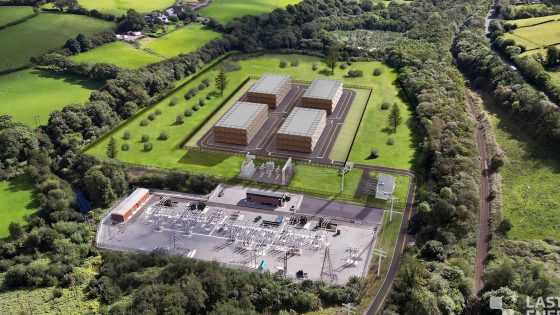
First reported on New Civil Engineer
30 Second Briefing
New images on the Welsh Government’s planning portal show Last Energy’s proposal for four 20MW pressurised water micro modular reactors at the Llynfi Clean Energy Project in South Wales, each housed in a compact, factory-fabricated unit. The visualisations indicate below-grade reactor vaults, on-site switchyard and cooling infrastructure, and modular transport routes suitable for delivery by road. For civil and geotechnical teams, the scheme points to concentrated nuclear loads on a relatively small footprint, tight construction sequencing, and significant below-ground works in a former coal valley setting.
Technical Brief
- Visuals show a compact, repeated nuclear island layout, enabling standardised civil works across four units.
- Renderings indicate segregated auxiliary buildings per unit, simplifying fire zoning and safety case definition.
- Cooling structures appear air-cooled or hybrid, implying reduced raw water abstraction from the former coal valley.
- On-site switchyard is positioned adjacent to units, minimising HV cable runs and associated ducting/trenching.
- Access roads and laydown areas are sized for abnormal loads, constraining geometry of earthworks and retaining structures.
- Images suggest perimeter security fencing and controlled access points, influencing drainage breaks and earth bund continuity.
- Visual massing indicates relatively low building elevations, reducing visual impact but increasing excavation volumes for shielding.
Our Take
The Llynfi Clean Energy Project sits alongside a wave of Welsh Government infrastructure activity in our database, from the £140M Cardiff Central station upgrade to record flood-defence budgets, signalling that nuclear-scale decisions will be judged against a crowded capital and resilience pipeline.
A 20 MW micro modular reactor is small enough to integrate with local district energy or industrial loads in South Wales, which could align with the government’s stated preference for retrofit and optimisation of existing built assets over large new-build schemes in its Built Environment Mission Statement.
Within our 878 Infrastructure stories, nuclear or micro‑reactor schemes in the United Kingdom are still rare compared with transport and water pieces, so Last Energy’s Welsh project is likely to become a reference case for how planning, public engagement and grid-connection are handled for future small-scale nuclear in the region.
Prepared by collating external sources, AI-assisted tools, and Geomechanics.io’s proprietary mining database, then reviewed for technical accuracy & edited by our geotechnical team.
Related Articles


Related Industries & Products
Construction
Quality control software for construction companies with material testing, batch tracking, and compliance management.
Mining
Geotechnical software solutions for mining operations including CMRR analysis, hydrogeological testing, and data management.
QCDB-io
Comprehensive quality control database for manufacturing, tunnelling, and civil construction with UCS testing, PSD analysis, and grout mix design management.