Kinross $1.5B Lobo-Marte gold project: design, capex and schedule notes for engineers
Reviewed by Tom Sullivan
First reported on MINING.com
30 Second Briefing
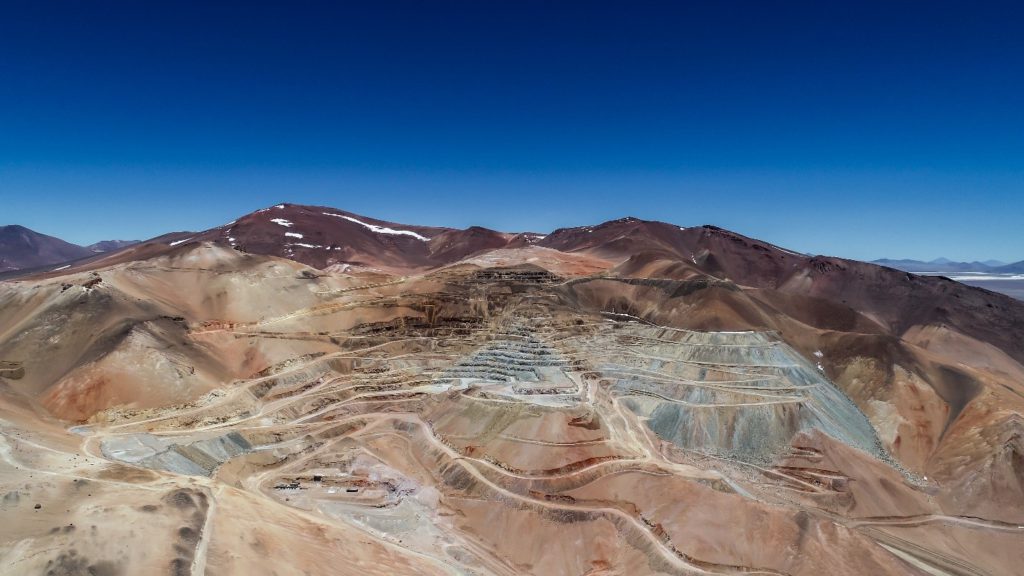
Kinross Gold has lodged its $1.5 billion Lobo-Marte project with Chile’s Environmental Impact Assessment System, proposing sequential open-pit mining of the Marte and Lobo deposits in the Atacama region over a 16-year life. The plan centres on a static, six-phase heap leach pad and plant processing about 35,000 tonnes per day, supplied by freshwater piped from existing Mantos de Oro wells near Nevado Tres Cruces National Park and power from a 220 kV line. A 3.5-year build is envisaged, with production of roughly 4.7 million oz at an AISC of $680/oz, starting after La Coipa closes 50 km away.
Technical Brief
- Static heap leach pad is planned to grow through six discrete expansion phases over the mine life.
- Fresh water will be piped from existing Mantos de Oro wells within the Nevado Tres Cruces exclusion zone.
- Power supply is to be secured via a dedicated 220 kV transmission line connection.
- Environmental Impact Assessment submission to SEIA formally initiates Chile’s multi-stage environmental and social permitting process.
- November 2021 feasibility study embeds environmental and community constraints directly into mine and plant layout.
- Chile’s mining minister explicitly links project viability to a “robust” but non-obstructive permitting and regulatory framework.
- Lobo-Marte joins recent large-scale Chilean permit applications by BHP, Freeport-McMoRan and Albemarle, signalling a clustered project pipeline.
Our Take
Kinross Gold’s push on Lobo-Marte in Chile sits alongside its C$1.4 billion Great Bear project in Ontario, which our coverage shows has been moved into a fast-track approvals regime, signalling the company is trying to balance a slower, complex Chilean permitting path with quicker-turnaround North American growth.
With an estimated all-in sustaining cost of about $680/oz at Lobo-Marte, Kinross is positioning this Atacama project in the lower half of the cost curve among the gold projects in our database, which could help buffer margins against Chile’s higher regulatory and environmental compliance costs.
The planned 220 kV transmission line echoes other recent items in our database where governments are funding high-capacity lines for mining (e.g. Ontario’s Ring of Fire), suggesting that securing grid-scale power is becoming a central design and permitting issue for large gold and copper projects rather than an afterthought.
Prepared by collating external sources, AI-assisted tools, and Geomechanics.io’s proprietary mining database, then reviewed for technical accuracy & edited by our geotechnical team.
Related Articles
Related Industries & Products
Mining
Geotechnical software solutions for mining operations including CMRR analysis, hydrogeological testing, and data management.
CMRR-io
Streamline coal mine roof stability assessments with our cloud-based CMRR software featuring automated calculations, multi-scenario analysis, and collaborative workflows.
HYDROGEO-io
Comprehensive hydrogeological testing platform for managing, analysing, and reporting on packer tests, lugeon values, and hydraulic conductivity assessments.
GEODB-io
Centralised geotechnical data management solution for storing, accessing, and analysing all your site investigation and material testing data.