Killi Resources doubles Lodestone rigs: drilling strategy and scale notes for mine planners
Reviewed by Tom Sullivan
First reported on Australian Mining
30 Second Briefing
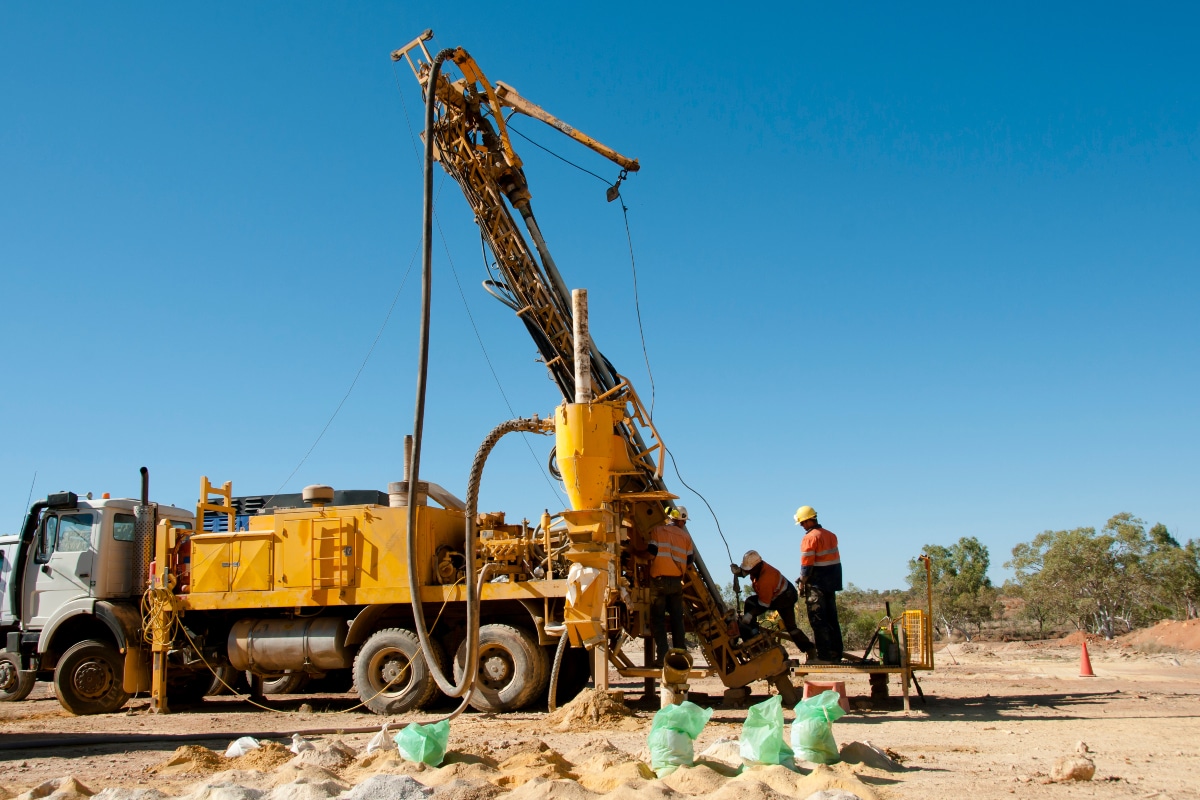
Killi Resources has deployed a second rig at its Lodestone iron ore project in Western Australia’s Mid-West, adding a reverse-circulation unit to the existing diamond core rig to fast-track a 20,000m drilling programme. The campaign is aimed at defining higher-grade, low-impurity iron ore suitable for green steel feedstock, with RC drilling focused on rapid coverage of near-surface mineralisation and core drilling targeting structural and metallurgical detail. Results will guide resource modelling, geometallurgical characterisation and potential project scale for future low-carbon steel supply chains.
Technical Brief
- Reverse-circulation rig selection indicates focus on dry sampling in semi-arid Mid-West conditions, minimising water logistics.
- Diamond core rig on site enables oriented core collection for structural mapping of iron ore bodies.
- Dual-rig configuration reduces rig move downtime and allows parallel testing of multiple target zones.
- RC chips will likely support rapid downhole geophysics (e.g. gamma, density) to refine stratigraphic controls.
- Core drilling provides material for detailed comminution and beneficiation testwork essential for low-impurity product design.
- Combining RC and core datasets improves geostatistical confidence for variography and eventual resource classification.
- Approach reflects a wider shift in juniors towards early geometallurgical characterisation for green steel feed qualification.
Our Take
Junior explorers in Australia, like Killi Resources, are currently lobbying for extended CGT concessions according to the 14 September 2026 policy coverage, so accelerated drilling at Lodestone with two rigs could be timed to strengthen the company’s position if any tax relief for early‑stage iron ore projects is adopted.
With Australian Mining heavily featuring digital and automation themes in recent months, Mid-West iron ore projects such as Lodestone that are framed around ‘green steel’ are likely to face expectations to integrate low‑emission haulage, real‑time monitoring and other technology-driven controls from the outset rather than retrofitting later.
Prepared by collating external sources, AI-assisted tools, and Geomechanics.io’s proprietary mining database, then reviewed for technical accuracy & edited by our geotechnical team.
Related Articles
Related Industries & Products
Mining
Geotechnical software solutions for mining operations including CMRR analysis, hydrogeological testing, and data management.
CMRR-io
Streamline coal mine roof stability assessments with our cloud-based CMRR software featuring automated calculations, multi-scenario analysis, and collaborative workflows.
HYDROGEO-io
Comprehensive hydrogeological testing platform for managing, analysing, and reporting on packer tests, lugeon values, and hydraulic conductivity assessments.
GEODB-io
Centralised geotechnical data management solution for storing, accessing, and analysing all your site investigation and material testing data.