JCB Hydromax FIA speed record: hydrogen ICE lessons for plant engineers
Reviewed by Tom Sullivan
First reported on The Construction Index
30 Second Briefing
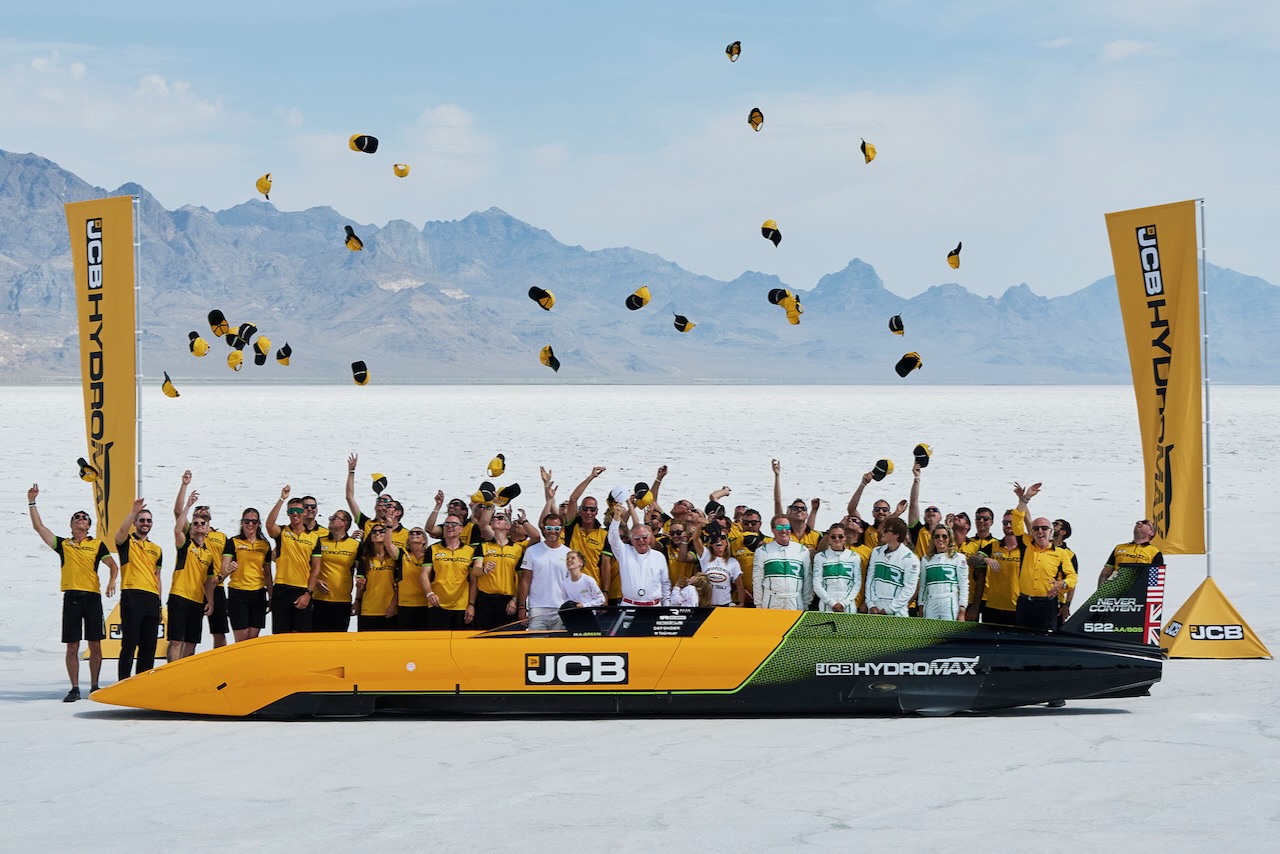
JCB’s Hydromax hydrogen car has set a new FIA world land speed record on the Bonneville Salt Flats, averaging 406.320 mph over two runs (400.623 mph and 412.135 mph) and eclipsing the previous hydrogen internal combustion mark of 185.5 mph set by BMW’s H2R in 2004. The 32‑foot, twin‑engined vehicle uses two production‑based JCB hydrogen digger engines from Foston, Derbyshire, delivering a combined 1,600 bhp and also surpassing the 350.092 mph diesel record of JCB Dieselmax from 2006. For plant and civil contractors, the run provides a high‑load, high‑speed proof of concept for hydrogen ICE powertrains already deployed in JCB construction equipment.
Technical Brief
- FIA Category A, Group XIV, Class 7 flying start record targeted, requiring two directional runs within one hour.
- Hydromax’s twin hydrogen ICEs are standard JCB production-based digger units from Foston, not bespoke race engines.
- Combined output is quoted at 1,600 bhp, providing a high specific power benchmark for future heavy plant calibration.
- Record attempt took place on the Bonneville Salt Flats, using the same venue as JCB’s 2006 Dieselmax programme.
- Vehicle length is 32 ft, implying a long, slender stability-focused chassis for high-speed straight-line running.
- Wing Commander Andy Green OBE, also driver for Dieselmax in 2006, provided continuity in driver input and feedback.
- JCB’s hydrogen engine project was initiated under Chairman Anthony Bamford, with the record concept defined in early 2023.
- Engineering Director Ryan Ballard’s team adapted the hydrogen digger engine for extreme duty cycles while retaining production architecture.
- FIA President Mohammed Ben Sulayem framed the run as a hydrogen combustion reference point for future sustainable mobility regulations.
Our Take
JCB’s Hydromax work at the Bonneville Salt Flats sits alongside several recent items in our database on JCB’s conventional plant sales and telematics upgrades, signalling that the company is using high‑profile hydrogen projects to complement, rather than replace, its diesel‑based core fleet for construction and quarrying.
With hydrogen and diesel both flagged as keywords across 101 matched pieces, this record run gives JCB a technical showcase that can feed directly into its production-based hydrogen digger engines, a route that lets contractors trial hydrogen combustion without abandoning familiar ICE maintenance regimes.
The previous BMW H2R benchmark and JCB’s own Dieselmax record show that the FIA and Southern California Timing Association are recurring validation channels for alternative-fuel ICE technology; for JCB, that external certification can be leveraged when pitching hydrogen-powered equipment to risk-averse infrastructure and mining clients in the UK and United States.
Prepared by collating external sources, AI-assisted tools, and Geomechanics.io’s proprietary mining database, then reviewed for technical accuracy & edited by our geotechnical team.
Related Articles


Related Industries & Products
Mining
Geotechnical software solutions for mining operations including CMRR analysis, hydrogeological testing, and data management.
Construction
Quality control software for construction companies with material testing, batch tracking, and compliance management.
CMRR-io
Streamline coal mine roof stability assessments with our cloud-based CMRR software featuring automated calculations, multi-scenario analysis, and collaborative workflows.
HYDROGEO-io
Comprehensive hydrogeological testing platform for managing, analysing, and reporting on packer tests, lugeon values, and hydraulic conductivity assessments.
GEODB-io
Centralised geotechnical data management solution for storing, accessing, and analysing all your site investigation and material testing data.