IWT’s self-healing underground network: safety and design notes for mine engineers
Reviewed by Tom Sullivan
First reported on Australian Mining
30 Second Briefing
Innovative Wireless Technologies’ SENTINEL underground network uses a self-healing, mesh-based architecture to maintain voice, data and personnel tracking when mine infrastructure is damaged or power is lost. The Mine Rescue System integrates directly with existing SENTINEL nodes to extend communications and location coverage into previously uninstrumented headings during emergencies, without new cabling. For geotechnical and operations teams, this supports real-time situational awareness during roof falls, explosions or inundations, with redundant wireless paths reducing single-point failures common in conventional leaky-feeder systems.
Technical Brief
- SENTINEL nodes form a distributed radio mesh, with each node acting as a repeater and router.
- Battery-backed nodes maintain local coverage when mains power or section substations fail.
- System design removes dependence on a single backbone cable, reducing common-mode failure during ground falls.
- Location tracking uses fixed reference nodes and mobile tags, supporting rapid mustering and last-known-position retrieval.
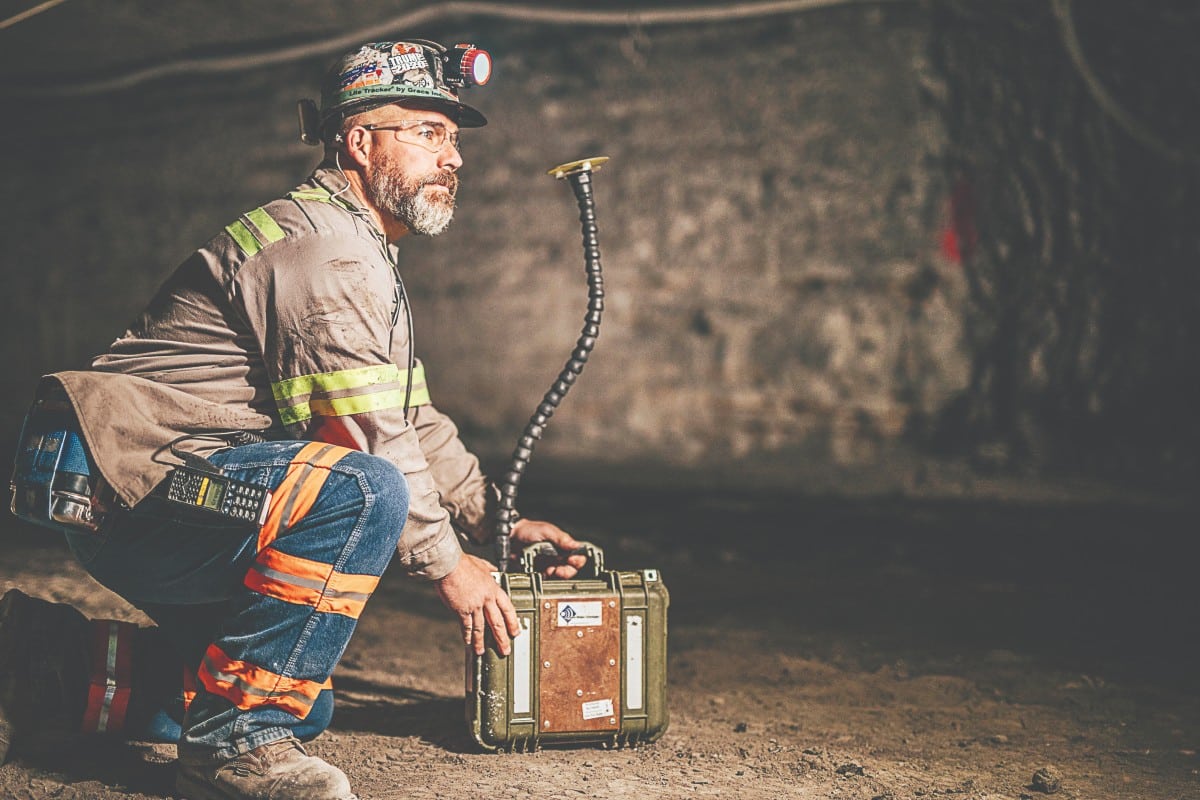
- Portable rescue nodes are man-portable, rapidly clamped to existing ground support or services for quick deployment.
- Voice, text and tracking data share the same wireless infrastructure, simplifying maintenance and fault-finding for safety-critical comms.
- Similar mesh-based systems are increasingly specified in refuge chamber and secondary egress design packages for underground mines.
Our Take
For Australian underground operators, self-healing wireless networks such as those promoted by Innovative Wireless Technologies can materially reduce the single‑point‑of‑failure risk that has been highlighted in several recent safety case studies, especially around post-incident re-entry and tracking.
Because this article sits in the product–safety overlap of our 1278 Mining stories, it signals that OEMs like IWT are increasingly pitching communications hardware not just as productivity tools but as part of the mine’s critical safety infrastructure stack, which may influence how capex is justified internally.
Prepared by collating external sources, AI-assisted tools, and Geomechanics.io’s proprietary mining database, then reviewed for technical accuracy & edited by our geotechnical team.
Related Articles
Related Industries & Products
Mining
Geotechnical software solutions for mining operations including CMRR analysis, hydrogeological testing, and data management.
Construction
Quality control software for construction companies with material testing, batch tracking, and compliance management.
CMRR-io
Streamline coal mine roof stability assessments with our cloud-based CMRR software featuring automated calculations, multi-scenario analysis, and collaborative workflows.
HYDROGEO-io
Comprehensive hydrogeological testing platform for managing, analysing, and reporting on packer tests, lugeon values, and hydraulic conductivity assessments.
GEODB-io
Centralised geotechnical data management solution for storing, accessing, and analysing all your site investigation and material testing data.