Islington canal tunnel scheme: digital structural assessment lessons for engineers
Reviewed by Tom Sullivan
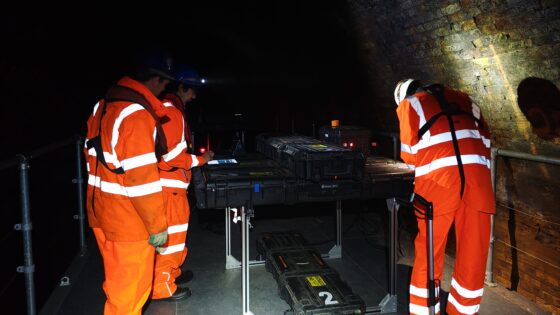
First reported on New Civil Engineer
30 Second Briefing
Structural assessment of the 1920s Islington canal tunnel is using laser scanning, finite element modelling and non-destructive testing to avoid full replacement of its 3 m high brick-lined arch. Engineers combined LiDAR point clouds with detailed masonry material characterisation to refine load paths, quantify remaining capacity and target localised strengthening rather than wholesale relining. The approach is cutting projected intervention costs and programme while providing a repeatable methodology for the Canal & River Trust’s 57 tunnels and roughly 2,000 culverts.
Technical Brief
- Asset age spans more than 250 years, so original design records and construction details are often incomplete.
- Navigation constraints require assessments and any strengthening to be undertaken with minimal closure of the waterway.
- Confined canal geometry severely limits access for conventional scaffold-based inspections and intrusive coring.
- Structural condition must account for long-term water seepage, chemical attack and repeated boat impact loading.
Our Take
With 57 canal tunnels and assets over 250 years old in the United Kingdom network, any proven structural assessment approach at Islington is likely to be replicable at scale, turning a one-off scheme into a portfolio-level asset management strategy for navigation authorities and local councils.
In our infrastructure coverage, older UK assets tend to struggle with the ‘data handover gap’ highlighted in New Civil Engineer’s BIM and asset management webinar, so digital structural assessment on the canal tunnel could materially improve long-term data quality for future inspections and interventions.
The sustainability tag here aligns with recent New Civil Engineer pieces on retrofit and asset libraries, suggesting that for historic canal structures the emphasis is shifting from major replacement works towards targeted strengthening and monitoring to minimise embodied carbon and disruption.
Prepared by collating external sources, AI-assisted tools, and Geomechanics.io’s proprietary mining database, then reviewed for technical accuracy & edited by our geotechnical team.
Related Articles


Related Industries & Products
Construction
Quality control software for construction companies with material testing, batch tracking, and compliance management.
Mining
Geotechnical software solutions for mining operations including CMRR analysis, hydrogeological testing, and data management.
QCDB-io
Comprehensive quality control database for manufacturing, tunnelling, and civil construction with UCS testing, PSD analysis, and grout mix design management.