Geomechanics.io

  • Free Tools
Sign UpLog In

Geomechanics.io

Geomechanics, Streamlined.

© 2026 Geomechanics.io. All rights reserved.

Geomechanics.io

CMRR-ioGEODB-ioHYDROGEO-ioQCDB-ioFree Tools & CalculatorsBlogLatest Industry News

Industries

MiningConstructionTunnelling

Company

Terms of UsePrivacy PolicyLinkedIn
    Product
    Safety

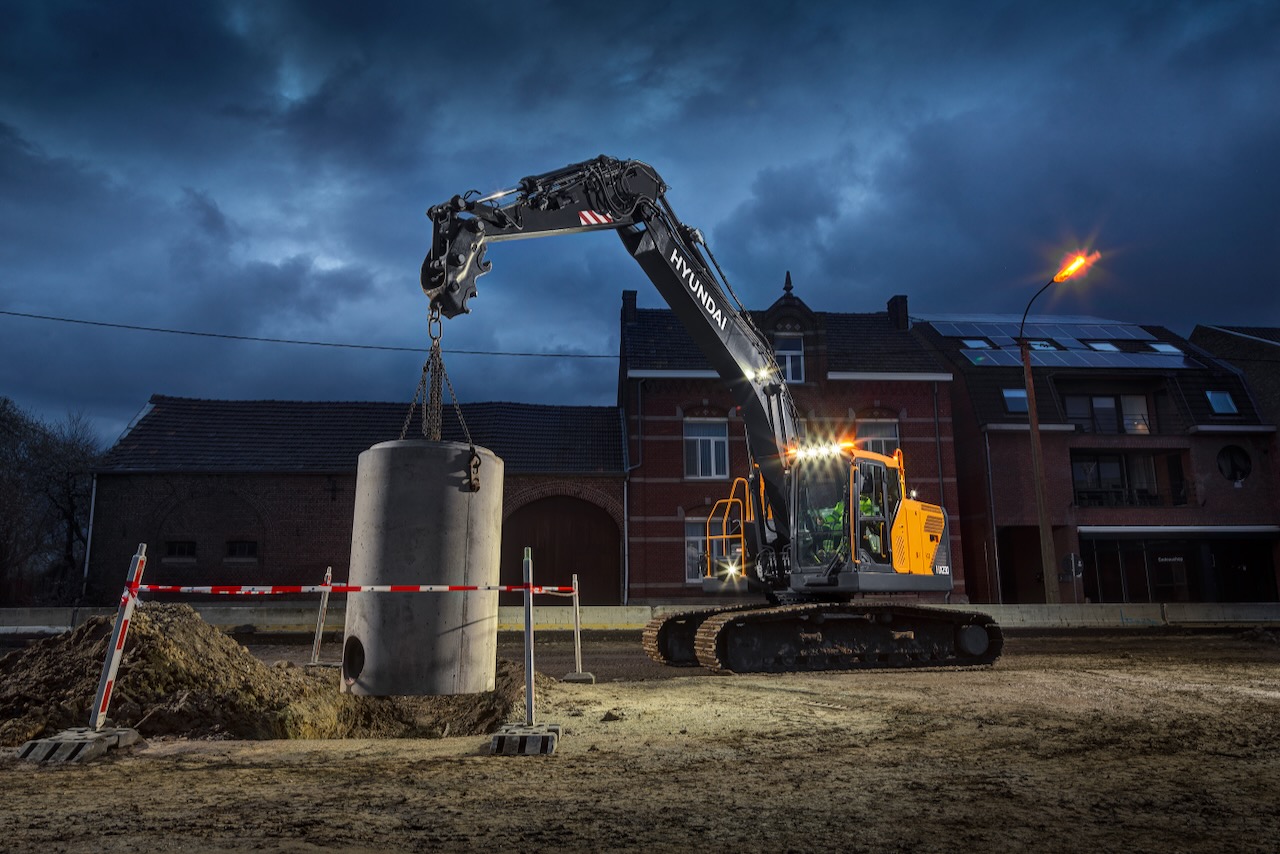
    Hyundai Next Generation excavators: fuel, safety and control insights for site engineers

    April 30, 2026|

    Reviewed by Tom Sullivan

    Hyundai Next Generation excavators: fuel, safety and control insights for site engineers

    First reported on The Construction Index

    30 Second Briefing

    Hyundai has expanded its Next Generation excavator line in Europe with the 23‑tonne HX230, using a twin‑turbo DX05 diesel, full electrohydraulic controls and delivering up to 7% lower fuel use, 30% less AdBlue consumption and 1,000‑hour service intervals. Larger HX260 and HX260N crawler models at around 26 tonnes, plus the compact 1.1‑tonne HX10A Z with a 7.6kW engine and retractable undercarriage, target both heavy and confined-site work. All Next Generation units add the Smart Around View Monitor with six cameras, AI human detection and optional radar object detection.

    Technical Brief

    • Smart Around View Monitor (SAVM) uses six upper-structure cameras to generate a 360° composite view.
    • AI-based human detection within SAVM differentiates people from other obstacles to prioritise collision warnings.
    • Optional radar object detection supplements cameras, improving hazard detection in dust, low light and blind spots.
    • Full electrohydraulic controls allow precise tuning of lever response, reducing unintended movements near personnel or services.
    • HX10A Z’s retractable undercarriage enables access through narrow openings, reducing need for manual excavation in confined spaces.
    • Extended 1,000‑hour service intervals cut technician exposure time around plant and reduce maintenance-related site congestion.
    • Such integrated vision, AI and radar packages are increasingly aligning with contractor zero‑harm policies on urban sites.

    Our Take

    Hyundai’s 23–26‑tonne Next Generation excavators sit squarely in the ‘heavy line’ segment that Willowbrook Plant has recently expanded to cover in eastern England, suggesting UK distribution capacity is already being built out for these models.

    The HX10A Z at around 1.1 tonnes aligns with Hyundai Construction Equipment’s push on compact kit via Tobin Plant’s dealership footprint in seven eastern counties, which should help contractors standardise on one brand from micro to heavy excavators.

    Within our 824 Infrastructure stories, Hyundai appears frequently in dealer network and territory reshuffle pieces, signalling that the 2025 machine launches are being paired with a deliberate strengthening of UK and wider European sales channels rather than just a product refresh in isolation.

    Geotechnical Software for Modern Teams

    Centralise site data, logs, and lab results with GEODB-io, CMRR-io, and HYDROGEO-io.

    No credit card required.

    • Save and export unlimited calculations
    • Advanced data visualisation
    • Generate professional PDF reports
    • Cloud storage for all your projects

    Prepared by collating external sources, AI-assisted tools, and Geomechanics.io’s proprietary mining database, then reviewed for technical accuracy & edited by our geotechnical team.

    Related Articles

    National Grid TBM under the Thames: tunnelling design and risk notes for engineers
    Infrastructure
    in 7 months

    National Grid TBM under the Thames: tunnelling design and risk notes for engineers

    A 271.5‑tonne Herrenknecht Mixshield TBM, Caroline, has started driving a 2.2km electricity cable tunnel with a 4m internal diameter beneath the River Thames in Essex for National Grid’s Grain to Tilbury project, delivered by the Ferrovial BEMO joint venture. The drive will pass through variable Thames estuary ground conditions between 35m‑deep launch and reception shafts of 15m and 12m diameter, with tunnelling continuing into 2026 and overall scheme completion targeted for 2029. The new tunnel will replace the 1969 Thames Cable Tunnel and carry new high‑voltage circuits between Grain and Tilbury substations.

    Panama Canal Mixshield undercrossing: design and tunnelling lessons for engineers
    Infrastructure
    in 7 months

    Panama Canal Mixshield undercrossing: design and tunnelling lessons for engineers

    A 13.46m diameter Herrenknecht Mixshield TBM has broken through into the future Balboa station on Panama Metro Line 3 after completing the first-ever TBM undercrossing of the Panama Canal at depths exceeding 60m below sea level. The 5,600kW, 26,616kNm machine, fitted with an accessible cutterhead and more than 4,500 sensors linked via the Herrenknecht.Connected platform, has achieved peak advance of 150 segment rings (about 300m) per month through mixed sandstone, tuff, breccias and basalt. Around 1.5km of the 4.5km twin-track tunnel remains to final breakthrough.

    Hudson Tunnel funding deadline: schedule and risk takeaways for project teams
    Infrastructure
    in 6 months

    Hudson Tunnel funding deadline: schedule and risk takeaways for project teams

    Federal funding for New York’s US$16bn Hudson Tunnel Project has been frozen, forcing the Gateway Development Commission to suspend works from 6 February after spending over US$1bn and employing about 1,000 site workers. A Manhattan federal judge has issued a temporary restraining order, giving the administration until 5 p.m. on 12 February to restore reimbursements or appeal, while contractors warn that demobilisation, resequencing and remobilisation will add cost and delay. Sites are now in “safe-pause” mode, with dewatering, ground support and environmental monitoring maintained, and assembly of two Herrenknecht TBMs in New Jersey likely to slip beyond the planned spring 2026 launch without funding certainty.

    Related Industries & Products

    Construction

    Quality control software for construction companies with material testing, batch tracking, and compliance management.

    Mining

    Geotechnical software solutions for mining operations including CMRR analysis, hydrogeological testing, and data management.

    QCDB-io

    Comprehensive quality control database for manufacturing, tunnelling, and civil construction with UCS testing, PSD analysis, and grout mix design management.

    AllGeotechnicalInfrastructureHazardsEnvironmental