HS2 tunnels to Euston halfway: settlement control insights for engineers
Reviewed by Tom Sullivan
First reported on New Civil Engineer
30 Second Briefing
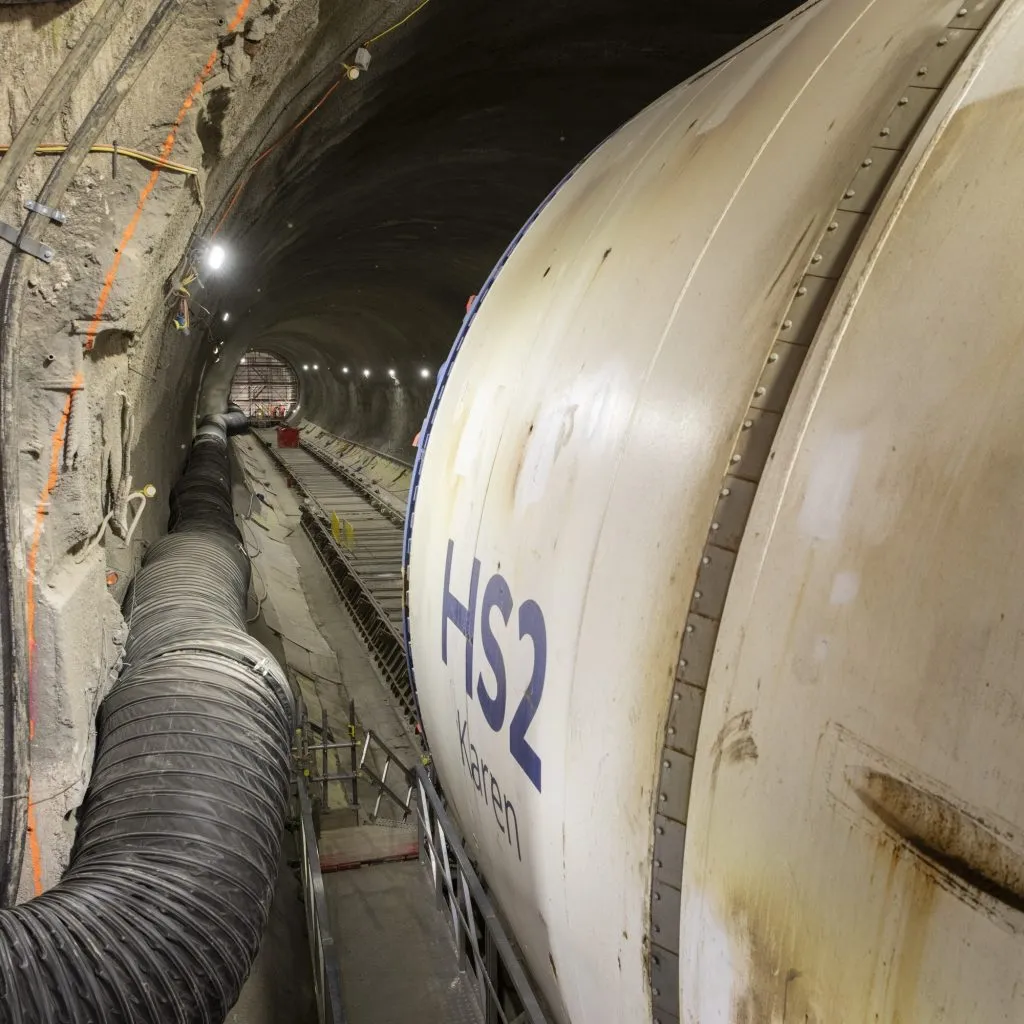
HS2’s twin-bore tunnels into London Euston have passed the halfway point, with the 4.5-mile (about 7.2km) drive by two tunnel-boring machines now targeting completion in 2027. The TBMs are advancing beneath densely built central London, requiring tight control of settlement, ground movement monitoring and protection of existing assets including utilities and building foundations. For geotechnical and civil teams, the milestone confirms the current excavation rate and programme assumptions for the approach into the proposed Euston high-speed terminus.
Technical Brief
- Works sit beneath existing Network Rail assets and utilities, demanding strict third-party asset protection regimes.
- Settlement control relies on continuous surface and building monitoring, with trigger levels tied to pre-agreed intervention plans.
- TBM operations must maintain face pressure within tight tolerances to manage London Clay and mixed-ground behaviour.
- Fire and life-safety design for the twin bores will dictate cross-passage spacing, egress routes and ventilation.
- Construction sequencing is constrained by operational rail lines, limiting access windows and emergency evacuation options.
- Safety management is expected to align with UK CDM Regulations, with detailed method statements for hyperbaric interventions.
Our Take
Taken with the recent item on rail freight moving 170,000t of spoil from the HS2 Euston station site, the 4.5-mile tunnel drive into central London signals a deliberate strategy to minimise HGV traffic and associated safety risks in dense urban streets during peak tunnelling activity.
The Old Oak Common breakthrough reported on 4 November means the Euston tunnels are now progressing into an already-connected underground network, which typically tightens settlement tolerances and monitoring requirements for HS2 in light of the nearby cracking reported in north London Victorian terraces.
Prepared by collating external sources, AI-assisted tools, and Geomechanics.io’s proprietary mining database, then reviewed for technical accuracy & edited by our geotechnical team.
Related Articles


Related Industries & Products
Construction
Quality control software for construction companies with material testing, batch tracking, and compliance management.
Tunnelling
Specialised solutions for tunnelling projects including grout mix design, hydrogeological analysis, and quality control.
QCDB-io
Comprehensive quality control database for manufacturing, tunnelling, and civil construction with UCS testing, PSD analysis, and grout mix design management.