Geomechanics.io

  • Free Tools
Sign UpLog In

    Geomechanics.io

    Geomechanics, Streamlined.

    © 2026 Geomechanics.io. All rights reserved.

    Geomechanics.io

    CMRR-ioGEODB-ioHYDROGEO-ioQCDB-ioFree Tools & CalculatorsBlogLatest Industry News

    Industries

    MiningConstructionTunnelling

    Company

    Terms of UsePrivacy PolicyLinkedIn
    Standard/Guideline
    Safety
    Sustainability

    HNTAS and 2027 heat network rules: data and assurance essentials for engineers

    April 21, 2026|

    Reviewed by Joe Ashwell

    HNTAS and 2027 heat network rules: data and assurance essentials for engineers

    First reported on New Civil Engineer

    30 Second Briefing

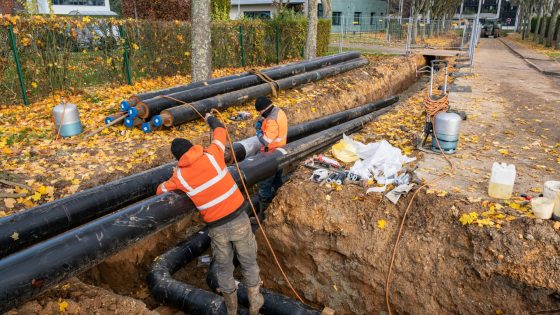
    Regulation of heat network technical standards due in 2027 will introduce a formal assessment and certification scheme for UK district and communal heating systems, putting new emphasis on verifiable performance data. Operators will need robust, auditable datasets on flow and return temperatures, thermal losses, metering accuracy and outage durations to prove compliance against the Heat Network Technical Assurance Scheme (HNTAS). Designers and asset managers should expect tighter requirements on data architecture, sensor specification and long‑term monitoring to evidence efficiency, consumer protection and interoperability.

    Technical Brief

    • Similar assurance-style regimes could be extended to other shared utilities (e.g. cooling networks, private wire systems).

    Our Take

    With regulation of heat network technical standards not due until 2027, asset owners and local authorities effectively have a two‑to‑three‑year window to build robust data architectures that can satisfy both safety and sustainability assurance requirements rather than retrofitting systems later at higher cost.

    Within our 165 Policy stories, only a subset explicitly combine Standard/Guideline, Safety and Sustainability tags, signalling that heat network data rules are likely to sit alongside other high‑scrutiny regimes (such as building safety) where demonstrable, auditable performance evidence becomes a prerequisite for financing and insurance.

    New Civil Engineer’s role across initiatives like the TechFest Awards 2025 and the British Construction & Infrastructure Awards suggests that early adopters of rigorous heat network data and assurance frameworks may gain profile advantages in UK procurement and awards ecosystems once the 2027 standards bite.

    Geotechnical Software for Modern Teams

    Centralise site data, logs, and lab results with GEODB-io, CMRR-io, and HYDROGEO-io.

    No credit card required.

    • Save and export unlimited calculations
    • Advanced data visualisation
    • Generate professional PDF reports
    • Cloud storage for all your projects

    Prepared by collating external sources, AI-assisted tools, and Geomechanics.io’s proprietary mining database, then reviewed for technical accuracy & edited by our geotechnical team.

    Related Articles

    GCA £4.2bn construction services framework: key takeaways for engineers
    Policy
    about 13 hours ago

    GCA £4.2bn construction services framework: key takeaways for engineers

    The Government Commercial Agency has launched a £4.2bn, four-year cross-government framework for construction professional and advisory services, open to central departments, local authorities and wider public sector clients. The framework is intended to streamline procurement of multidisciplinary design, project management, cost consultancy and technical advisory support for major infrastructure, building and regeneration programmes. Civil and geotechnical engineers can expect more standardised scopes, repeatable NEC-based call-off contracts and stronger pipelines for public sector workload across transport, flood, education and health projects.

    Burnham and regional infrastructure: pipeline certainty lessons for UK project teams
    Policy
    1 day ago

    Burnham and regional infrastructure: pipeline certainty lessons for UK project teams

    Greater regional infrastructure investment under a potential Andy Burnham government must not be funded by cutting London’s capital budgets, BusinessLDN deputy CEO Muniya Barua has warned. She argues that shifting money away from major London schemes—such as upgrades to key commuter rail corridors and strategic road junctions—would weaken national productivity rather than rebalance it. For engineers, the message is that long-term pipeline certainty for both London and regional projects is critical to maintain design capacity, contractor capability and supply-chain investment.

    ICE decarbonisation call: delivery and carbon design impacts for UK engineers
    Policy
    1 day ago

    ICE decarbonisation call: delivery and carbon design impacts for UK engineers

    UK civil engineers are warning that policymakers “aren’t moving fast enough” on decarbonisation after the Climate Change Committee’s latest progress report showed the UK is off track for its sixth carbon budget and 2030 NDC. The Institution of Civil Engineers is pressing for accelerated delivery of low‑carbon infrastructure, including grid reinforcement for renewables, building retrofit at scale and low‑carbon transport schemes. For practitioners, this signals likely tighter embodied‑carbon expectations on materials, more whole‑life carbon assessments and stronger scrutiny of project emissions pathways.

    Related Industries & Products

    Construction

    Quality control software for construction companies with material testing, batch tracking, and compliance management.

    QCDB-io

    Comprehensive quality control database for manufacturing, tunnelling, and civil construction with UCS testing, PSD analysis, and grout mix design management.

    AllGeotechnicalMiningInfrastructureMaterialsHazardsEnvironmentalSoftwarePolicy