Hinkley Point C incident: lifting and work-at-height lessons for project teams
Reviewed by Tom Sullivan
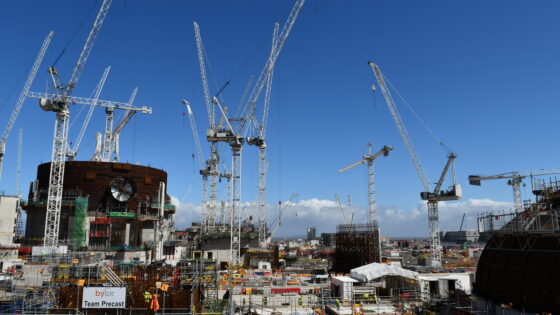
First reported on New Civil Engineer
30 Second Briefing
Bouygues Travaux Publics and Laing O'Rourke, working as the Bylor joint venture on EDF’s Hinkley Point C nuclear project, have received two Health and Safety Executive enforcement notices after a panel fell from height and caused “serious injuries” to a worker. Both notices have been formally extended, signalling ongoing regulatory concern over lifting operations and work-at-height controls on the major civil works. Contractors on large nuclear and energy schemes will likely face closer scrutiny of temporary works design, lifting plans and exclusion-zone management.
Technical Brief
- Incident involved a panel component falling from height during major civil construction activities.
- Health and Safety Executive issued two separate enforcement notices to the Bylor joint venture.
- Formal extension of both notices indicates HSE believes remedial actions are not yet fully adequate.
- Regulatory focus is likely on lifting accessories, rigging configuration and integrity of temporary attachment points.
- Work-at-height controls under scrutiny typically include edge protection, secondary restraints and exclusion-zone demarcation.
Our Take
Hinkley Point C already features in other safety-tagged pieces in our database, including ONR prosecutions over earlier incidents and separate fire enforcement notices on MEH alliance contractors, signalling that regulatory scrutiny on this site is both sustained and multi-faceted rather than tied to a single event.
Bylor’s receipt of two enforcement notices here comes as the same Bouygues–Laing O’Rourke partnership is scaling up at Sizewell C, so any mandated changes to safety systems or supervision at Hinkley are likely to be exported quickly into procedures on the Suffolk project.
Bouygues Travaux Publics appears across several major UK and international infrastructure items in our coverage (Hinkley Point C, HS2 Chiltern tunnel, Hong Kong’s Tung Chung line), so repeated safety enforcement at one flagship nuclear site may influence how clients specify oversight and reporting requirements on its other large tunnelling and civils contracts.
Prepared by collating external sources, AI-assisted tools, and Geomechanics.io’s proprietary mining database, then reviewed for technical accuracy & edited by our geotechnical team.
Related Articles


Related Industries & Products
Construction
Quality control software for construction companies with material testing, batch tracking, and compliance management.
Tunnelling
Specialised solutions for tunnelling projects including grout mix design, hydrogeological analysis, and quality control.
QCDB-io
Comprehensive quality control database for manufacturing, tunnelling, and civil construction with UCS testing, PSD analysis, and grout mix design management.