Haulotte–Ukrainian Unmanned Technologies: RAVLYK platform implications for engineers
Reviewed by Tom Sullivan
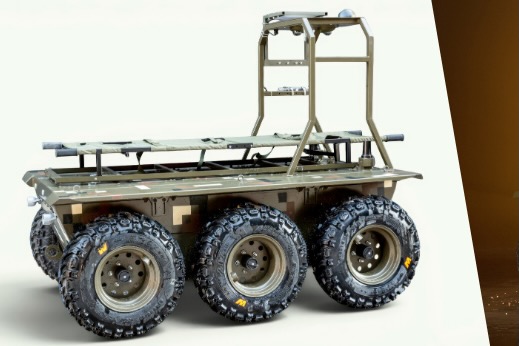
First reported on The Construction Index
30 Second Briefing
Haulotte has agreed a partnership with Ukrainian Unmanned Technologies (UUT) to industrially scale UUT’s RAVLYK (UMP-2) electric 6x6 all‑terrain robotic ground logistics platform, announced at the Eurosatory 2026 defence show. The modular RAVLYK, already at TRL‑9 with serial production in several Ukrainian defence plants, can be reconfigured in under 30 minutes for logistics, casualty evacuation, reconnaissance, and operational support. Haulotte will contribute manufacturing capacity, quality systems, and service support, with potential crossover into civilian crisis response and hazardous‑environment industrial operations.
Technical Brief
- RAVLYK (UMP-2) uses a 6x6 electric drivetrain for off-road, low-signature ground logistics.
- Modular mission kits allow role changeovers, including casualty evacuation fit-out, in under 30 minutes.
- Serial production already occurs across several Ukrainian defence manufacturing plants, easing Haulotte’s industrial ramp-up.
- Crisis-response and hazardous-industry roles could include remote debris clearance support, sensor carriage and casualty extraction in unstable ground.
Our Take
Haulotte’s work with Ukrainian Unmanned Technologies on the RAVLYK (UMP-2) platform echoes its earlier tie-up with Builder Assist in France, signalling a deliberate strategy to repurpose MEWP and access-platform know‑how into robotic and unmanned ground systems across both civil and defence markets.
A TRL‑9 unmanned platform that can be reconfigured in around 30 minutes is mature enough for near‑term field deployment, which suggests contractors in conflict‑adjacent regions such as Ukraine and the UK could soon see UGVs integrated into hazardous-site inspection, EOD support, or post‑strike infrastructure assessment workflows.
Within our Infrastructure coverage, Haulotte now appears in several automation- and robotics‑tagged pieces, indicating that traditional access-equipment OEMs are becoming important technology partners for unmanned systems developers rather than just hardware suppliers.
Prepared by collating external sources, AI-assisted tools, and Geomechanics.io’s proprietary mining database, then reviewed for technical accuracy & edited by our geotechnical team.


