GBR’s small‑scale AI projects: data, safety and control insights for engineers
Reviewed by Joe Ashwell
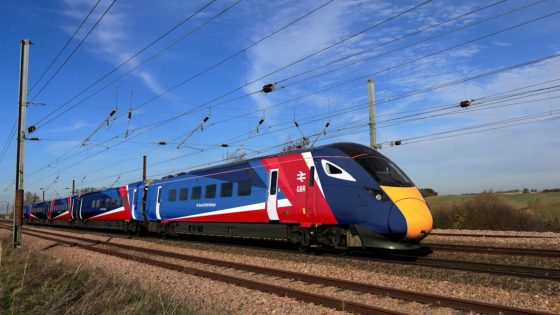
First reported on New Civil Engineer
30 Second Briefing
AI deployment across Great British Railways is expected to focus on small, incremental projects such as condition monitoring of points, overhead line equipment and track geometry rather than network-wide “big bang” systems. Pilot applications are likely to use existing SCADA, CCTV and onboard sensor data to feed relatively simple machine-learning models for fault prediction, timetable adherence and energy-optimised driving. For civil and track engineers, this points to near-term demand for high-quality asset data, standardised interfaces and clear governance on model validation, safety cases and human-in-the-loop decision-making.
Technical Brief
- Initial GBR AI deployments are constrained to existing signalling, SCADA and control architectures, avoiding new safety-critical hardware.
- Safety cases will need to align AI functions with current Railway Group Standards and CSM-RA processes.
- Model validation is expected to follow assurance tiers similar to signalling software, with staged approvals and sandboxing.
- Human-in-the-loop operation will likely be mandated for any AI influencing movement authorities or speed supervision.
- Data governance must address chain-of-custody for sensor streams used in incident investigations and RAIB inquiries.
- For geotechnical and structures assets, AI outputs will need traceable links to inspection, examination and examination intervals.
- Cyber-security requirements for AI tools are anticipated to mirror those for signalling interlockings and traffic management systems.
Our Take
New Civil Engineer’s involvement in early careers challenges and innovation competitions, such as the Heathrow Airport initiative, indicates that GBR’s AI future will probably be shaped as much by graduate- and apprentice-led experimentation on live projects as by top-down corporate strategies.
Prepared by collating external sources, AI-assisted tools, and Geomechanics.io’s proprietary mining database, then reviewed for technical accuracy & edited by our geotechnical team.
Related Articles


Related Industries & Products
Construction
Quality control software for construction companies with material testing, batch tracking, and compliance management.
CMRR-io
Streamline coal mine roof stability assessments with our cloud-based CMRR software featuring automated calculations, multi-scenario analysis, and collaborative workflows.
HYDROGEO-io
Comprehensive hydrogeological testing platform for managing, analysing, and reporting on packer tests, lugeon values, and hydraulic conductivity assessments.
GEODB-io
Centralised geotechnical data management solution for storing, accessing, and analysing all your site investigation and material testing data.