Geomechanics.io

  • Free Tools
Sign UpLog In

Geomechanics.io

Geomechanics, Streamlined.

© 2026 Geomechanics.io. All rights reserved.

Geomechanics.io

CMRR-ioGEODB-ioHYDROGEO-ioQCDB-ioFree Tools & CalculatorsBlogLatest Industry News

Industries

MiningConstructionTunnelling

Company

Terms of UsePrivacy PolicyLinkedIn
    Safety
    Product
    Op-Ed

    From reactive to predictive mining safety: data and sensing priorities for engineers

    August 28, 2026|

    Reviewed by Joe Ashwell

    From reactive to predictive mining safety: data and sensing priorities for engineers

    First reported on Australian Mining

    30 Second Briefing

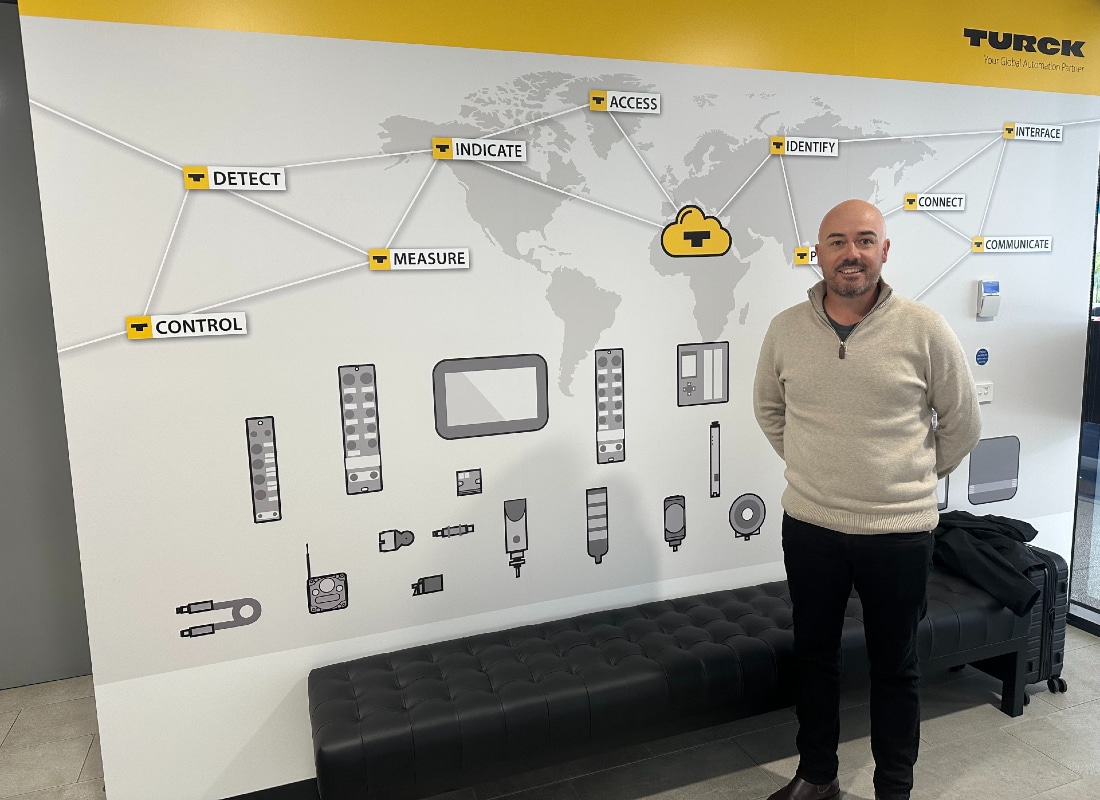
    Mining safety specialist David Coghlan, head of technology and product at TURCK, argues that connected sensing and control must shift mines from reactive alarms to predictive intervention as fleets, conveyors and fixed plant become more automated. He points to integrated proximity detection, real-time location and condition monitoring on mobile equipment, tied into site-wide networks, as the basis for predicting collision and entrapment risks rather than just logging incidents. For geotechnical and operations teams, this means designing safety systems around data quality, latency and interoperability, not just compliance with existing guarding and lock-out procedures.

    Technical Brief

    • For similar mines, the key shift is specifying safety systems around data architecture and time-to-intervention, not just hardware.

    Our Take

    In our database of 1318 Mining stories, safety-tagged pieces linked to Australian operations increasingly reference integrated digital ecosystems, aligning TURCK’s identification focus with the AI, automation and connected data themes flagged in the 27 August 2026 Australian Mining digitalisation article.

    The move from reactive to predictive safety in Australia by companies like TURCK sits alongside dust and emissions control work by Nederman MikroPul (9 August 2026 article), suggesting mine operators are starting to treat sensing, identification and environmental controls as a single risk-management stack rather than separate compliance boxes.

    With 2026 framed as a reference year for mining safety and the Australian Mining Prospect Awards highlighting mine safety categories, operators adopting advanced identification systems from vendors such as TURCK are likely positioning themselves for both regulatory scrutiny and industry recognition in the near term.

    Geotechnical Software for Modern Teams

    Centralise site data, logs, and lab results with GEODB-io, CMRR-io, and HYDROGEO-io.

    No credit card required.

    • Save and export unlimited calculations
    • Advanced data visualisation
    • Generate professional PDF reports
    • Cloud storage for all your projects

    Prepared by collating external sources, AI-assisted tools, and Geomechanics.io’s proprietary mining database, then reviewed for technical accuracy & edited by our geotechnical team.

    Related Articles

    Evolution becomes Carnaby’s largest shareholder: M&A and project signals for mine planners
    Mining
    about 1 hour ago

    Evolution becomes Carnaby’s largest shareholder: M&A and project signals for mine planners

    Evolution Mining has become Carnaby Resources’ largest shareholder with a 13.7 per cent stake after acquiring the QIC Queensland Critical Minerals Fund’s ~37.9 million Carnaby shares as part of its proposed $213 million takeover. Evolution also issued about 2.6 million new shares to QIC, signalling continued use of scrip-based structures in Australian mid-tier M&A. For copper–gold project developers, the move points to stronger strategic interest from established producers in advanced exploration portfolios rather than greenfield assets.

    Develop’s Woodlawn drilling: 15-year mine life implications for planners and geotechs
    Mining
    about 1 hour ago

    Develop’s Woodlawn drilling: 15-year mine life implications for planners and geotechs

    Develop Global’s latest underground drilling at the Woodlawn copper–zinc mine in New South Wales has returned intercepts grading up to 15.7 per cent copper equivalent (CuEq), supporting its Project DM15 plan to extend mine life from 10 to 15 years. The high-grade results, from step-out holes targeting depth extensions of existing lenses, suggest additional sulphide resources beyond the current reserve envelope. For mine planners and geotechs, this points to a longer stoping schedule, potential redesign of sequencing and backfill, and extended use of existing underground infrastructure.

    Forrestania’s $145m Johnson Range contract: pit design and schedule notes for engineers
    Mining
    about 1 hour ago

    Forrestania’s $145m Johnson Range contract: pit design and schedule notes for engineers

    Forrestania Resources has awarded MEGA Resources a ~$145 million contract for a two-year open-pit mining campaign at the Johnson Range gold project in Western Australia. The scope covers end-to-end pit development, including production drilling and blasting, ore and waste haulage, and construction of haul roads and associated mining infrastructure. Contractors and suppliers can expect near-term demand for drill-and-blast services, mobile fleet, and road construction materials, with geotechnical design and pit slope performance critical over the compressed two-year schedule.

    Related Industries & Products

    Mining

    Geotechnical software solutions for mining operations including CMRR analysis, hydrogeological testing, and data management.

    CMRR-io

    Streamline coal mine roof stability assessments with our cloud-based CMRR software featuring automated calculations, multi-scenario analysis, and collaborative workflows.

    HYDROGEO-io

    Comprehensive hydrogeological testing platform for managing, analysing, and reporting on packer tests, lugeon values, and hydraulic conductivity assessments.

    GEODB-io

    Centralised geotechnical data management solution for storing, accessing, and analysing all your site investigation and material testing data.

    AllGeotechnicalInfrastructureHazardsEnvironmental