Fenner conveyor belt recycling at Gladstone: ESG and waste lessons for mine operators
Reviewed by Joe Ashwell
First reported on Australian Mining
30 Second Briefing
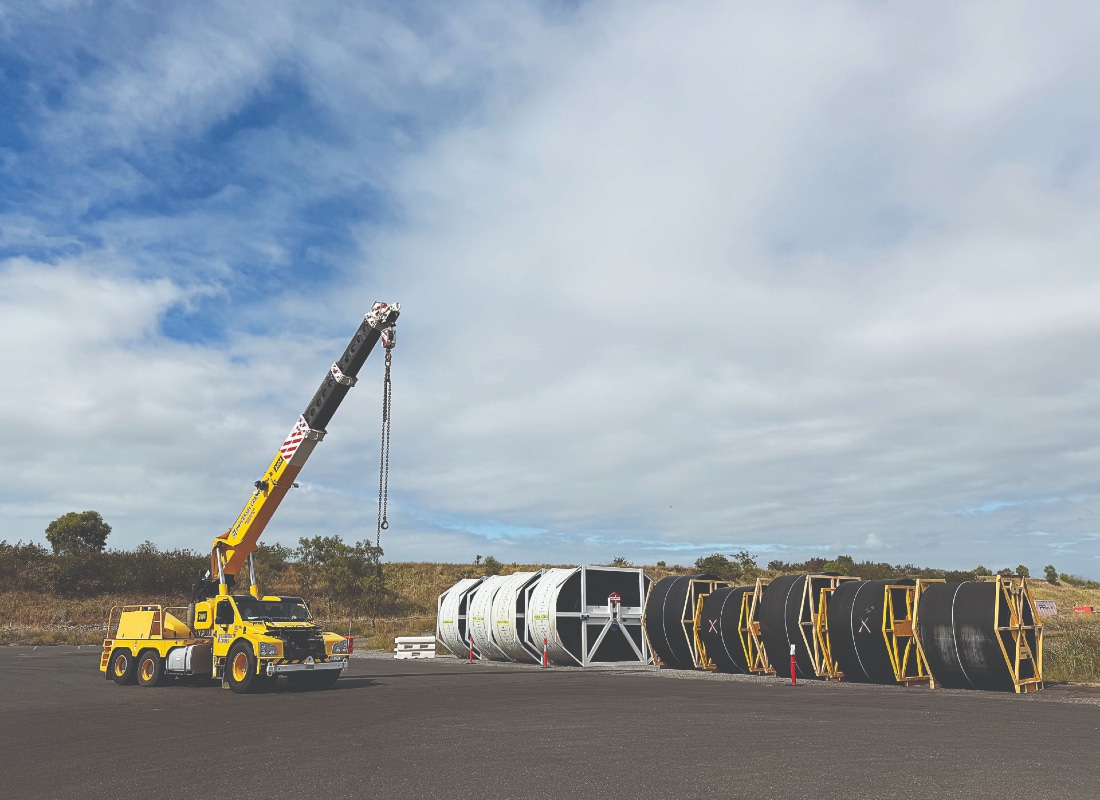
Fenner Conveyors has partnered with Tyrecycle on a port-first conveyor belt recycling initiative at Gladstone Ports Corporation, where 65 conveyor systems totalling more than 48km of belt length previously went to landfill after decommissioning. The programme will process decommissioned belts into recovered rubber and steel for reuse in products such as civil construction materials and tyre-derived fuels, rather than stockpiling or burial. For mine and port operators, the model offers a practical route to manage high-tension, steel-cord and fabric belts at end-of-life under tightening waste and ESG requirements.
Technical Brief
- High-throughput port conveyors imply large belt cross-sections and high-tension steel-cord constructions needing specialised processing.
- Coating rubber, steel cords and fabric plies must be mechanically separated before rubber granulation or steel recovery.
- Tyrecycle’s process enables recovered rubber to be sized for civil aggregates, matting or tyre-derived fuel feedstock.
- Steel recovered from belt carcasses can re-enter scrap supply chains, reducing on-site heavy waste handling.
- Centralised port-based collection reduces mine-site stockpiling, haulage distances and double-handling of redundant belts.
- For other bulk terminals, similar partnerships could convert legacy belt stockpiles into saleable secondary materials.
Our Take
Fenner Conveyors’ recycling push at Gladstone Ports Corporation aligns with its INFINITYSERIES recycled‑content belt line launched in March 2026, signalling that closed‑loop belt recovery is likely being built directly into its product offering rather than treated as a standalone waste initiative.
With 65 conveyor systems spanning more than 48 km at GPC, even partial diversion of end‑of‑life belts into Tyrecycle’s downstream uses could create a material, steady feedstock stream for the crumb rubber and recycled products markets Tyrecycle has been promoting in recent road infrastructure coverage.
Prepared by collating external sources, AI-assisted tools, and Geomechanics.io’s proprietary mining database, then reviewed for technical accuracy & edited by our geotechnical team.
Related Articles
Related Industries & Products
Mining
Geotechnical software solutions for mining operations including CMRR analysis, hydrogeological testing, and data management.
Construction
Quality control software for construction companies with material testing, batch tracking, and compliance management.
CMRR-io
Streamline coal mine roof stability assessments with our cloud-based CMRR software featuring automated calculations, multi-scenario analysis, and collaborative workflows.
QCDB-io
Comprehensive quality control database for manufacturing, tunnelling, and civil construction with UCS testing, PSD analysis, and grout mix design management.
HYDROGEO-io
Comprehensive hydrogeological testing platform for managing, analysing, and reporting on packer tests, lugeon values, and hydraulic conductivity assessments.