Farrans’ London Stansted skylink walkways: phasing and design notes for engineers
Reviewed by Tom Sullivan
First reported on New Civil Engineer
30 Second Briefing
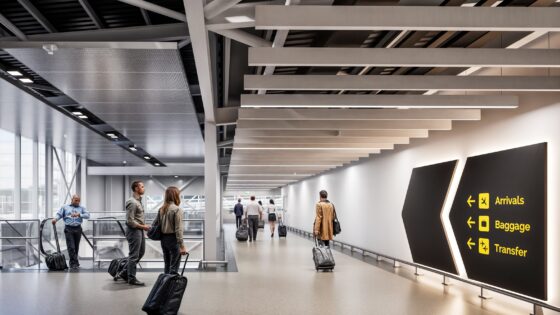
Farrans has been appointed to construct new covered “skylink” walkways at London Stansted Airport as part of a major terminal redevelopment programme. The elevated structures will provide weather-protected, step-free routes between the terminal and aircraft stands, reducing reliance on ground-level bussing and simplifying passenger flows. For civil and structural teams, the project points to increased airside integration work, complex phasing around live operations, and stringent airfield pavement and loading interface requirements.
Technical Brief
- Works sit inside a wider terminal transformation programme, requiring tight interface management with parallel contractors.
- Construction will be delivered airside, so methods must comply with airport security, access permitting and night-time possession regimes.
- Foundations and supports must be detailed to avoid compromising existing airfield pavements, buried services and stand drainage.
- Structural design will need to satisfy aircraft jet-blast, wind uplift and dynamic crowd loading requirements simultaneously.
- Envelope and glazing systems must control glare and reflections to protect pilots’ sightlines and air traffic operations.
- Phasing will be constrained by stand availability, with sequencing likely tied to seasonal flight schedules and peak periods.
Our Take
Farrans’ repeat work at London Stansted, alongside its £30m Bristol Airport terminal infill contract, signals that the contractor is becoming a go‑to delivery partner for UK regional airport terminal upgrades rather than just airfield civils.
With Farrans also embedded in Scottish Water’s six‑year capital programme, the London Stansted walkway package adds to a pipeline that mixes regulated utility work with higher‑margin aviation projects, which typically demand tighter phasing and passenger‑flow management.
Among recent UK Infrastructure pieces in our database, very few contractors feature simultaneously in airport expansion and major water-utility frameworks, suggesting Farrans is positioning itself as a diversified Tier 2 player with resilience across economic cycles.
Prepared by collating external sources, AI-assisted tools, and Geomechanics.io’s proprietary mining database, then reviewed for technical accuracy & edited by our geotechnical team.


