Geomechanics.io

  • Free Tools
Sign UpLog In

    Geomechanics.io

    Geomechanics, Streamlined.

    © 2026 Geomechanics.io. All rights reserved.

    Geomechanics.io

    CMRR-ioGEODB-ioHYDROGEO-ioQCDB-ioFree Tools & CalculatorsBlogLatest Industry News

    Industries

    MiningConstructionTunnelling

    Company

    Terms of UsePrivacy PolicyLinkedIn
    Projects
    Safety

    Exploration algorithms and ‘missing’ assays: data lineage design notes for geologists

    September 3, 2026|

    Reviewed by Joe Ashwell

    First reported on International Mining – News

    30 Second Briefing

    Digital exploration workflows are exposing a new failure mode where assay values ingested into drillhole databases lose their evidentiary trail, allowing mis-keyed grades, OCR errors from scanned lab certificates, or misaligned historical drill logs to appear as authoritative inputs to machine-learning targeting. Joshua argues that algorithms ranking targets, interpolating block models, or driving prospectivity maps must treat each assay with an explicit provenance score, distinguishing original lab CSVs from hand-typed transcriptions or reconstructed intervals. For geologists and data engineers, this means redesigning schemas to store document lineage, QA/QC context and uncertainty flags, not just numeric assay fields.

    Technical Brief

    • Core failure mode arises when assay values are decoupled from original paper or PDF evidence.
    • Once ingested, legacy lab certificates and drill logs often become untraceable within centralised exploration databases.

    Our Take

    International Mining also features prominently in coverage of IMARC and the World Mining Congress 2026, signalling that its editorial line on AI in exploration is being shaped alongside high-level conference debates on data integrity and critical minerals supply risk.

    With IMARC summaries in our database already highlighting ‘rapid deployment of AI in exploration’, this article suggests operators will increasingly need formal QA/QC protocols not just for sampling and assaying, but for how machine-learning models treat missing, corrupted or fabricated drillhole data.

    Geotechnical Software for Modern Teams

    Centralise site data, logs, and lab results with GEODB-io, CMRR-io, and HYDROGEO-io.

    No credit card required.

    • Save and export unlimited calculations
    • Advanced data visualisation
    • Generate professional PDF reports
    • Cloud storage for all your projects

    Prepared by collating external sources, AI-assisted tools, and Geomechanics.io’s proprietary mining database, then reviewed for technical accuracy & edited by our geotechnical team.

    Related Articles
    Meeka hits nameplate at Andy Well: throughput and ore sorting lens for planners
    Mining
    about 3 hours ago

    Meeka hits nameplate at Andy Well: throughput and ore sorting lens for planners

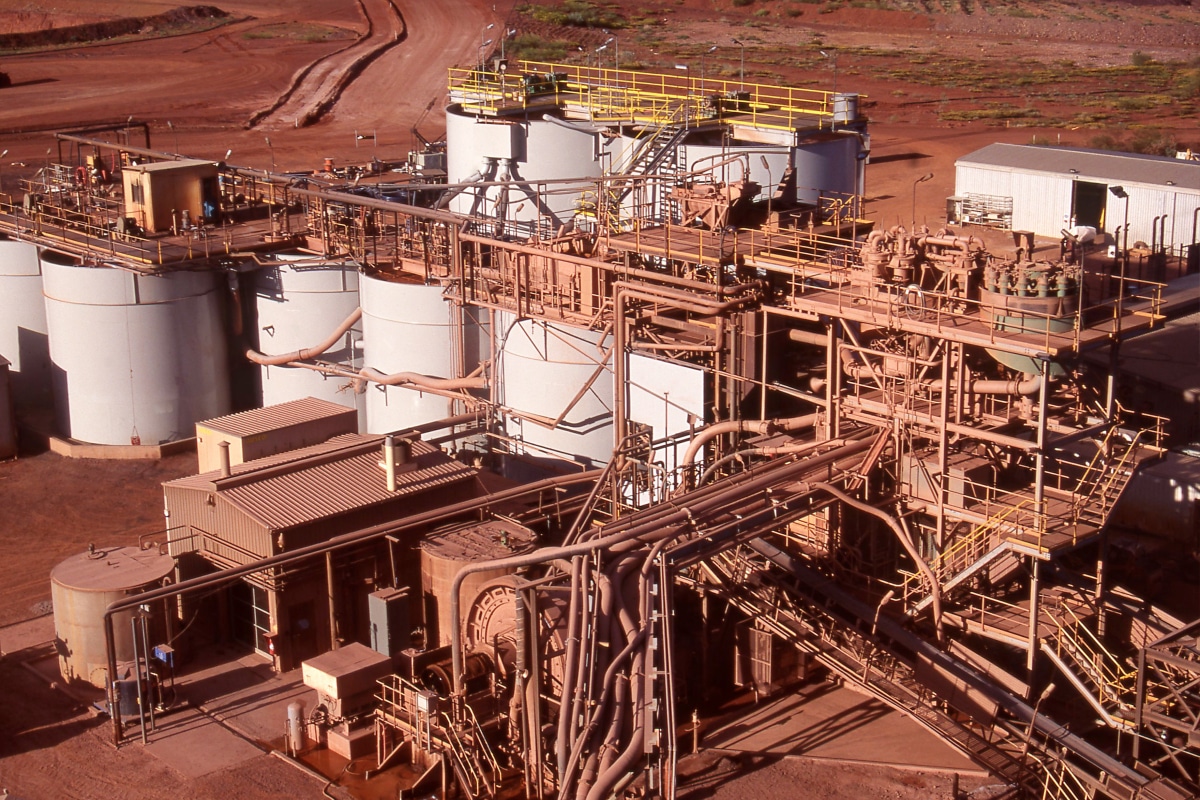
    Meeka Metals has reached its nameplate 600,000 tonnes per annum processing rate at the Andy Well gold operation in Western Australia, with the plant running at an annualised ~600ktpa through July and August and recording higher peak throughput over the period. An ore sorter is scheduled for commissioning in October, targeting higher feed grades and reduced mill load by rejecting low-grade material ahead of the existing circuit. For plant and mine planners, stable operation at nameplate before adding pre-concentration reduces ramp-up risk and supports more predictable metallurgical performance.

    Greenland Mines’ Sarfartoq rare earth acquisition: NPV, IRR and mine plan lens
    Mining
    about 3 hours ago

    Greenland Mines’ Sarfartoq rare earth acquisition: NPV, IRR and mine plan lens

    Greenland Mines has closed its US$35 million acquisition of the Sarfartoq rare earth project from Neo Performance Materials, securing a carbonatite-hosted NdPr deposit near Kangerlussuaq, about 60 km from Greenland’s main international airport. An independent Initial Assessment on the ST1 deposit alone, which occupies under 1% of the 191 km² licence, reports a pre-tax NPV of ~US$2.05 billion and IRR of 118.6%, based on Indicated and Inferred resources and a nine-year mine plan. The company plans immediate infill drilling, pilot-scale metallurgical test work, mine engineering and expanded environmental and social baseline studies to advance to pre-feasibility.

    Maritana’s Boorara drilling and 2027 restart: planning insights for mine engineers
    Mining
    about 3 hours ago

    Maritana’s Boorara drilling and 2027 restart: planning insights for mine engineers

    Maritana Minerals has completed over 17,000m of reverse-circulation drilling in 119 holes at the Boorara gold project near Kalgoorlie, progressing it as the first planned ore source for the Black Swan processing hub ahead of a targeted mid-2027 restart. The campaign focuses on resource conversion and was run in parallel with grade-control drilling to tighten pre-production mine planning. For geotechnical and mine design teams, the dense drilling grid should materially refine orebody geometry, grade continuity and pit optimisation for the initial restart phase.

    Related Industries & Products

    Mining

    Geotechnical software solutions for mining operations including CMRR analysis, hydrogeological testing, and data management.

    Construction

    Quality control software for construction companies with material testing, batch tracking, and compliance management.

    CMRR-io

    Streamline coal mine roof stability assessments with our cloud-based CMRR software featuring automated calculations, multi-scenario analysis, and collaborative workflows.

    HYDROGEO-io

    Comprehensive hydrogeological testing platform for managing, analysing, and reporting on packer tests, lugeon values, and hydraulic conductivity assessments.

    GEODB-io

    Centralised geotechnical data management solution for storing, accessing, and analysing all your site investigation and material testing data.

    AllGeotechnicalInfrastructureHazardsEnvironmental