Geomechanics.io

  • Free Tools
Sign UpLog In

    Geomechanics.io

    Geomechanics, Streamlined.

    © 2026 Geomechanics.io. All rights reserved.

    Geomechanics.io

    CMRR-ioGEODB-ioHYDROGEO-ioQCDB-ioFree Tools & CalculatorsBlogLatest Industry News

    Industries

    MiningConstructionTunnelling

    Company

    Terms of UsePrivacy PolicyLinkedIn
    Projects
    Sustainability

    Europe’s utilities gridlock: design and delivery notes for civil engineers

    June 4, 2026|

    Reviewed by Joe Ashwell

    Europe’s utilities gridlock: design and delivery notes for civil engineers

    First reported on New Civil Engineer

    30 Second Briefing

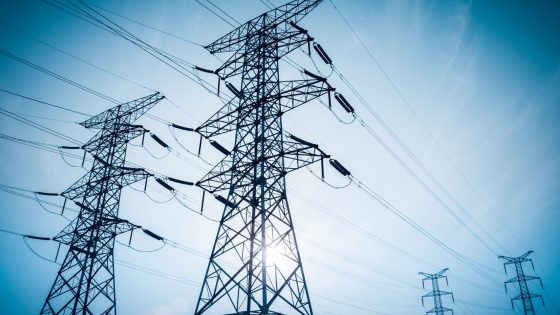
    Europe’s energy transition is increasingly constrained by utilities gridlock, with overloaded 110kV–400kV transmission corridors and urban distribution networks delaying grid connections for large offshore wind farms and 100MW-scale electrolysers by up to a decade. Transmission system operators and DSOs are turning to underground 132kV cable routes in dense city centres, retrofitting existing 220kV lines with high-temperature low-sag conductors, and deploying digital substations with advanced protection relays to squeeze more capacity from legacy assets. For civil and geotechnical teams, this means more complex multi-utility tunnelling, deeper cable ducts in congested ground, and tighter outage windows driving offsite prefabrication.

    Technical Brief

    • Designers are being pushed towards shared multi-utility corridors to avoid repeated track or highway possessions.
    • Several DSOs are requiring deeper joint bays and larger cable basements, increasing excavation support demands.
    • Interface risk is rising where project-specific earthing, bonding and EMC requirements meet ageing substation assets.
    • For upcoming megaprojects, early joint planning with TSOs/DSOs is becoming a critical programme determinant.

    Our Take

    New Civil Engineer’s role here mirrors its facilitation work with Heathrow Airport’s Early Careers Innovation Challenge, signalling that utilities gridlock is being framed as a design-and-delivery problem for practitioners rather than just a policy debate.

    Within our 848 Infrastructure stories and 2,287 tag-matched pieces on Projects and Sustainability, New Civil Engineer frequently links digital delivery issues (such as BIM handover in the recent webinar coverage) to programme delays, which suggests this utilities gridlock piece is likely to intersect with data and coordination challenges as much as with permitting.

    Because New Civil Engineer is the only company tagged, this article is best read as sector-wide commentary; in our database such NCE-branded analysis often precedes more asset-specific case studies, so it may flag themes that will shape upcoming project procurement and design briefs across European utilities work.

    Geotechnical Software for Modern Teams

    Centralise site data, logs, and lab results with GEODB-io, CMRR-io, and HYDROGEO-io.

    No credit card required.

    • Save and export unlimited calculations
    • Advanced data visualisation
    • Generate professional PDF reports
    • Cloud storage for all your projects

    Prepared by collating external sources, AI-assisted tools, and Geomechanics.io’s proprietary mining database, then reviewed for technical accuracy & edited by our geotechnical team.

    Related Articles

    Strabag’s Pfaffensteig Tunnel contract: design and delivery notes for rail engineers
    Infrastructure
    in 6 months

    Strabag’s Pfaffensteig Tunnel contract: design and delivery notes for rail engineers

    Strabag and Group company Züblin have secured the design-and-build structural works for the ABS Gäubahn Nord/Pfaffensteig Tunnel in south-west Germany, centred on an 11km twin-bore rail tunnel linking Stuttgart Airport station directly to the Gäubahn line towards Switzerland. About 9.8km will be driven by two TBMs, with conventional tunnelling for the A8 motorway undercrossing and airport connection, plus a 240m cut-and-cover section, retaining structures, railway underpasses and a grade-separated crossing. A 3km surface section will be upgraded and partially realigned for 200km/h operation, delivered under an integrated project delivery model with Ed. Züblin, Wayss & Freytag and Strabag AG sharing tunnelling, structural and earthworks packages.

    National Grid TBM under the Thames: tunnelling design and risk notes for engineers
    Infrastructure
    in 6 months

    National Grid TBM under the Thames: tunnelling design and risk notes for engineers

    A 271.5‑tonne Herrenknecht Mixshield TBM, Caroline, has started driving a 2.2km electricity cable tunnel with a 4m internal diameter beneath the River Thames in Essex for National Grid’s Grain to Tilbury project, delivered by the Ferrovial BEMO joint venture. The drive will pass through variable Thames estuary ground conditions between 35m‑deep launch and reception shafts of 15m and 12m diameter, with tunnelling continuing into 2026 and overall scheme completion targeted for 2029. The new tunnel will replace the 1969 Thames Cable Tunnel and carry new high‑voltage circuits between Grain and Tilbury substations.

    Panama Canal Mixshield undercrossing: design and tunnelling lessons for engineers
    Infrastructure
    in 6 months

    Panama Canal Mixshield undercrossing: design and tunnelling lessons for engineers

    A 13.46m diameter Herrenknecht Mixshield TBM has broken through into the future Balboa station on Panama Metro Line 3 after completing the first-ever TBM undercrossing of the Panama Canal at depths exceeding 60m below sea level. The 5,600kW, 26,616kNm machine, fitted with an accessible cutterhead and more than 4,500 sensors linked via the Herrenknecht.Connected platform, has achieved peak advance of 150 segment rings (about 300m) per month through mixed sandstone, tuff, breccias and basalt. Around 1.5km of the 4.5km twin-track tunnel remains to final breakthrough.

    Related Industries & Products

    Tunnelling

    Specialised solutions for tunnelling projects including grout mix design, hydrogeological analysis, and quality control.

    Mining

    Geotechnical software solutions for mining operations including CMRR analysis, hydrogeological testing, and data management.

    QCDB-io

    Comprehensive quality control database for manufacturing, tunnelling, and civil construction with UCS testing, PSD analysis, and grout mix design management.

    AllGeotechnicalInfrastructureHazardsEnvironmental