Eric Wright Leyland Market Hall scheme: design and retrofit notes for engineers
Reviewed by Joe Ashwell
First reported on The Construction Index
30 Second Briefing
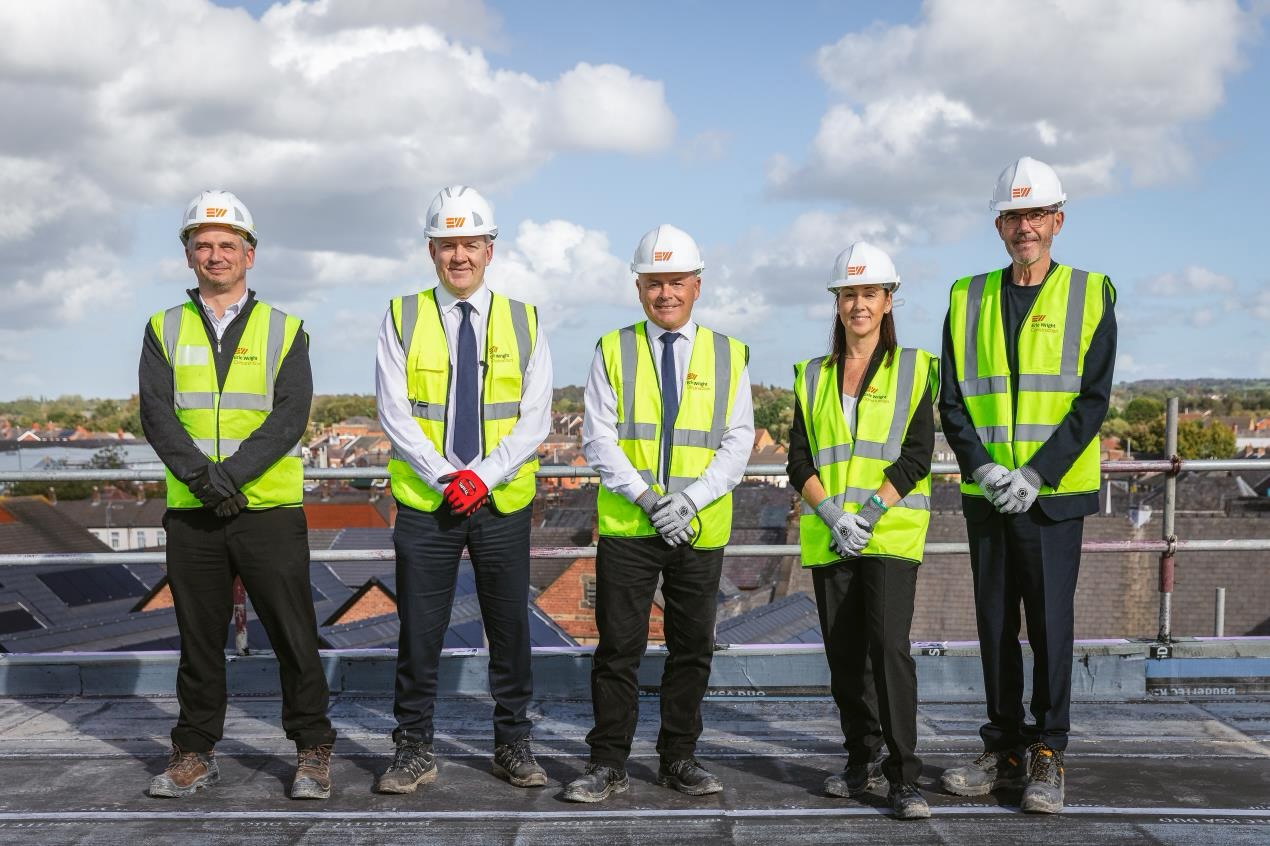
Eric Wright has topped out the tallest building in the £22m refurbishment of Leyland Market Hall, a former Leyland Motors estate asset whose historic internal structure is being retained while a new sustainable roof is installed. The scheme delivers 18 upgraded permanent stalls, new outdoor and pop-up trading spaces tied directly into a new Market Square, plus two new mixed-use buildings with retail, leisure, office, business and community space and 16 council-owned apartments. Funded through South Ribble’s £34m Town Deal regeneration, completion is scheduled for next autumn.
Technical Brief
- Historic internal frame of the former Leyland Motors market hall is being retained rather than demolished.
- New roof is described as “sustainable”, implying upgraded thermal performance and reduced operational energy demand.
- Scheme cost for the market and associated buildings is £22m within a wider £34m Town Deal.
- South Ribble Borough Council is the client, with Eric Wright delivering as main contractor.
- Wider Town Deal works bundle includes new housing at Quin Street and public realm upgrades on Hough Lane.
- Market Square and commercial hub are being delivered as integrated public-realm and retail infrastructure.
- Overall regeneration programme is scheduled to complete by next autumn, constraining construction sequencing and tenant fit-out.
Our Take
Eric Wright’s role on Leyland’s market follows a run of North West public‑realm and housing work in our database, including the Preston Tram Bridge and Salford’s Willohaus scheme, signalling that councils in the region increasingly treat the group as a go‑to delivery partner for complex regeneration packages.
South Ribble Borough Council’s direct ownership of the 16 new apartments aligns with other council‑backed schemes in the North West, where retaining residential assets within the public estate is being used to underpin long‑term revenue streams from regeneration rather than relying solely on private disposal.
Prepared by collating external sources, AI-assisted tools, and Geomechanics.io’s proprietary mining database, then reviewed for technical accuracy & edited by our geotechnical team.


