EKFB’s 320 m HS2 Great Ouse viaduct: geotechnical and hydraulic notes for engineers
Reviewed by Tom Sullivan
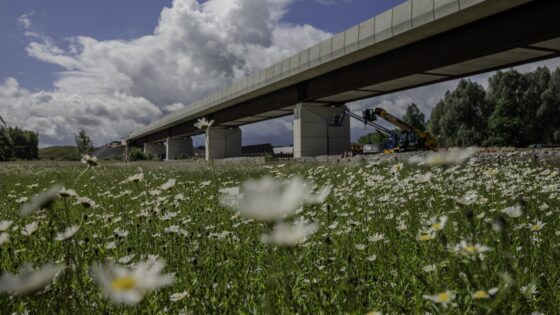
First reported on New Civil Engineer
30 Second Briefing
A 320m viaduct carrying HS2 across the River Great Ouse floodplain east of Brackley has been completed by the EKFB joint venture of Eiffage, Kier, Ferrovial Construction and Bam Nuttall. Spanning a wide active floodplain, the structure will need to accommodate high groundwater, soft alluvial deposits and differential settlement, placing particular emphasis on pile design, scour protection and long-term deck movement joints. Completion of this crossing removes a key geotechnical and hydraulic risk point on the HS2 route in this section.
Technical Brief
- Viaduct completion enables progressive removal of temporary works in the floodplain, reducing residual construction-stage hydraulic and public-safety risks.
- Experience from this crossing will inform HS2’s standard controls for future long viaducts over environmentally sensitive floodplains.
Our Take
EKFB’s work on the HS2 Great Ouse floodplain sits within a very small subset of our 918 Infrastructure stories that deal with major rail structures in active floodplains, where constructability and long-term maintenance access often drive higher lifecycle costs than comparable dry-land viaducts.
Kier’s role in this HS2 section aligns with its presence across other UK civils work in our database, from Yorkshire Water’s £7.9M storm overflow scheme to the Pagabo £4.29bn framework, suggesting it is leveraging HS2 experience to reinforce its positioning on complex, water-sensitive infrastructure.
Prepared by collating external sources, AI-assisted tools, and Geomechanics.io’s proprietary mining database, then reviewed for technical accuracy & edited by our geotechnical team.


