EHV projects for data centres: coordination lessons for civil and geotechnical teams
Reviewed by Joe Ashwell
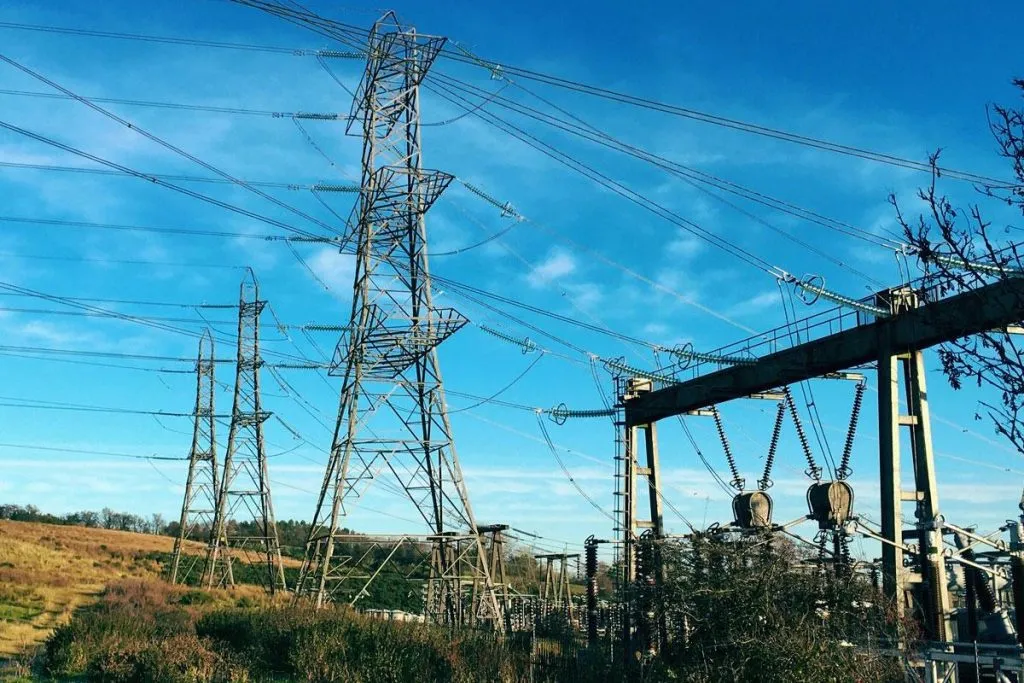
First reported on New Civil Engineer
30 Second Briefing
Data centres, grid-scale battery storage schemes and heavy industrial users are increasingly connecting directly at extra high voltage (typically 132kV and above), where a single connection can involve a dozen contractors, OEMs and network operators working to one tightly sequenced programme. Early engagement of specialist EHV engineers is now central to coordinating protection studies, cable routing, substation layout and grid-code compliance, reducing late-stage design changes and outage risks. For civil and geotechnical teams, this means earlier input on compound footprints, cable trench alignments, earthing grids and high fault-level foundations.
Technical Brief
- Protection coordination at these voltages demands specialist relay settings and detailed fault-level modelling across multiple owners.
- Earthing and step/touch voltage control become critical, often dictating substation geometry and surface treatment.
- Civil and geotechnical works must accommodate heavy transformers, tall gantries and higher uplift forces from fault events.
- Interface risk grows where client, DNO, TSO and OEM standards differ, particularly around earthing, fire and access.
- For similar data centre and battery projects, EHV-specific CDM and electrical safety procedures need integrating into early design.
Our Take
New Civil Engineer’s recent webinar on BIM, CDEs and the ‘data handover gap’ suggests that for EHV schemes, engineering expertise increasingly needs to extend into digital asset definition and information requirements at handover, not just physical design.
The Heathrow–New Civil Engineer early careers innovation competition coverage indicates that operators are starting to tap graduate and apprentice input on complex systems; for EHV projects this could translate into fresh thinking on operability, maintainability and human–machine interface risks that senior engineers then need to validate and integrate.
Prepared by collating external sources, AI-assisted tools, and Geomechanics.io’s proprietary mining database, then reviewed for technical accuracy & edited by our geotechnical team.
Related Articles


Related Industries & Products
Construction
Quality control software for construction companies with material testing, batch tracking, and compliance management.
CMRR-io
Streamline coal mine roof stability assessments with our cloud-based CMRR software featuring automated calculations, multi-scenario analysis, and collaborative workflows.
HYDROGEO-io
Comprehensive hydrogeological testing platform for managing, analysing, and reporting on packer tests, lugeon values, and hydraulic conductivity assessments.
GEODB-io
Centralised geotechnical data management solution for storing, accessing, and analysing all your site investigation and material testing data.