East West Rail start delay: utilisation and staging impacts for project teams
Reviewed by Tom Sullivan
First reported on New Civil Engineer
30 Second Briefing
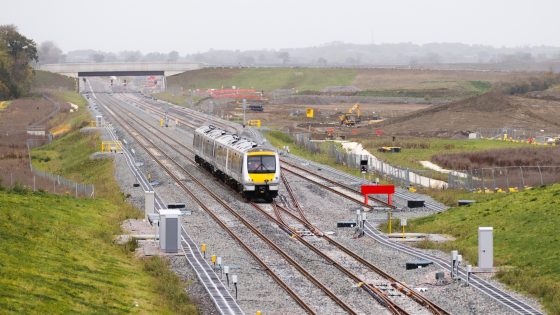
East West Rail’s planned passenger services on the rebuilt Bicester–Bletchley/Milton Keynes section will miss their already-delayed 2026 start window as a dispute with the RMT union remains unresolved. The stand-off, centred on staffing, rostering and terms for operating the new Oxford–Cambridge corridor, leaves newly commissioned track, signalling and station upgrades on the 31km “Connection Stage 1” largely unused. For engineers and contractors, the delay extends the period of low utilisation on recently delivered civil works and complicates planning for subsequent construction stages and timetable integration.
Technical Brief
- Similar labour‑operations stand‑offs on UK rail schemes have previously added unplanned holding costs and programme uncertainty.
Our Take
In our infrastructure database, East West Rail is unusual in combining advanced survey tools like thermal-imaging drones with a still-uncertain operations start, signalling that digital delivery does not necessarily translate into programme certainty once industrial relations issues with bodies such as the RMT arise.
The recent £300M programme assurance partner market engagement for East West Rail suggests a long-term, system-wide delivery model, so prolonged union disputes now could ripple into how risk, performance incentives and staffing assumptions are written into those assurance and future operations contracts.
Prepared by collating external sources, AI-assisted tools, and Geomechanics.io’s proprietary mining database, then reviewed for technical accuracy & edited by our geotechnical team.


