Eagle Nuclear’s Aurora uranium project: baseline studies and design notes for engineers
Reviewed by Tom Sullivan
First reported on MINING.com
30 Second Briefing
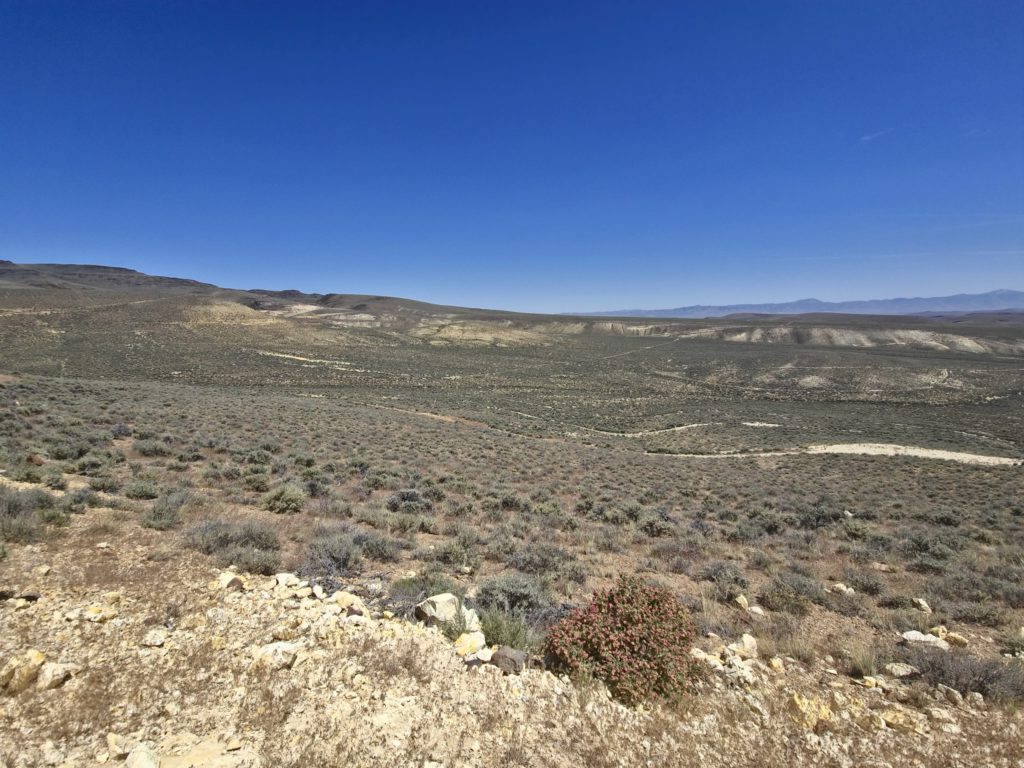
Eagle Nuclear Energy has begun comprehensive environmental baseline studies at its Aurora uranium project on the Oregon–Nevada border ahead of a 27,000 ft pre-feasibility drill programme at what it calls the largest conventional measured and indicated uranium deposit in the US. Work covers hydrology, hydrogeology, surface and groundwater quality, flora and fauna, wetlands delineation, geochemistry, meteorology and cultural heritage to feed into impact assessment, mine design optimisation and permitting. The company is also permitting a 10 m meteorological mast for installation by early June to log wind, temperature gradients, humidity, pressure and solar radiation.
Technical Brief
- Pre-feasibility drill programme totals 27,000 ft of drilling at the Aurora uranium site.
- Aurora is described by Eagle as the largest conventional measured and indicated uranium deposit in the US.
- Baseline work is being launched before PFS drilling, sequencing environmental data ahead of mine design.
- A 10 m meteorological mast is being permitted and procured for installation by early June.
- The MET station will log wind vectors, temperature contrasts, humidity, barometric pressure and solar radiation for dispersion and microclimate modelling.
- Aurora lies on the Oregon–Nevada border in southeast Oregon, implying interstate regulatory and permitting interfaces.
- Energy Fuels’ White Mesa Mill in Utah is currently the only operating uranium mill in the US, constraining domestic processing options for future Aurora output.
Our Take
With Eagle Nuclear Energy’s market capitalisation under $300 million and no deal_type flagged, progressing environmental baseline studies at Aurora without a disclosed partner or acquirer suggests the company is still in a pre-consolidation phase, unlike several US uranium names in our coverage that have already been swept into larger portfolios.
The reference to US reactors needing 32 million pounds of uranium annually versus 50 million pounds purchased in 2024 underscores that any future Aurora output would be competing into a market where utilities are front-loading procurement, which can favour projects that, like Aurora, are already collecting site-specific meteorological and environmental data for licensing dossiers.
Prepared by collating external sources, AI-assisted tools, and Geomechanics.io’s proprietary mining database, then reviewed for technical accuracy & edited by our geotechnical team.
Related Articles

Related Industries & Products
Mining
Geotechnical software solutions for mining operations including CMRR analysis, hydrogeological testing, and data management.
Tunnelling
Specialised solutions for tunnelling projects including grout mix design, hydrogeological analysis, and quality control.
CMRR-io
Streamline coal mine roof stability assessments with our cloud-based CMRR software featuring automated calculations, multi-scenario analysis, and collaborative workflows.
HYDROGEO-io
Comprehensive hydrogeological testing platform for managing, analysing, and reporting on packer tests, lugeon values, and hydraulic conductivity assessments.
GEODB-io
Centralised geotechnical data management solution for storing, accessing, and analysing all your site investigation and material testing data.