Delivering the UK’s energy transition: grid and consent bottlenecks for engineers
Reviewed by Joe Ashwell
First reported on New Civil Engineer
30 Second Briefing
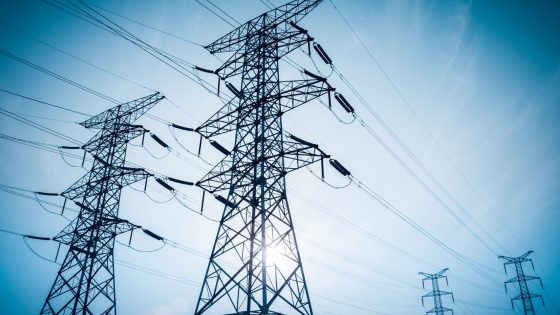
Delivering the UK’s energy transition hinges less on 2030–2050 net zero targets and more on unblocking grid connections, planning consents and supply-chain capacity for gigawatt-scale offshore wind, nuclear new build and grid-scale storage. Engineers face long lead times for 400kV transmission reinforcements, substation upgrades and new interconnectors, with consenting and land access often exceeding construction durations. The piece points to the need for standardised designs, earlier geotechnical investigations and coordinated upgrades of ageing 132kV and 275kV assets to avoid delivery bottlenecks.
Technical Brief
- Delivery of gigawatt-scale assets is constrained by onshore works: pylons, substations, access roads and foundations.
- Contractors face compound risk from overlapping programmes: simultaneous piling, heavy lifting and outage windows on adjacent assets.
- For similar programmes, integrated portfolio planning of civils, electrical and consenting workstreams becomes as critical as design.
Our Take
New Civil Engineer’s recent webinars on BIM, common data environments and digital handover suggest that any UK energy transition build‑out will be constrained as much by information management and asset data quality as by physical construction capacity.
Across our 864 Infrastructure stories, UK pieces that combine ‘Projects’ and ‘Sustainability’ increasingly highlight delivery risk around skills and early‑career pipelines, echoed by New Civil Engineer’s bridges and Heathrow innovation competitions that try to surface practical ideas from graduates and apprentices.
With the United Kingdom dominating New Civil Engineer’s infrastructure coverage, the energy transition discussion here is likely to influence how UK clients specify digital standards and whole‑life performance requirements on future transport and airport schemes as much as on pure energy projects.
Prepared by collating external sources, AI-assisted tools, and Geomechanics.io’s proprietary mining database, then reviewed for technical accuracy & edited by our geotechnical team.
Related Articles


Related Industries & Products
Construction
Quality control software for construction companies with material testing, batch tracking, and compliance management.
Mining
Geotechnical software solutions for mining operations including CMRR analysis, hydrogeological testing, and data management.
QCDB-io
Comprehensive quality control database for manufacturing, tunnelling, and civil construction with UCS testing, PSD analysis, and grout mix design management.