Geomechanics.io

  • Free Tools
Sign UpLog In

Geomechanics.io

Geomechanics, Streamlined.

© 2026 Geomechanics.io. All rights reserved.

Geomechanics.io

CMRR-ioGEODB-ioHYDROGEO-ioQCDB-ioFree Tools & CalculatorsBlogLatest Industry News

Industries

MiningConstructionTunnelling

Company

Terms of UsePrivacy PolicyLinkedIn
    Research
    Projects

    CSIRO quantum battery breakthrough: critical minerals lens for engineers

    March 18, 2026|

    Reviewed by Joe Ashwell

    CSIRO quantum battery breakthrough: critical minerals lens for engineers

    First reported on Australian Mining

    30 Second Briefing

    Australian researchers led by CSIRO have built the world’s first proof‑of‑concept quantum battery, using entangled quantum states to charge multiple cells collectively rather than individually. The lab‑scale device, fabricated in CSIRO’s clean quantum battery engineering lab, is designed to scale to solid‑state architectures compatible with grid‑scale storage and electric vehicles. If commercialised, the technology could sharply increase demand for high‑purity critical minerals such as lithium, nickel, cobalt and rare earth elements, with tighter specifications on impurity control and crystal defect behaviour.

    Technical Brief

    • Prototype cells are fabricated in CSIRO’s clean lab to tightly control particulate and chemical contamination.

    Our Take

    CSIRO’s parallel work on petalite-based lithium extraction suggests that any quantum battery chemistry they back is likely to be aligned with non-traditional lithium feedstocks, which could diversify upstream supply options for Australian projects beyond spodumene.

    Across the 41 Materials stories in our database, CSIRO appears repeatedly as a technology catalyst rather than a project operator, signalling that Australian miners may need to engage early with CSIRO-led IP if they want a stake in future critical-mineral battery value chains.

    The combination of CSIRO’s low-frequency connectivity trials for underground and remote mining and its quantum battery research points to an integrated R&D agenda in Australia where power storage, data links and automation are being developed as a package for hard-to-access deposits.

    Geotechnical Software for Modern Teams

    Centralise site data, logs, and lab results with GEODB-io, CMRR-io, and HYDROGEO-io.

    No credit card required.

    • Save and export unlimited calculations
    • Advanced data visualisation
    • Generate professional PDF reports
    • Cloud storage for all your projects

    Prepared by collating external sources, AI-assisted tools, and Geomechanics.io’s proprietary mining database, then reviewed for technical accuracy & edited by our geotechnical team.

    Related Articles
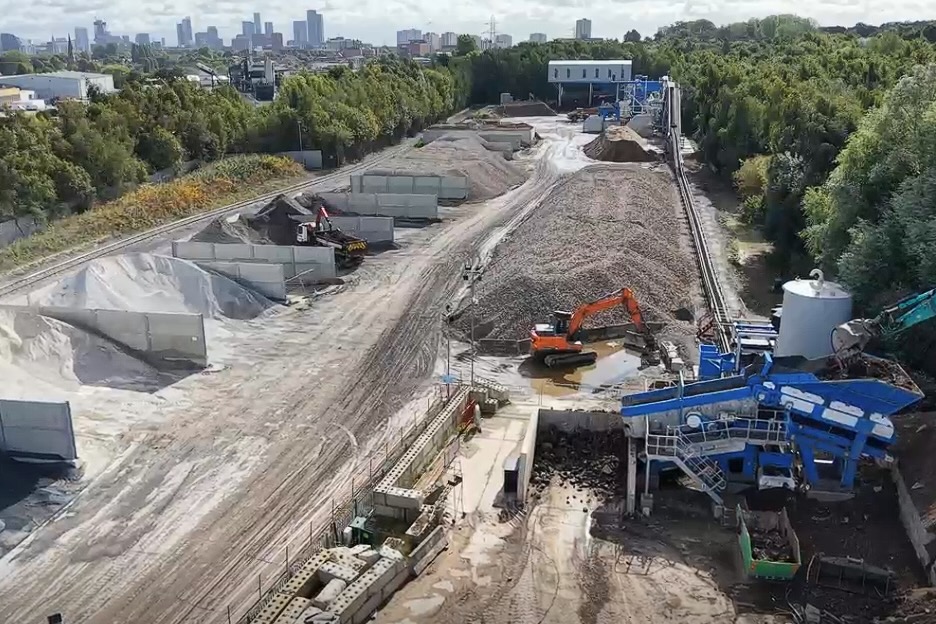
    Screencore Orbiter 206R trommel: mobility and flow control insights for engineers
    Materials
    4 days ago

    Screencore Orbiter 206R trommel: mobility and flow control insights for engineers

    Screencore has launched the Orbiter 206R trommel, a 31‑tonne unit with a 7m³ hopper, 1,200mm heavy belt, and variable feed angle designed to maintain unencumbered material flow. The machine uses independent, radio‑controlled belt speed controls and a large PLC interface with full‑auto functionality, plus a Cat engine on 4m tracks with two‑speed drive and remote control for site mobility. A 180° radial fines conveyor with radio remote and auto‑functionality targets higher stockpile volumes and reduced loader rehandling on constrained sites.

    British Steel nationalisation: supply, cost and risk takeaways for UK project teams
    Materials
    5 days ago

    British Steel nationalisation: supply, cost and risk takeaways for UK project teams

    Government plans to nationalise British Steel aim to preserve domestic production of structural sections, plate and rail steel used in major UK infrastructure, but raise questions over long‑term subsidy levels and exposure of public finances. Civil contractors reliant on BS EN 10025 and BS EN 10210 compliant sections could see short‑term supply stability, yet face potential cost volatility if state ownership drives changes in pricing, energy cost pass‑through or decarbonisation investment. The move also concentrates risk for large public works pipelines such as HS2, road bridges and offshore wind foundations.

    Ionic recycled rare earth EV motor magnets: supply chain lessons for engineers
    Materials
    7 days ago

    Ionic recycled rare earth EV motor magnets: supply chain lessons for engineers

    Ionic Rare Earths has led a UK–European collaboration with Less Common Metals, GKN and Ford UK to complete what it calls the Western world’s first end-to-end recycled rare earth supply chain for EV motor magnets, using “made-in-Belfast” long-loop recycling technology. Recycled neodymium, dysprosium and terbium oxides at >99.5% purity were converted by LCM into strip alloy, then into GKN magnets that passed Ford Dunton rotor durability tests with performance equivalent to production magnets. The Belfast commercial recycling plant will feed LCM alloy production for Ford’s UK EV facilities, directly supporting the UK Critical Minerals Strategy target of sourcing 20% of mineral needs from recycling by 2035.

    Related Industries & Products

    Mining

    Geotechnical software solutions for mining operations including CMRR analysis, hydrogeological testing, and data management.

    Tunnelling

    Specialised solutions for tunnelling projects including grout mix design, hydrogeological analysis, and quality control.

    CMRR-io

    Streamline coal mine roof stability assessments with our cloud-based CMRR software featuring automated calculations, multi-scenario analysis, and collaborative workflows.

    HYDROGEO-io

    Comprehensive hydrogeological testing platform for managing, analysing, and reporting on packer tests, lugeon values, and hydraulic conductivity assessments.

    GEODB-io

    Centralised geotechnical data management solution for storing, accessing, and analysing all your site investigation and material testing data.

    AllGeotechnicalInfrastructureHazardsEnvironmental