Canwick storm tank upgrade: hydraulic and control implications for engineers
Reviewed by Tom Sullivan
First reported on New Civil Engineer
30 Second Briefing
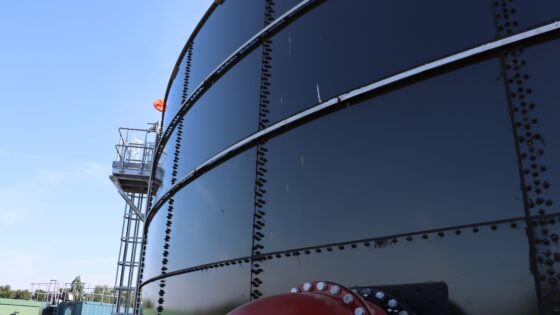
A £3.3M upgrade at Anglian Water’s Canwick Water Recycling Centre in Lincolnshire is nearing completion, with final commissioning of expanded storm storage now underway. The scheme centres on increasing offline storm tank capacity to reduce combined sewer overflows to the River Witham and improve compliance with Environment Agency storm spill permits. Civil works, new mechanical screening and upgraded control systems will alter hydraulic behaviour during peak events, so operators will need updated network models and revised operating rules for intense rainfall.
Technical Brief
- Works are being completed under live treatment operations, requiring staged isolations and temporary flow diversions.
- Offline storm storage is configured as a separate tank system, avoiding major reconfiguration of primary process units.
- New mechanical screening on the storm line reduces ragging in downstream tanks and return pumping equipment.
- Upgraded control integrates storm storage with existing SCADA, enabling automated set-points for storm inflow and drawdown.
- Commissioning includes wet-testing of storm transfer pumps and verification of level instrumentation across the new tank volume.
- Civil close-out activities focus on reinstating access, drainage and safe tanker / maintenance access around the new structures.
- Similar UK WRC upgrades are increasingly packaging storm storage, screening and controls as single EPC-style interventions.
Our Take
Several recent Anglian Water pieces in our database – including the Raunds Cypermethrin treatment upgrade – show the company pairing relatively modest-capex schemes with targeted environmental outcomes, which suggests Canwick is likely optimised for regulatory compliance on storm overflows rather than major hydraulic reconfiguration.
Within our 918 Infrastructure stories, Anglian Water appears frequently in the ‘Projects’ and ‘Sustainability’ set, indicating that even mid-sized works in regions like Lincolnshire are now being framed as part of a wider environmental performance narrative rather than routine maintenance.
Prepared by collating external sources, AI-assisted tools, and Geomechanics.io’s proprietary mining database, then reviewed for technical accuracy & edited by our geotechnical team.
Related Articles


Related Industries & Products
Construction
Quality control software for construction companies with material testing, batch tracking, and compliance management.
CMRR-io
Streamline coal mine roof stability assessments with our cloud-based CMRR software featuring automated calculations, multi-scenario analysis, and collaborative workflows.
HYDROGEO-io
Comprehensive hydrogeological testing platform for managing, analysing, and reporting on packer tests, lugeon values, and hydraulic conductivity assessments.
GEODB-io
Centralised geotechnical data management solution for storing, accessing, and analysing all your site investigation and material testing data.