Cameco flood recovery at McArthur River: access and production lessons for mine engineers
Reviewed by Joe Ashwell
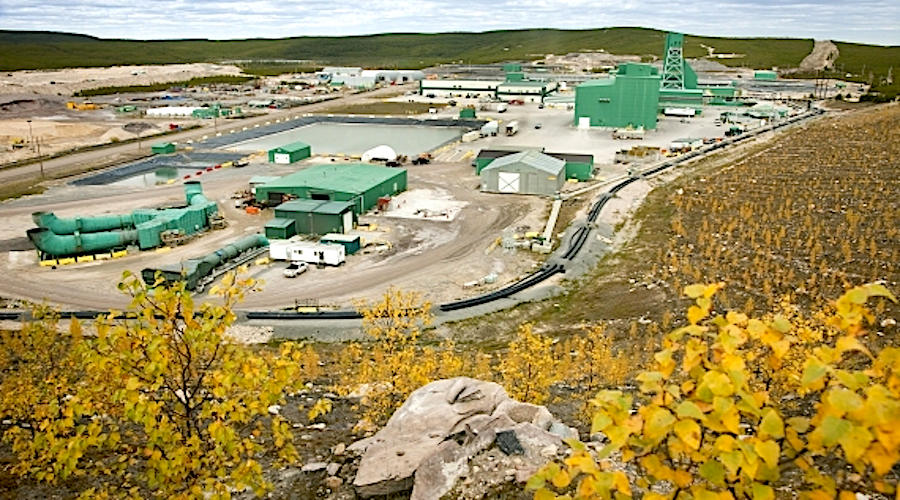
First reported on MINING.com
30 Second Briefing
Cameco has restored full production at the McArthur River uranium mine and Key Lake mill in northern Saskatchewan after flooding earlier in May partially collapsed the Smoothstone River bridge, severing the main haul route between the two sites. Key Lake output was halted on 10 May and McArthur River activity reduced, with weight and traffic limits on an alternate road constraining deliveries of operating supplies. The company is working with the Saskatchewan Ministry of Highways on permanent access restoration and is maintaining its 2026 production guidance of 19.5–21.5 million lb U₃O₈.
Technical Brief
- Flood-induced partial collapse of the Smoothstone River bridge removed the primary heavy-haul link between McArthur River and Key Lake.
- Key Lake production was stopped on 10 May specifically due to loss of safe logistics access, not plant damage.
- McArthur River output was deliberately reduced to align with constrained inbound supplies under temporary road restrictions.
- Alternate route remained operational but with weight and traffic limits, effectively acting as a controlled-risk, light-haul corridor.
- Cameco reports no direct flood damage to mine or mill infrastructure, limiting safety concerns to off-site transport exposure.
- Continuous liaison with the Saskatchewan Ministry of Highways indicates formal coordination on structural assessment and permanent access reinstatement.
- Cigar Lake mine operations were maintained without interruption, suggesting diversified site access and independent logistics corridors within Cameco’s network.
- For similar remote uranium operations, the incident underlines vulnerability of single critical bridges and the need for pre-planned redundant access routes.
Our Take
With Cameco already committing nearly 22 million lb of uranium ore concentrate to India between 2027 and 2035, any disruption at McArthur River/Key Lake tightens its flexibility to layer in further long-term contracts without over‑stretching the 19.5–21.5 million lb U3O8 production outlook for 2026.
Northern Saskatchewan features in several of our recent pieces as a high‑grade but logistically exposed uranium district; the Smoothstone River bridge failure underlines that haulage and access redundancy may now warrant as much attention in project design as mill debottlenecking for assets like McArthur River, Cigar Lake and future brownfield expansions.
Prepared by collating external sources, AI-assisted tools, and Geomechanics.io’s proprietary mining database, then reviewed for technical accuracy & edited by our geotechnical team.
Related Articles

Related Industries & Products
Mining
Geotechnical software solutions for mining operations including CMRR analysis, hydrogeological testing, and data management.
Construction
Quality control software for construction companies with material testing, batch tracking, and compliance management.
CMRR-io
Streamline coal mine roof stability assessments with our cloud-based CMRR software featuring automated calculations, multi-scenario analysis, and collaborative workflows.
HYDROGEO-io
Comprehensive hydrogeological testing platform for managing, analysing, and reporting on packer tests, lugeon values, and hydraulic conductivity assessments.
GEODB-io
Centralised geotechnical data management solution for storing, accessing, and analysing all your site investigation and material testing data.