Brightstar’s Two Mile Hill drilling: design and resource implications for mine planners
Reviewed by Tom Sullivan
First reported on Australian Mining
30 Second Briefing
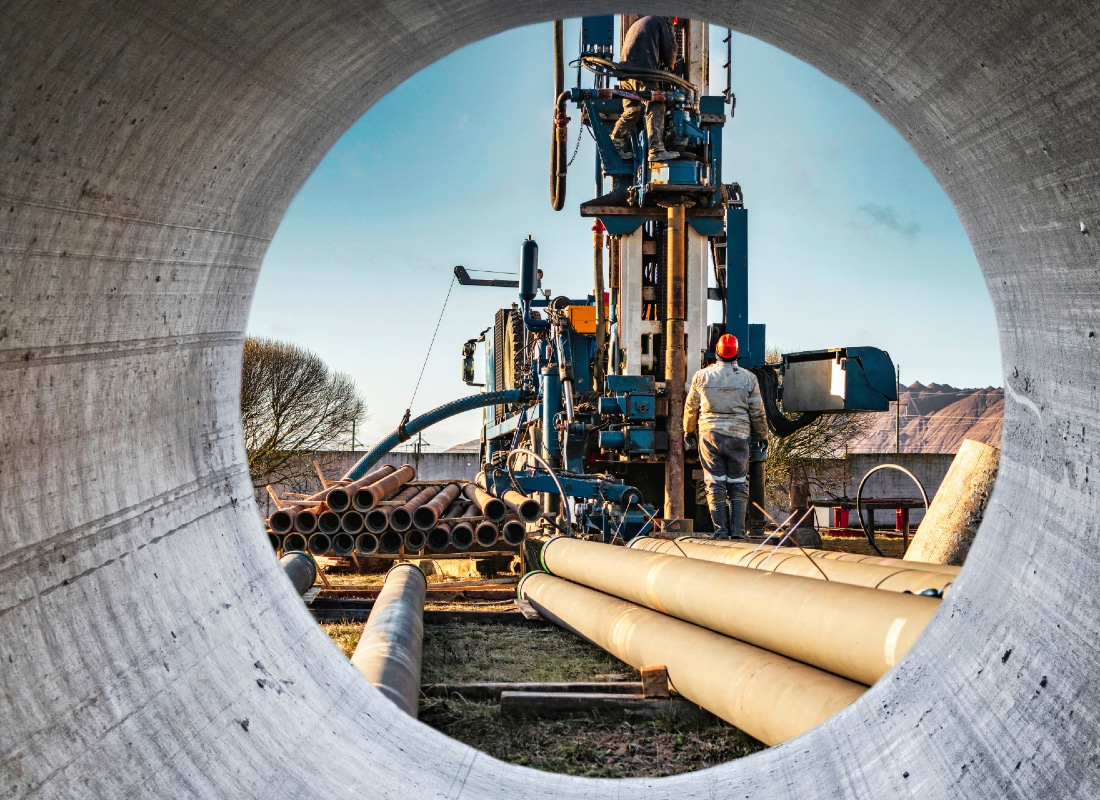
Brightstar Resources has started a 6500m, seven-hole diamond deep-drilling programme at the Two Mile Hill–Shillington deposit in Western Australia, targeting extensions of gold mineralisation beneath the current 1.45Moz resource. Drilling will probe the Shirvington Zone, a broad mineralised tonalite body at depth within the wider 3.6Moz Sandstone gold project, using at least one dedicated deep-capacity rig. Results will guide updated resource modelling and could materially change underground mine design options, including potential bulk-tonnage extraction scenarios.
Technical Brief
- Focus on the Shirvington Zone tonalite points to potential bulk-tonnage, lower-grade underground stoping geometries.
- Tonalite host rock typically provides more competent ground than shear-hosted lodes, affecting support and dilution control.
- Deep drilling data will refine vertical continuity of mineralisation, critical for stope sequencing and ventilation design.
- Core from depth will improve geotechnical domains for underground design: UCS, RQD, structural fabric.
- Results are likely to drive trade-off studies between long-hole open stoping, sublevel caving or block caving options.
Our Take
The 1.45Moz resource now quoted for the Two Mile Hill–Shillington deposit matches the upgraded figure reported in the 28 Sept 2026 item, so this 6500m deep-drilling phase looks more like a push to convert and extend that inventory than a greenfield step-out.
With Sandstone sitting at 3.6Moz and Bull Oak delivering long mineralised runs in the 5 Oct 2026 article, incremental ounces at the Shirvington Zone could be important for Brightstar Resources in sustaining mill feed flexibility across its Western Australian gold hubs.
Across our 1246 Mining stories, Western Australian gold projects like Sandstone tend to move from drilling to construction decisions quickly once resources pass the multi-million-ounce mark, which suggests any material uplift from this campaign could accelerate mine planning options.
Prepared by collating external sources, AI-assisted tools, and Geomechanics.io’s proprietary mining database, then reviewed for technical accuracy & edited by our geotechnical team.
Related Articles

Related Industries & Products
Mining
Geotechnical software solutions for mining operations including CMRR analysis, hydrogeological testing, and data management.
Construction
Quality control software for construction companies with material testing, batch tracking, and compliance management.
CMRR-io
Streamline coal mine roof stability assessments with our cloud-based CMRR software featuring automated calculations, multi-scenario analysis, and collaborative workflows.
HYDROGEO-io
Comprehensive hydrogeological testing platform for managing, analysing, and reporting on packer tests, lugeon values, and hydraulic conductivity assessments.
GEODB-io
Centralised geotechnical data management solution for storing, accessing, and analysing all your site investigation and material testing data.