Geomechanics.io

  • Free Tools
Sign UpLog In
Built byBoxcut Studio

Geomechanics.io

Geomechanics, Streamlined.

© 2026 Geomechanics.io. All rights reserved.

Geomechanics.io

CMRR-ioGEODB-ioHYDROGEO-ioQCDB-ioFree Tools & CalculatorsBlogLatest Industry News

Industries

MiningConstructionTunnelling

Company

Terms of UsePrivacy PolicyLinkedIn
    Product
    Sustainability

    Boosting diesel asset life with H2Boost: integration and emissions lens for mines

    July 2, 2026|

    Reviewed by Joe Ashwell

    Boosting diesel asset life with H2Boost: integration and emissions lens for mines

    First reported on Australian Mining

    30 Second Briefing

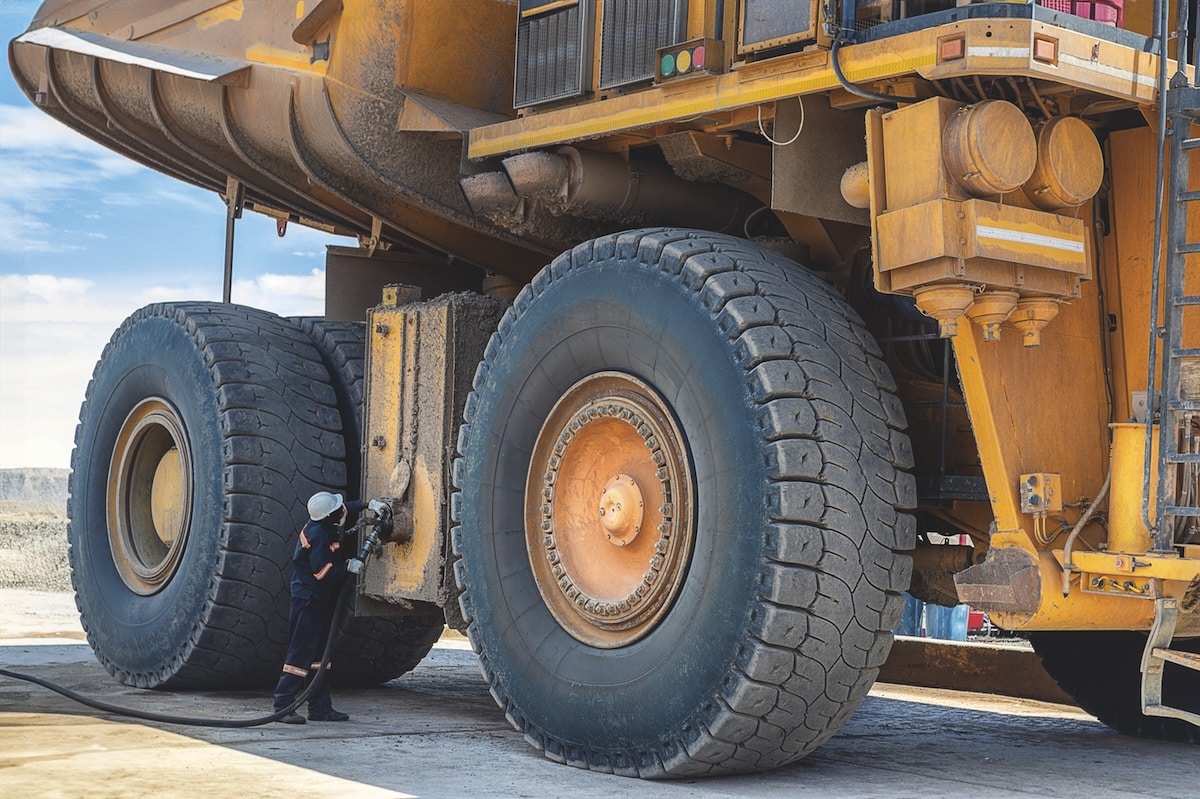
    H2Boost is being promoted as a retrofit hydrogen‑diesel dual‑fuel system that injects on‑demand hydrogen into existing diesel engines to improve combustion and cut emissions without replacing trucks or loaders. The system supplements diesel with small hydrogen volumes generated or stored on site, targeting large mining haul fleets where full battery or trolley‑assist conversion is currently cost‑prohibitive. For mine operators, the key questions are integration with existing fuel supply, engine warranty implications, and quantifying real‑world NOx, particulate and CO₂ reductions under high‑load duty cycles.

    Technical Brief

    • For other mines, dual-fuel retrofits offer an interim pathway where grid power or full electrification is unavailable.

    Our Take

    Hydrogen–diesel optimisation pieces are still a small subset of the 95 keyword‑matched items in our database, suggesting H2Boost is operating in a relatively early but visible niche for decarbonising existing diesel fleets rather than replacing them outright.

    Positioned under both ‘Product’ and ‘Sustainability’, this H2Boost coverage aligns with Australian Mining’s recent ESG‑technology focus, where other articles highlight real‑time environmental data; hydrogen retrofit solutions could be attractive for operators who cannot yet justify full battery‑electric or hydrogen fuel‑cell fleets on remote Australian sites.

    Because Australian heavy‑haul rail and mine haulage remain dominated by diesel, as seen in coverage of Martinus’ rail work for iron ore and coal, hydrogen‑assisted diesel life‑extension products may offer a transitional pathway to lower emissions while preserving sunk capital in locomotives and mobile plant.

    Geotechnical Software for Modern Teams

    Centralise site data, logs, and lab results with GEODB-io, CMRR-io, and HYDROGEO-io.

    No credit card required.

    • Save and export unlimited calculations
    • Advanced data visualisation
    • Generate professional PDF reports
    • Cloud storage for all your projects

    Prepared by collating external sources, AI-assisted tools, and Geomechanics.io’s proprietary mining database, then reviewed for technical accuracy & edited by our geotechnical team.

    Related Articles

    Mining
    about 4 hours ago

    Techking–Boonray autonomous mining tyres: design and duty-cycle notes for engineers

    Techking is collaborating with Chinese autonomous haulage specialist Boonray to co-develop mining truck tyres tailored to electric and driverless fleets, where high, instantaneous torque and tighter speed control change loading behaviour. The partners are integrating tyre design into early vehicle engineering, using Boonray’s AHS control data on torque curves, duty cycles and haul-road conditions to refine carcass structure, compound selection and heat management. For mine operators, this points to tyre performance being tuned to specific autonomous truck–road systems rather than generic TKPH-based selection.

    Mining
    about 4 hours ago

    EcoPower Mate temporary power: layout and staging insights for mine planners

    EcoPower Mate introduces a modular temporary power system for remote mines, targeting exploration camps, mobile offices, communications nodes and construction facilities that currently rely on diesel gensets. Designed for locations with shifting footprints and variable loads, the units can be redeployed as drilling pads, laydown areas or satellite camps move, reducing the need to oversize fixed generator banks. For mine planners and project engineers, the approach supports more flexible power layouts and staged infrastructure without committing to early grid extensions.

    Mining
    about 4 hours ago

    Sedgman wins Barroso lithium FEED: design and risk notes for project engineers

    Sedgman has secured the Front-End Engineering and Design contract for the lithium concentrator plant at Savannah Resources’ Barroso lithium project in northern Portugal, following its earlier work on the process flowsheet and Definitive Feasibility Study plant design. The FEED scope will refine equipment selection, layout and mass–energy balances for the hard-rock spodumene concentrator, de-risking capital estimates ahead of a final investment decision. For geotechnical and civil teams, the move signals progression towards detailed earthworks, foundations and tailings/waste infrastructure design on what is billed as mainland Europe’s largest lithium project.

    Related Industries & Products

    Mining

    Geotechnical software solutions for mining operations including CMRR analysis, hydrogeological testing, and data management.

    CMRR-io

    Streamline coal mine roof stability assessments with our cloud-based CMRR software featuring automated calculations, multi-scenario analysis, and collaborative workflows.

    HYDROGEO-io

    Comprehensive hydrogeological testing platform for managing, analysing, and reporting on packer tests, lugeon values, and hydraulic conductivity assessments.

    GEODB-io

    Centralised geotechnical data management solution for storing, accessing, and analysing all your site investigation and material testing data.

    AllGeotechnicalInfrastructureHazardsEnvironmental