BHP shelving $1.7bn Pilbara climate projects: risk signals for mine planners
Reviewed by Joe Ashwell
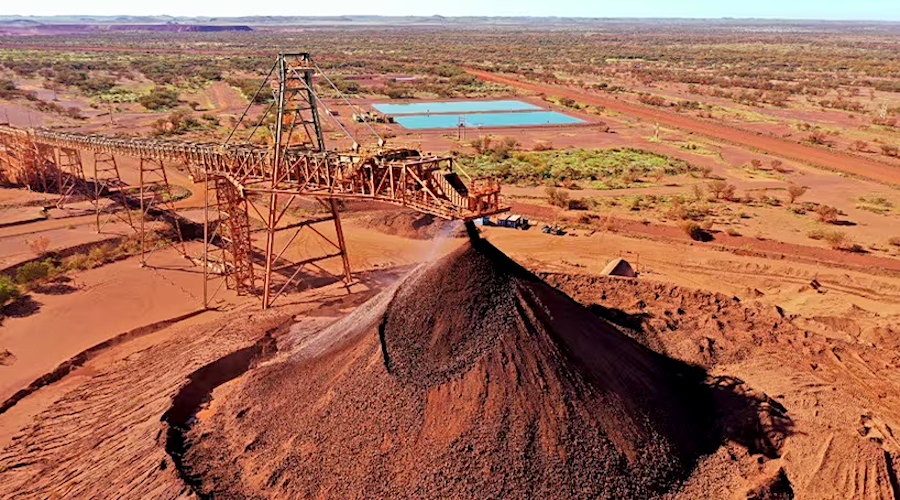
First reported on MINING.com
30 Second Briefing
Leaked internal records show BHP has paused or deferred more than $1.7 billion of Pilbara decarbonisation projects, including a board‑approved $400 million solar‑and‑battery plant at Jimblebar and a $1.3 billion regional renewables package to power electric haul trucks and trains, with no major spend planned before 2031. The documents warn that slow emissions cuts in Pilbara, which generates $14.4 billion pre‑tax profit and over one‑third of BHP’s Australian emissions, threaten its “licence to operate”. BHP has instead ordered 62 new diesel trucks for Jimblebar, extending diesel reliance into the late 2030s, while rival Fortescue pushes ahead with electrification.
Technical Brief
- Internal 2023 memo signed by BHP Australia president Geraldine Slattery labels Pilbara decarbonisation “urgent”.
- Same memo explicitly links emissions reduction pace to maintaining BHP’s “licence to operate, sustain and grow”.
- Pilbara iron ore assets are documented as producing over one‑third of BHP’s total Australian emissions.
- Board‑approved Jimblebar solar‑and‑battery project was halted shortly after approval due to “cash prioritization requirements”.
- Separate $1.3 billion regional renewables package (solar, wind, batteries) was shelved in its proposed configuration.
- Purchase of 62 additional diesel haul trucks at Jimblebar followed a sharp fall in truck prices.
- Rival Fortescue is referenced as proceeding with Pilbara electrification despite internal industry scepticism on technology readiness and timelines.
Our Take
In our database of 1187 Mining stories, BHP’s Pilbara iron ore business is one of the few assets showing pre‑tax profits above $10 billion, so deferring a $1.3‑billion renewables build-out suggests management is prioritising near‑term cash margins over early decarbonisation at a flagship cash generator.
Recent coverage of BHP at Olympic Dam in South Australia highlights regulatory pressure to assess critical minerals and hydrogen options, which contrasts with the slower decarbonisation timetable implied for Pilbara iron ore and may create an uneven emissions profile across BHP’s portfolio.
The decision to lock in diesel use at Jimblebar out toward 2041 sits awkwardly alongside BHP’s collaborative work with Rio Tinto on large‑scale filtered tailings and water-efficient technologies, signalling that operational innovation on waste and water is currently moving faster than fuel-switching in its iron ore operations.
Prepared by collating external sources, AI-assisted tools, and Geomechanics.io’s proprietary mining database, then reviewed for technical accuracy & edited by our geotechnical team.
Related Articles

Related Industries & Products
Mining
Geotechnical software solutions for mining operations including CMRR analysis, hydrogeological testing, and data management.
CMRR-io
Streamline coal mine roof stability assessments with our cloud-based CMRR software featuring automated calculations, multi-scenario analysis, and collaborative workflows.
HYDROGEO-io
Comprehensive hydrogeological testing platform for managing, analysing, and reporting on packer tests, lugeon values, and hydraulic conductivity assessments.
GEODB-io
Centralised geotechnical data management solution for storing, accessing, and analysing all your site investigation and material testing data.