Geomechanics.io

  • Free Tools
Sign UpLog In
Built byBoxcut Studio

Geomechanics.io

Geomechanics, Streamlined.

© 2026 Geomechanics.io. All rights reserved.

Geomechanics.io

CMRR-ioGEODB-ioHYDROGEO-ioQCDB-ioFree Tools & CalculatorsBlogLatest Industry News

Industries

MiningConstructionTunnelling

Company

Terms of UsePrivacy PolicyLinkedIn
    Projects
    Standard/Guideline
    Sustainability

    AustStab 2026: stabilised pavement evidence to practice for road engineers

    November 25, 2026|

    Reviewed by Joe Ashwell

    AustStab 2026: stabilised pavement evidence to practice for road engineers

    First reported on Roads & Infrastructure (AU)

    30 Second Briefing

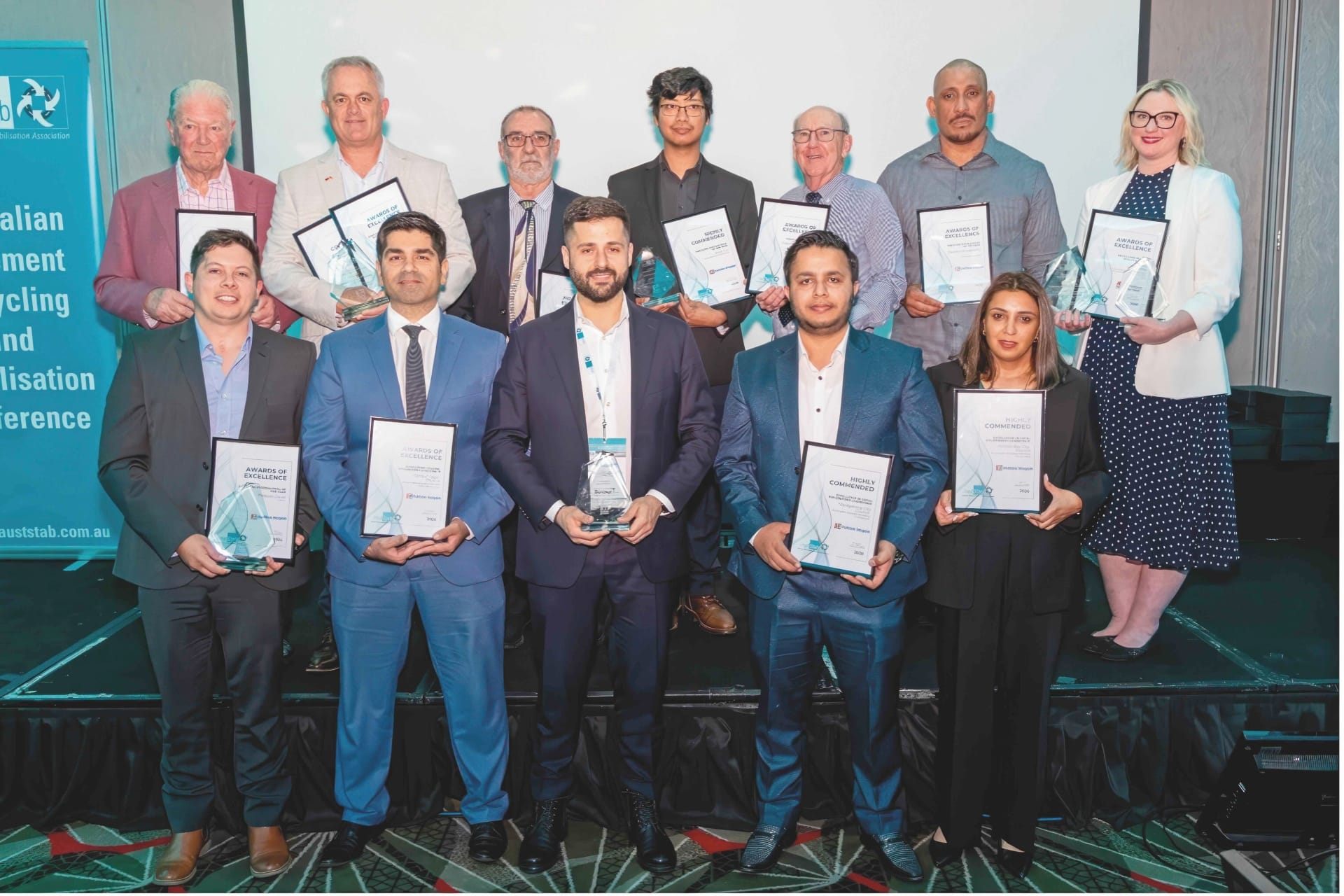
    AustStab’s 2026 conference focused on converting stabilisation research and performance data into day‑to‑day decisions on investigation, specification, funding, construction and acceptance of pavements. Delegates examined how evidence on in-situ recycling, binder selection and whole‑of‑life cost modelling can be embedded in procurement and standards to deliver more resilient road bases rather than relying solely on new materials. The AustStab Awards of Excellence spanned eight categories, including new Project of the Year and Industry Leadership awards, signalling priority areas for 2027’s technical agenda.

    Technical Brief

    • AustStab Awards of Excellence were expanded to eight categories to capture diverse stabilisation applications.
    • New Project of the Year award targeted projects using innovative stabilisation design, delivery or quality control.
    • Industry Leadership award recognised organisations driving adoption of stabilisation in network-level asset strategies.

    Our Take

    Across our infrastructure coverage, AustStab appears mainly in the context of in situ pavement recycling and stabilisation, so a 2026 conference with a 2027 agenda focus suggests the association is trying to lock in medium‑term practice changes rather than one‑off trials on individual road projects in Australia.

    With 973 Infrastructure stories and 2500 tag‑matched pieces, only a small subset deal with standards and guidelines for sustainability, so AustStab’s work in Australia is one of the more prominent examples where a specialist body is explicitly trying to translate evidence on stabilisation into day‑to‑day specifications and maintenance practice.

    Geotechnical Software for Modern Teams

    Centralise site data, logs, and lab results with GEODB-io, CMRR-io, and HYDROGEO-io.

    Cancel at any time.

    • Save and export unlimited calculations
    • Advanced data visualisation
    • Generate professional PDF reports
    • Cloud storage for all your projects

    Prepared by collating external sources, AI-assisted tools, and Geomechanics.io’s proprietary mining database, then reviewed for technical accuracy & edited by our geotechnical team.

    Related Articles

    Strabag’s Pfaffensteig Tunnel contract: design and delivery notes for rail engineers
    Infrastructure
    7 months ago

    Strabag’s Pfaffensteig Tunnel contract: design and delivery notes for rail engineers

    Strabag and Group company Züblin have secured the design-and-build structural works for the ABS Gäubahn Nord/Pfaffensteig Tunnel in south-west Germany, centred on an 11km twin-bore rail tunnel linking Stuttgart Airport station directly to the Gäubahn line towards Switzerland. About 9.8km will be driven by two TBMs, with conventional tunnelling for the A8 motorway undercrossing and airport connection, plus a 240m cut-and-cover section, retaining structures, railway underpasses and a grade-separated crossing. A 3km surface section will be upgraded and partially realigned for 200km/h operation, delivered under an integrated project delivery model with Ed. Züblin, Wayss & Freytag and Strabag AG sharing tunnelling, structural and earthworks packages.

    National Grid TBM under the Thames: tunnelling design and risk notes for engineers
    Infrastructure
    9 months ago

    National Grid TBM under the Thames: tunnelling design and risk notes for engineers

    A 271.5‑tonne Herrenknecht Mixshield TBM, Caroline, has started driving a 2.2km electricity cable tunnel with a 4m internal diameter beneath the River Thames in Essex for National Grid’s Grain to Tilbury project, delivered by the Ferrovial BEMO joint venture. The drive will pass through variable Thames estuary ground conditions between 35m‑deep launch and reception shafts of 15m and 12m diameter, with tunnelling continuing into 2026 and overall scheme completion targeted for 2029. The new tunnel will replace the 1969 Thames Cable Tunnel and carry new high‑voltage circuits between Grain and Tilbury substations.

    Panama Canal Mixshield undercrossing: design and tunnelling lessons for engineers
    Infrastructure
    10 months ago

    Panama Canal Mixshield undercrossing: design and tunnelling lessons for engineers

    A 13.46m diameter Herrenknecht Mixshield TBM has broken through into the future Balboa station on Panama Metro Line 3 after completing the first-ever TBM undercrossing of the Panama Canal at depths exceeding 60m below sea level. The 5,600kW, 26,616kNm machine, fitted with an accessible cutterhead and more than 4,500 sensors linked via the Herrenknecht.Connected platform, has achieved peak advance of 150 segment rings (about 300m) per month through mixed sandstone, tuff, breccias and basalt. Around 1.5km of the 4.5km twin-track tunnel remains to final breakthrough.

    Related Industries & Products

    Construction

    Quality control software for construction companies with material testing, batch tracking, and compliance management.

    Mining

    Geotechnical software solutions for mining operations including CMRR analysis, hydrogeological testing, and data management.

    QCDB-io

    Comprehensive quality control database for manufacturing, tunnelling, and civil construction with UCS testing, PSD analysis, and grout mix design management.

    AllGeotechnicalInfrastructureHazardsEnvironmental