Arada’s £2.5bn Thameside West: design, phasing and transport notes for engineers
Reviewed by Joe Ashwell
First reported on The Construction Index
30 Second Briefing
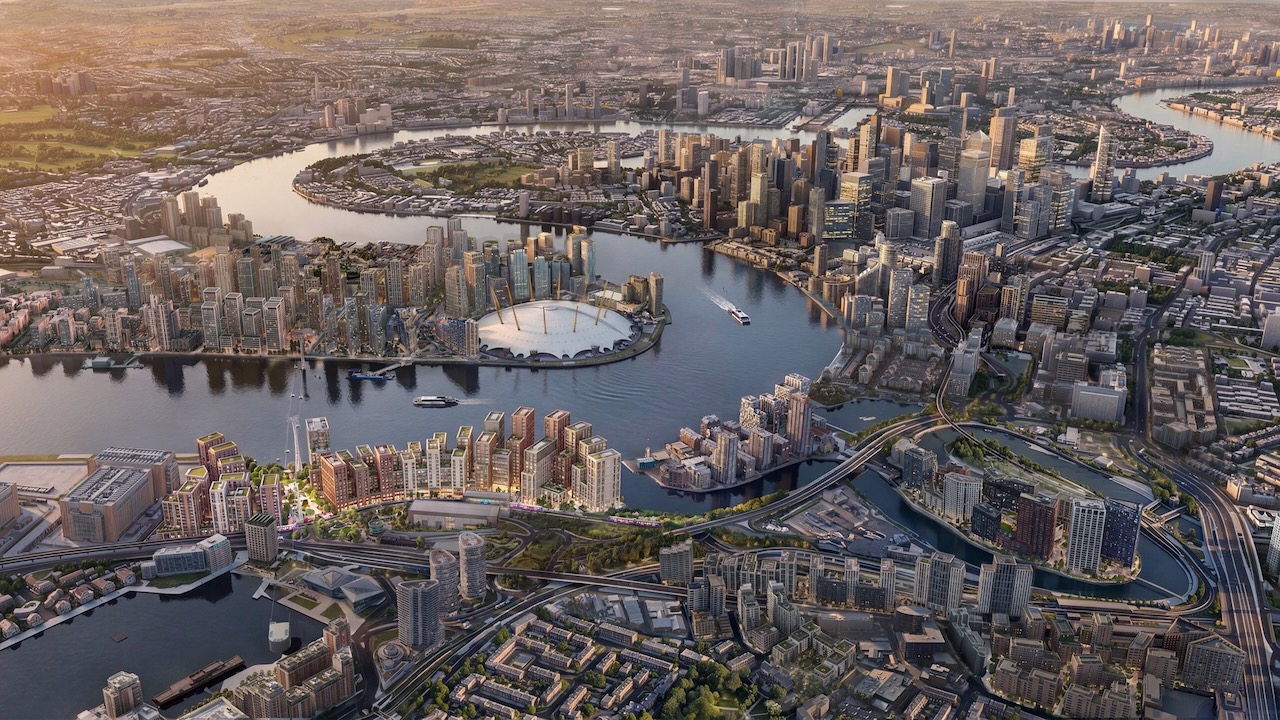
Arada has unveiled a £2.5bn plan for the 47‑acre Thameside West site in London’s Royal Docks, targeting at least 5,000 homes with 35% affordable, green space over roughly half the site and a 1km active waterfront. The first phase will deliver 1,500 homes in six buildings plus a major public park, with Arup, Gensler and landscape architect Planit appointed to lead design updates to current building safety and regulatory standards. Arada aims to submit the first-stage planning application this summer, start on site by early 2028, and open a new DLR station with TfL in time for initial occupation.
Technical Brief
- Gross development value is £2.5bn for the 47‑acre Thameside West regeneration.
- Existing outline consent already secures capacity for at least 5,000 residential units on site.
- Delivery structure pairs Arada with the GLA’s land company GLAP as public–private partners.
- New DLR station is being co‑developed with TfL as a primary public transport access node.
- Planning submission for the first stage is targeted for summer, with on‑site works dependent on approval.
Our Take
Arup’s role at Thameside West follows its appearance across several other UK infrastructure pieces in our database, including National Highways’ Water Quality Plan and MOD-backed industrial works, signalling that the consultant is consolidating a strong pipeline of complex, publicly linked projects.
With the Greater London Authority and Transport for London involved at a 47‑acre Royal Docks site, the scheme will likely face the same tight overheating and environmental performance expectations referenced in the updated CIBSE TM59 guidance developed with Arup, pushing design teams towards robust passive and active cooling strategies.
A gross development value in the multi‑billion range and a build start not expected until 2028 puts Thameside West among the longer‑horizon London regeneration schemes in our infrastructure coverage, meaning early design decisions on phasing and transport interfaces around the DLR station will be critical to lock in viability under evolving planning and funding regimes.
Prepared by collating external sources, AI-assisted tools, and Geomechanics.io’s proprietary mining database, then reviewed for technical accuracy & edited by our geotechnical team.
Related Articles


Related Industries & Products
Construction
Quality control software for construction companies with material testing, batch tracking, and compliance management.
CMRR-io
Streamline coal mine roof stability assessments with our cloud-based CMRR software featuring automated calculations, multi-scenario analysis, and collaborative workflows.
HYDROGEO-io
Comprehensive hydrogeological testing platform for managing, analysing, and reporting on packer tests, lugeon values, and hydraulic conductivity assessments.
GEODB-io
Centralised geotechnical data management solution for storing, accessing, and analysing all your site investigation and material testing data.