Antofagasta’s $900M Zaldívar mine life extension: water strategy insights for engineers
Reviewed by Tom Sullivan
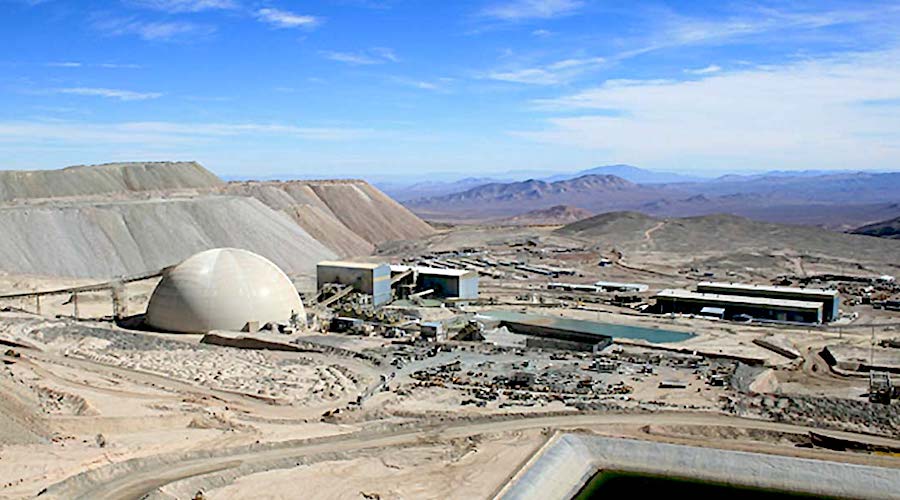
First reported on MINING.com
30 Second Briefing
Antofagasta will invest $900 million to extend the Zaldívar copper mine in Chile’s Antofagasta region to 2051, under a plan that replaces all continental water use with treated wastewater supplied by sanitation company Econssa from 2028. The project centres on a new conveyance and pumping system from the La Negra sector and will generate up to 5,000 construction jobs at peak activity starting in the second half of 2026. For other operators in northern Chile’s arid copper belt, the scheme provides a full-scale reference for wastewater-based process water supply under tightening environmental constraints.
Technical Brief
- Antofagasta’s Zaldívar operation is co-owned with Barrick, affecting JV capital allocation and water-supply risk sharing.
- Treated wastewater will be supplied by sanitation company Econssa, requiring mining–municipal interface on quality and reliability.
- Conveyance and pumping infrastructure will run from the La Negra sector to Zaldívar’s processing facilities.
- Up to 5,000 construction jobs are expected at peak, implying large-scale civil, mechanical and pipeline works.
- The mine has already operated for 31 years, so brownfield integration with existing leach and plant circuits is critical.
- Chile’s Economy and Mining Ministry links the project to regulatory stability, signalling permitting confidence for long-horizon water schemes.
- For other northern Chile copper districts, Zaldívar becomes a reference case for offsite-treated effluent as primary process water.
Our Take
In our database, Antofagasta’s copper coverage this year is dominated by items on autonomy and processing efficiency at Centinela and other Chilean assets, so a long-life extension at Zaldívar in the Antofagasta region signals a parallel push to lock in resource optionality while those higher-tech operations are scaled.
The move to secure treated wastewater from 2028 at Zaldívar aligns with a cluster of Chile copper stories tagged ‘Sustainability’, and is likely to be important for maintaining social licence in the country’s arid north where water allocations are increasingly scrutinised by regulators and communities.
With copper futures recently highlighted in our coverage as testing record levels and smelter utilisation in China running hot, extending a Chilean sulphide asset like Zaldívar to 2051 positions Antofagasta to benefit from any sustained tightness in concentrate supply rather than relying solely on short-life brownfield debottlenecking.
Prepared by collating external sources, AI-assisted tools, and Geomechanics.io’s proprietary mining database, then reviewed for technical accuracy & edited by our geotechnical team.
Related Articles
Related Industries & Products
Construction
Quality control software for construction companies with material testing, batch tracking, and compliance management.
Mining
Geotechnical software solutions for mining operations including CMRR analysis, hydrogeological testing, and data management.
CMRR-io
Streamline coal mine roof stability assessments with our cloud-based CMRR software featuring automated calculations, multi-scenario analysis, and collaborative workflows.
HYDROGEO-io
Comprehensive hydrogeological testing platform for managing, analysing, and reporting on packer tests, lugeon values, and hydraulic conductivity assessments.
GEODB-io
Centralised geotechnical data management solution for storing, accessing, and analysing all your site investigation and material testing data.