Geomechanics.io

  • Free Tools
Sign UpLog In

Geomechanics.io

Geomechanics, Streamlined.

© 2026 Geomechanics.io. All rights reserved.

Geomechanics.io

CMRR-ioGEODB-ioHYDROGEO-ioQCDB-ioFree Tools & CalculatorsBlogLatest Industry News

Industries

MiningConstructionTunnelling

Company

Terms of UsePrivacy PolicyLinkedIn
    Projects
    Safety

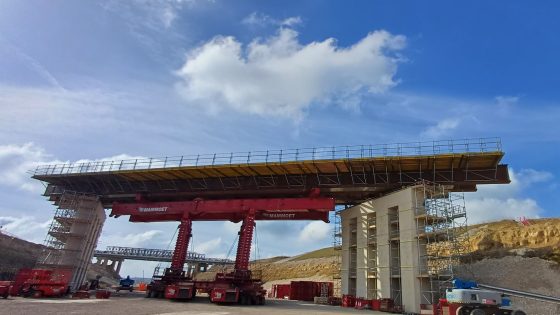
    A422 overbridge over HS2: staging, temporary works and risk notes for engineers

    April 23, 2026|

    Reviewed by Tom Sullivan

    A422 overbridge over HS2: staging, temporary works and risk notes for engineers

    First reported on New Civil Engineer

    30 Second Briefing

    Construction of a new A422 overbridge between Brackley and Buckingham is being re-sequenced to span the HS2 alignment, forcing major changes in methodology and extensive temporary works to keep traffic flowing on this key route. Designers and contractors are coordinating complex staging, including phased carriageway realignments, temporary support structures and possession windows over the future high-speed rail cutting. The scheme demands tight collaboration between HS2, highway authorities and multiple contractors to manage interface risks, groundworks and structural tolerances above the new rail corridor.

    Technical Brief

    • HS2 cutting geometry dictates minimum bridge soffit clearance and strict settlement limits for abutments and approach embankments.
    • Temporary works must satisfy both CDM Regulations and HS2 assurance processes, adding dual-layer design checks.
    • Traffic management layouts require compliance with Chapter 8 and National Highways DMRB sightline and queue-length criteria.
    • Interface risk workshops between HS2, local highway authority and principal contractor are mandated before each staging change.
    • Construction over the future rail corridor triggers rail industry safe system of work controls, even pre-commissioning.
    • Groundworks sequencing is constrained by exclusion zones around HS2 assets, including utilities corridors and future OLE foundations.
    • Structural tolerances at the deck–bearing–abutment interfaces are set to accommodate HS2 track alignment monitoring feedback.

    Our Take

    HS2-related pieces in our database increasingly pair project delivery with operational risk concerns, from this A422 overbridge temporary works to the separate coverage of HS2’s rolling stock length constraints, signalling that constructability and future operability are being scrutinised together rather than in isolation.

    With HS2 appearing across multiple Infrastructure and Safety‑tagged items in our coverage, complex interfaces like the A422 overbridge near Brackley are becoming case studies for how multi‑party collaboration and competence tracking (for example via the NOCN digital skills passport initiative on HS2 plant operators) are formalised on UK megaprojects.

    For practitioners working around Buckingham and Brackley, this overbridge work sits within a cluster of HS2‑driven highway and structure interfaces that our database shows are often where design changes late in the programme translate most directly into additional temporary works, traffic management risk, and claims exposure.

    Geotechnical Software for Modern Teams

    Centralise site data, logs, and lab results with GEODB-io, CMRR-io, and HYDROGEO-io.

    No credit card required.

    • Save and export unlimited calculations
    • Advanced data visualisation
    • Generate professional PDF reports
    • Cloud storage for all your projects

    Prepared by collating external sources, AI-assisted tools, and Geomechanics.io’s proprietary mining database, then reviewed for technical accuracy & edited by our geotechnical team.

    Related Articles

    National Grid TBM under the Thames: tunnelling design and risk notes for engineers
    Infrastructure
    in 7 months

    National Grid TBM under the Thames: tunnelling design and risk notes for engineers

    A 271.5‑tonne Herrenknecht Mixshield TBM, Caroline, has started driving a 2.2km electricity cable tunnel with a 4m internal diameter beneath the River Thames in Essex for National Grid’s Grain to Tilbury project, delivered by the Ferrovial BEMO joint venture. The drive will pass through variable Thames estuary ground conditions between 35m‑deep launch and reception shafts of 15m and 12m diameter, with tunnelling continuing into 2026 and overall scheme completion targeted for 2029. The new tunnel will replace the 1969 Thames Cable Tunnel and carry new high‑voltage circuits between Grain and Tilbury substations.

    Panama Canal Mixshield undercrossing: design and tunnelling lessons for engineers
    Infrastructure
    in 7 months

    Panama Canal Mixshield undercrossing: design and tunnelling lessons for engineers

    A 13.46m diameter Herrenknecht Mixshield TBM has broken through into the future Balboa station on Panama Metro Line 3 after completing the first-ever TBM undercrossing of the Panama Canal at depths exceeding 60m below sea level. The 5,600kW, 26,616kNm machine, fitted with an accessible cutterhead and more than 4,500 sensors linked via the Herrenknecht.Connected platform, has achieved peak advance of 150 segment rings (about 300m) per month through mixed sandstone, tuff, breccias and basalt. Around 1.5km of the 4.5km twin-track tunnel remains to final breakthrough.

    Hudson Tunnel funding deadline: schedule and risk takeaways for project teams
    Infrastructure
    in 6 months

    Hudson Tunnel funding deadline: schedule and risk takeaways for project teams

    Federal funding for New York’s US$16bn Hudson Tunnel Project has been frozen, forcing the Gateway Development Commission to suspend works from 6 February after spending over US$1bn and employing about 1,000 site workers. A Manhattan federal judge has issued a temporary restraining order, giving the administration until 5 p.m. on 12 February to restore reimbursements or appeal, while contractors warn that demobilisation, resequencing and remobilisation will add cost and delay. Sites are now in “safe-pause” mode, with dewatering, ground support and environmental monitoring maintained, and assembly of two Herrenknecht TBMs in New Jersey likely to slip beyond the planned spring 2026 launch without funding certainty.

    Related Industries & Products

    Construction

    Quality control software for construction companies with material testing, batch tracking, and compliance management.

    Mining

    Geotechnical software solutions for mining operations including CMRR analysis, hydrogeological testing, and data management.

    QCDB-io

    Comprehensive quality control database for manufacturing, tunnelling, and civil construction with UCS testing, PSD analysis, and grout mix design management.

    AllGeotechnicalInfrastructureHazardsEnvironmental