A38 Saltash Tunnel £25M upgrade: safety and control lessons for engineers
Reviewed by Tom Sullivan
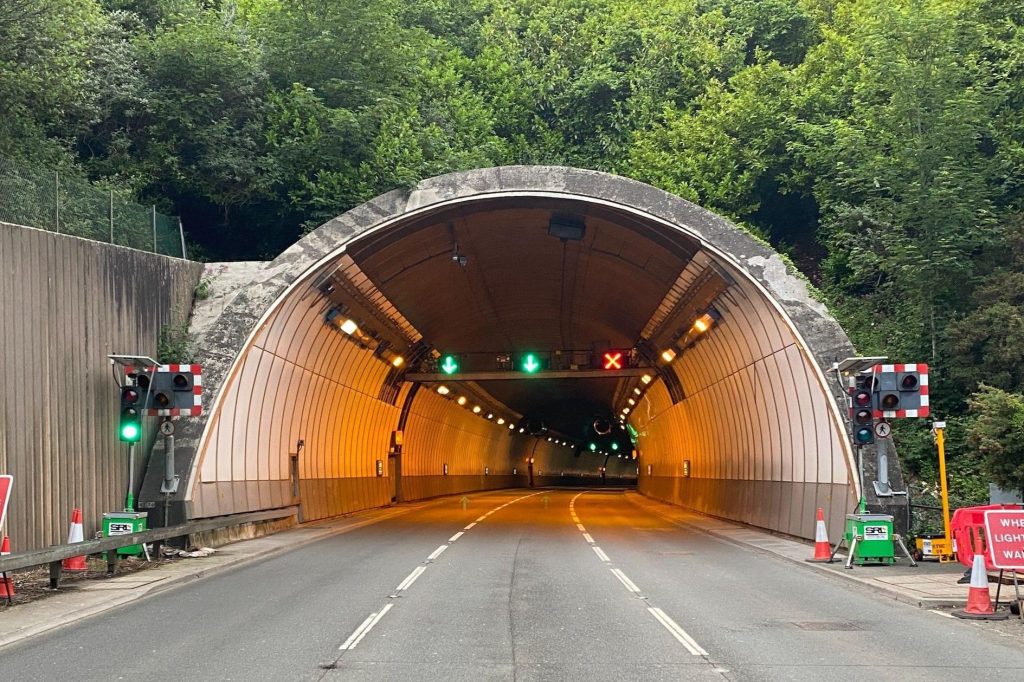
First reported on New Civil Engineer
30 Second Briefing
National Highways is entering the final phase of a £25M technology upgrade to the A38 Saltash Tunnel, a key 410m route under the River Tamar linking Plymouth and south‑east Cornwall, with major civil works now complete and new safety systems being commissioned. Engineers are installing upgraded tunnel control, ventilation and fire‑safety equipment, alongside improved CCTV and incident detection, to modernise an asset that carries high seasonal traffic loads. The works aim to reduce unplanned closures and improve resilience for this strategic single‑bore road tunnel.
Technical Brief
- Upgrade centres on replacing legacy tunnel control hardware and software with a modern integrated SCADA.
- New ventilation control logic is being configured to modulate fan operation by real‑time air quality and smoke.
- Fire‑safety enhancements include automated incident detection linked directly to alarms, signage and traffic control barriers.
- CCTV coverage density is being increased to minimise blind spots and shorten incident verification times.
- Control room ergonomics and screen layouts are being re‑organised to reduce operator workload during multi‑vehicle events.
- Commissioning phase will include live‑traffic night closures for system proving, fail‑safe checks and evacuation drills.
- Safety case updates must align with tunnel standards and UK fire and life‑safety regulations.
Our Take
Within our 737-item Infrastructure corpus, relatively few pieces focus on tunnel safety retrofits in the United Kingdom, so the A38 Saltash Tunnel work stands out as part of a smaller subset of complex brownfield upgrades rather than new-build highways.
National Highways’ £25M technology update at Saltash Tunnel signals that UK operators are now allocating sizeable capex to digital and control systems on existing assets, which typically implies more stringent operational safety and resilience requirements for other ageing road tunnels around Plymouth and south‑east Cornwall.
For contractors and systems integrators, this type of project on the A38 suggests a pipeline of similar safety-driven technology refreshes on older strategic routes in the UK network, as asset managers move from structural renewal to instrumentation, monitoring and incident-response enhancements.
Prepared by collating external sources, AI-assisted tools, and Geomechanics.io’s proprietary mining database, then reviewed for technical accuracy & edited by our geotechnical team.
Related Articles


Related Industries & Products
Construction
Quality control software for construction companies with material testing, batch tracking, and compliance management.
Mining
Geotechnical software solutions for mining operations including CMRR analysis, hydrogeological testing, and data management.
CMRR-io
Streamline coal mine roof stability assessments with our cloud-based CMRR software featuring automated calculations, multi-scenario analysis, and collaborative workflows.
HYDROGEO-io
Comprehensive hydrogeological testing platform for managing, analysing, and reporting on packer tests, lugeon values, and hydraulic conductivity assessments.
GEODB-io
Centralised geotechnical data management solution for storing, accessing, and analysing all your site investigation and material testing data.