A21 £20M upgrades: geometric design and safety lessons for road engineers
Reviewed by Tom Sullivan
First reported on New Civil Engineer
30 Second Briefing
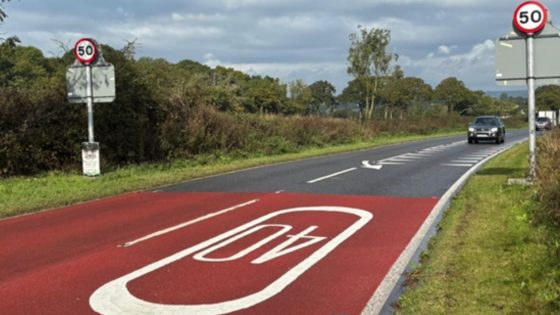
£20M of National Highways upgrades on the A21 between Hastings and Flimwell are being criticised by local MP Huw Merriman for failing to tackle what he calls the “underlying cause” of serious collisions on the single-carriageway sections. Works reportedly focus on resurfacing, signage and minor junction changes rather than full dualling or major realignment of substandard bends and short sightlines. For designers and safety engineers, the row centres on whether incremental measures can manage overtaking and speed-related crash risk without a more fundamental geometric redesign.
Technical Brief
- Huw Merriman MP has raised concerns directly with both National Highways and the Department for Transport.
- Safety concerns specifically relate to “serious” collisions, indicating a history of high‑severity crash records.
- Works are being implemented on live traffic, implying reliance on temporary traffic management and phased closures.
- Criticism focuses on scheme scope definition and option selection within DfT’s value‑for‑money appraisal framework.
- Debate exposes tension between low‑cost safety treatments and full geometric upgrade on constrained rural corridors.
Our Take
National Highways appears under pressure on multiple fronts in our infrastructure coverage, with MPs recently questioning £500M of spend on cancelled schemes, which may make it harder for the DfT to justify further major safety-led reconfigurations on the A21 without very clear benefit evidence.
Recent pieces on the A5 weight restriction and the strategic Water Quality Plan show National Highways leaning on operational controls and network-wide programmes rather than large-scale rebuilds, suggesting that on constrained corridors like the A21 they may favour incremental measures and enforcement over geometry changes.
With the United Kingdom dominating our safety-tagged infrastructure items, the A21 debate will likely feed into a wider policy question for the DfT about how far to prioritise corridor redesign versus traffic management and environmental performance on the strategic road network.
Prepared by collating external sources, AI-assisted tools, and Geomechanics.io’s proprietary mining database, then reviewed for technical accuracy & edited by our geotechnical team.
Related Articles


Related Industries & Products
Mining
Geotechnical software solutions for mining operations including CMRR analysis, hydrogeological testing, and data management.
Construction
Quality control software for construction companies with material testing, batch tracking, and compliance management.
CMRR-io
Streamline coal mine roof stability assessments with our cloud-based CMRR software featuring automated calculations, multi-scenario analysis, and collaborative workflows.
HYDROGEO-io
Comprehensive hydrogeological testing platform for managing, analysing, and reporting on packer tests, lugeon values, and hydraulic conductivity assessments.
GEODB-io
Centralised geotechnical data management solution for storing, accessing, and analysing all your site investigation and material testing data.