£18.3M Balgray station: ORR approval and design notes for rail engineers
Reviewed by Tom Sullivan
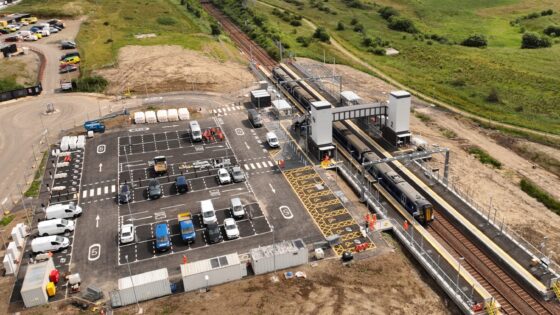
First reported on New Civil Engineer
30 Second Briefing
The Office of Rail and Road has authorised opening of the £18.3M Balgray railway station in Barrhead, East Renfrewshire, allowing passenger services to start later this month on the Glasgow South Western route. The new stop is expected to relieve pressure on nearby Barrhead station and support housing growth around Balgray Reservoir, with platforms designed for modern ScotRail rolling stock and full step-free access. For civil and rail engineers, the approval confirms compliance with current ORR and Network Rail standards on platform geometry, accessibility and signalling integration.
Technical Brief
- ORR authorisation confirms Balgray’s design, construction and operations meet current UK rail safety regulatory requirements.
- Approval process would have scrutinised platform clearances, track geometry and structural interfaces against Network Rail standards.
- Signalling integration on the Glasgow South Western route must satisfy ORR safety validation for interlocking and train detection.
- Station opening consent implies emergency egress routes, fire strategy and evacuation signage passed formal safety assessment.
- Accessibility compliance requires step-free routes, tactile paving and platform–train interface controls to reduce fall risk.
- ORR sign-off typically follows a staged safety verification regime, including design review, construction assurance and pre-opening inspection.
- For other infill stations on live lines, Balgray underlines the need for early ORR engagement on signalling and access design.
Our Take
Balgray station adds to a run of Office of Rail and Road decisions in our database where ORR has recently tightened its stance on both new services and infrastructure condition, as seen in its rejection of the Hampshire–Waterloo service and its critical findings on Network Rail in Wales and the West of England.
Prepared by collating external sources, AI-assisted tools, and Geomechanics.io’s proprietary mining database, then reviewed for technical accuracy & edited by our geotechnical team.


