£13M West Highland Line upgrade: resilience and drainage notes for engineers
Reviewed by Tom Sullivan
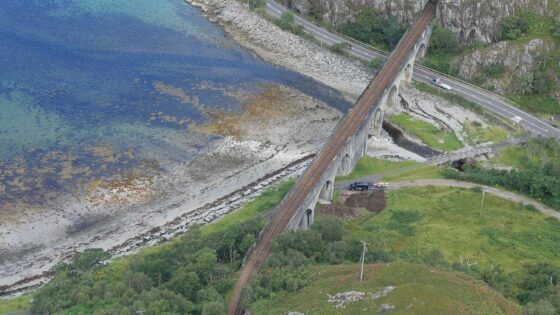
First reported on New Civil Engineer
30 Second Briefing
The West Highland Line between Glasgow and Mallaig/Oban will shut for nine days in November while Network Rail delivers a £13M package of track and asset renewals to improve reliability and resilience on the single‑track rural route. Works are expected to focus on replacing life‑expired rail and sleepers, targeted ballast and formation interventions, and drainage upgrades at known wet spots vulnerable to washout. The closure will compress disruptive possessions into a single blockade, affecting passenger and freight services that rely on limited diversion options in the Highlands.
Technical Brief
- Nine-day blockade enables continuous access to remote cuttings, embankments and structures without daily mobilisation constraints.
- Single-track geometry on the West Highland Line removes practical diversion options, increasing reliance on temporary bus and freight road haulage plans.
- Blockade planning will require detailed possession sequencing around viaducts, tunnels and constrained coastal sections.
- Remote Highland topography complicates emergency access; worksite safety plans must integrate helicopter and 4x4 response routes.
- Autumn timing reduces tourist traffic but coincides with higher rainfall, elevating work-at-height and slip risks on wet formations.
- Isolation of signalling and power on a long rural section demands rigorous lockout–tagout and verification procedures across multiple workfaces.
- Coordination with freight operators will need defined speed restrictions and post-blockade monitoring to manage track settlement and derailment risk.
Our Take
A nine‑day closure window in the Highland region implies reliance on intensive blockade working; in comparable UK rail upgrades this has often driven use of modular track and structure components to compress on‑site activities and reduce exposure to weather‑related delays.
Prepared by collating external sources, AI-assisted tools, and Geomechanics.io’s proprietary mining database, then reviewed for technical accuracy & edited by our geotechnical team.
Related Articles


Related Industries & Products
Construction
Quality control software for construction companies with material testing, batch tracking, and compliance management.
Tunnelling
Specialised solutions for tunnelling projects including grout mix design, hydrogeological analysis, and quality control.
CMRR-io
Streamline coal mine roof stability assessments with our cloud-based CMRR software featuring automated calculations, multi-scenario analysis, and collaborative workflows.
HYDROGEO-io
Comprehensive hydrogeological testing platform for managing, analysing, and reporting on packer tests, lugeon values, and hydraulic conductivity assessments.
GEODB-io
Centralised geotechnical data management solution for storing, accessing, and analysing all your site investigation and material testing data.